The chapter to start with
When They Stop Talking to You
For parents whose teenager hardly talks to them any more.
13 min read · Ages 11 to 18
Read the chapter Your first chapter is free to read in full.
↑ ↓ to moveEnter to openEsc to close
Worry, mood and big feelings

Managing a strong feeling without being swept away by it is something children learn gradually as they grow. Helping a four-year-old calm down looks different from sitting beside a fourteen-year-old, and these pages follow that learning through childhood, whatever your child’s age.
What to do first, what helps and who else can help are free to read and to print. So is the first chapter you open.
What the library holds on emotional regulation
From the therapists
Children borrow calm from the adults around them before they can find it on their own. A child learns to calm themselves by being calmed, several thousand times, by someone who wasn’t frightened by how upset the child got.
From the chapters
Young children can’t calm themselves down yet; they calm down by being near an adult who is calm. So before you say anything, slow your own breathing and lower your voice. That does more than the words.
Try “You’re really frustrated right now.” That’s all you need to say. Naming the feeling moves brain activity from the emotional centre towards the language centre, and that in itself is calming.
Sit close and slow your own breathing. Being next to a calm adult helps a child’s body settle, and that does more than anything clever you could say. Save the words for when the worst has passed.
Try “That sounds really hard” or “You look really worried.” Naming the feeling makes it seem less strange, and it shifts brain activity from the alarm centre towards the language centre.
16 on emotional regulation
The long reads, each on one situation, written by a therapist.
The chapter to start with
For parents whose teenager hardly talks to them any more.
13 min read · Ages 11 to 18
Read the chapter Your first chapter is free to read in full.
Nothing on this shelf is written for that age yet.
27 on emotional regulation
Short pieces for the moment in front of you, each with things to try.
School & pressure
Your child held it together all day; give them food and no questions for a while, and tell the school what you see.
Try this
From the tip
If it happens most days for several weeks, they have started to dread school, have stomach aches or headaches on school mornings, or seem low or anxious most of the time, talk to your GP as well.
If your child takes medicine for ADHD and has become irritable, aggressive, low or anxious, speak to their doctor straight away.
Big feelings
An anxious child rarely tells you they’re worried; it comes out as stomach aches, refusals and repeated questions.
Try this
From the tip
If the worry goes on for weeks, or your child needs the same answer again and again before they can settle, talk to your GP.
Big feelings
In the middle of it your child can’t listen, so the next ten minutes are for getting them safe and calm, and the talking comes later.
Try this
From the tip
If they’re getting more frequent or worse, or your child hurts themselves or someone else, talk to your health visitor or GP, and take the notes with you.
More quick tips on emotional regulation
Big feelings
A broken banana is more than a tired three-year-old can take.
2 min read · Under 9
Friendships & social life
When a best friendship slowly fades, it’s usually part of growing up, and it helps to say you’ve noticed.
2 min read · Ages 7 to 11
Big feelings
For many children, a pet’s death is their first significant bereavement, and the grief is real.
2 min read · Ages 5 to 11
Big feelings
When a child is overwhelmed, a few words usually reach them better than a lot.
2 min read · Under 7
Big feelings
Young children usually show trauma in their bodies and behaviour before they can put it into words.
2 min read · Under 7
Bodies & growing up
Crying is how a two-year-old tells you what they can’t yet put into words.
2 min read · Under 5
Big feelings
A young child rarely has words for something hard; give them a simple phrase for what their body feels.
2 min read · Under 7
Big feelings
Most teenagers recover from something frightening with the people around them; keep your teenager’s routines going, and let them choose when to talk.
2 min read · Ages 11 to 18
Friendships & social life
A party for four and a whole class minus one mean different things, so find out which it was, and let your child be sad before you try to fix it.
2 min read · Ages 5 to 11
Family transitions
Don’t rush to fill the evening when the other parent cancels a handover at the last minute.
2 min read · Ages 5 to 11
Family dynamics
Some children run out of social energy long before the party ends, and going home is how they recover.
2 min read · Ages 5 to 13
Family dynamics
While one child struggles, the other may become very easy to live with and keep their worries to themselves.
2 min read · Ages 5 to 11
Big feelings
When a perfectionist child tears up their maths, they’re upset about what getting it wrong says about them.
2 min read · Ages 5 to 11
Online life
Agree how long your child will play before they start, and give them a few minutes’ warning.
2 min read · Ages 5 to 9
Family dynamics
Many well siblings come to resent being the easy one, and the unfairness they feel is real.
2 min read · Ages 9 to 13
Family dynamics
Stop it, go to the child who was hurt, and leave the talking until your child has calmed down.
2 min read · Ages 5 to 9
Friendships & social life
Don’t argue with “nobody”; ask what happened today, then keep an eye on the next few weeks.
2 min read · Ages 5 to 11
Friendships & social life
A first heartbreak is real grief, so take it seriously.
2 min read · Ages 13 to 18
Big feelings
A child who is cross with everything may be low, and the clue is what they have stopped enjoying.
2 min read · Ages 9 to 16
Family dynamics
When one twin is struggling, the other is often overlooked just when they need to be noticed.
2 min read · Ages 7 to 16
Family dynamics
Your child can’t fix the other parent’s substance use, and they need to hear that often.
2 min read · Ages 7 to 16
Parent wellbeing
If your shouting tends to come at the same hour, changing that hour may help more than resolving to be patient.
2 min read · Under 16
Neurodiversity
An emotional meltdown and an executive-function meltdown look the same, but they need different responses.
2 min read · Ages 5 to 13
Bodies & growing up
Stop the hit first, then help your child find words for what they were feeling.
2 min read · Under 5
The rest of each tip, with more to try and why it works, is in the library.
Nothing on this shelf is written for that age yet.
13 on emotional regulation
Small, repeatable things to do with your child, with what to watch for and when to get help.
To do together · About 10 min
Your child picks a song and plays it to you. You listen to the end, and ask one question about it.
What it is for. A teenager’s moods often show in the music they listen to. Asking your teenager to play you something shows you are interested in what they listen to, and it can tell you something about their week.
Safety. Music services set minimum ages, often thirteen; a younger child belongs on a family account a parent manages. The phone that plays the music still charges in the kitchen overnight.
When to get help. If your child’s mood has been flat for more than two weeks, or you’re worried at any point, talk to the school and your GP, and tell them about any change in your child’s sleep, appetite or friendships. If a song leads your child to tell you that someone is hurting them, that they are hurting themselves, or that they do not want to be alive, stay calm, thank them for telling you, do not promise to keep it secret, and act that day, using the routes under “If you need help right now”, at the foot of every page.
The other four steps, and your part in it, are in the library.
More to do together
To do together
On a plain outline of a body, your child marks where they first notice anger, worry and sadness.
About 20 min · Under 11 · With a sheet to print
To do together
A comfortable corner, chosen with your child, for when a feeling gets too big. While they are small you go there together, and nobody is ever sent there.
About 20 min · Under 9
To do together
A short noticing game, and for younger children a slow breath traced with a finger. Practise them together on calm days, so your child already knows them on a hard one.
About 5 min · Ages 5 to 18 · With a sheet to print
To do together
Colour, build or make things side by side, each of you on your own thing. Nothing is asked of your child, and nothing they make is marked.
About 20 min · Under 13 · With a sheet to print
To do together
For an everyday fear, such as dogs, the dark or a new club: together you write the steps from easiest to hardest, and your child practises each one until it feels easy before they move up.
About 15 min · Ages 5 to 16 · With a sheet to print
To do together
For the child who holds it together at school and comes apart at home. The first hour back asks nothing of them: something to eat, somewhere to recover, and no questions yet.
The first hour home · Ages 5 to 13 · With a sheet to print
To do together
A card with two pictures, the thing to do first and the thing that comes next, for a young child who finds it hard to stop one thing and start another.
About 15 min · Under 9 · With a sheet to print
To do together
A game now and then, where everyone loses sometimes, you included, and it is all right to be upset about losing.
About 30 min · Ages 5 to 16 · With a sheet to print
To do together
Notice what you do to spare your child a worry, then change one thing, telling them first and staying kind.
About 15 min · Ages 7 to 16 · With a sheet to print
To do together
Walk with your child at the same time each week, side by side. Some weeks they will talk, and you still go on the weeks they do not.
About 20 min · Under 18 · With a sheet to print
To do together
Ten minutes at the same time each afternoon for your child’s worries. If one comes up at another time, you listen, write it down and save it for then.
About 10 min · Ages 5 to 13 · With a sheet to print
To do together
With an autistic teenager, list what uses up their energy and what gives it back, and plan time to recover before they run out.
About 20 min · Ages 11 to 18 · With a sheet to print
Nothing on this shelf is written for that age yet.
45 on emotional regulation
Made to be printed, kept, and handed on.
To print and keep
What to do first, what helps, a few things to try and who else can help, together in one guide. Free to print and keep, or to hand to the other parent, a grandparent or the school.
Who else can help with emotional regulation, on a sheet of its own.
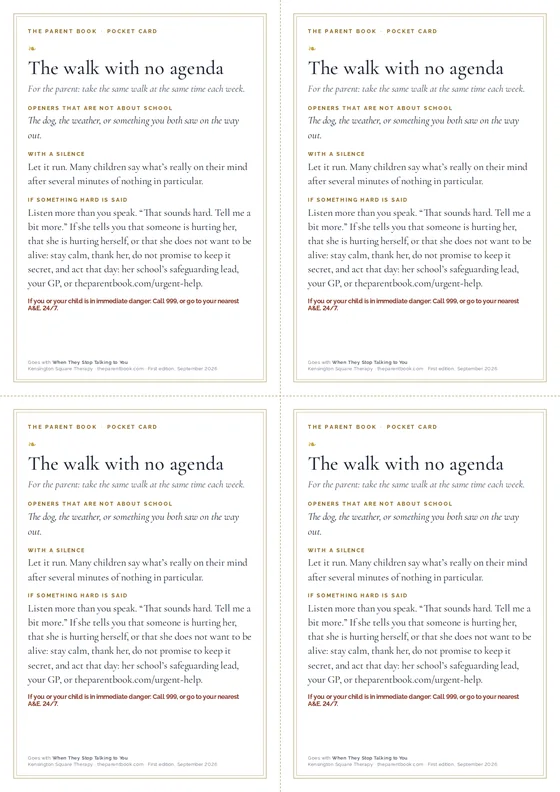 The walk with no agenda
Pocket card · A4, four cards to cut · With a subscription
The walk with no agenda
Pocket card · A4, four cards to cut · With a subscription
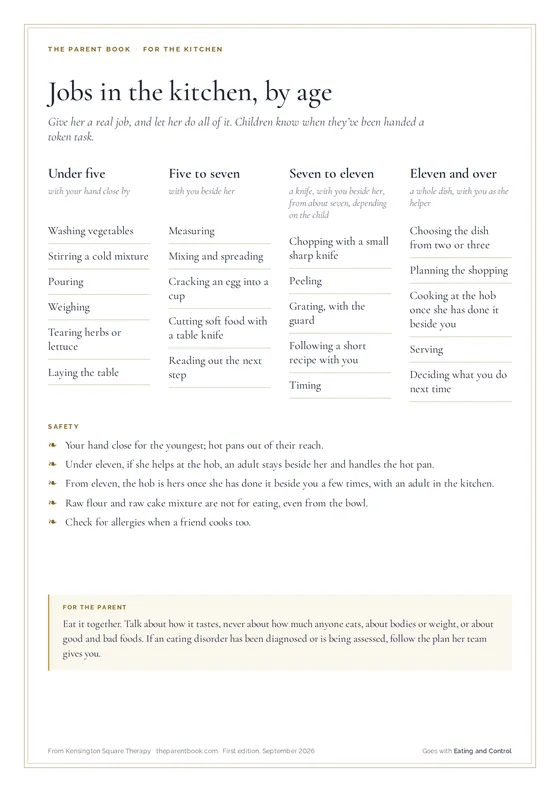 Jobs in the kitchen, by age
For the kitchen · A4 · With a subscription
Jobs in the kitchen, by age
For the kitchen · A4 · With a subscription
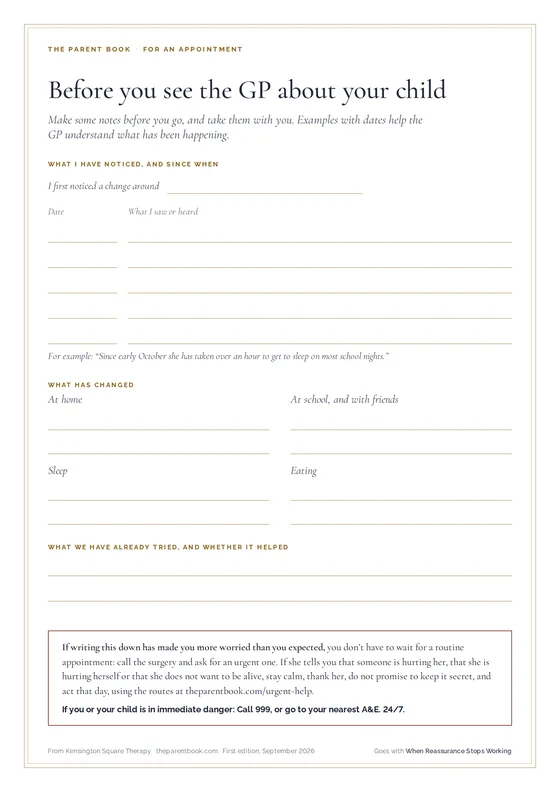 Before you see the GP about your child
For an appointment · A4, two sides · Free
Before you see the GP about your child
For an appointment · A4, two sides · Free
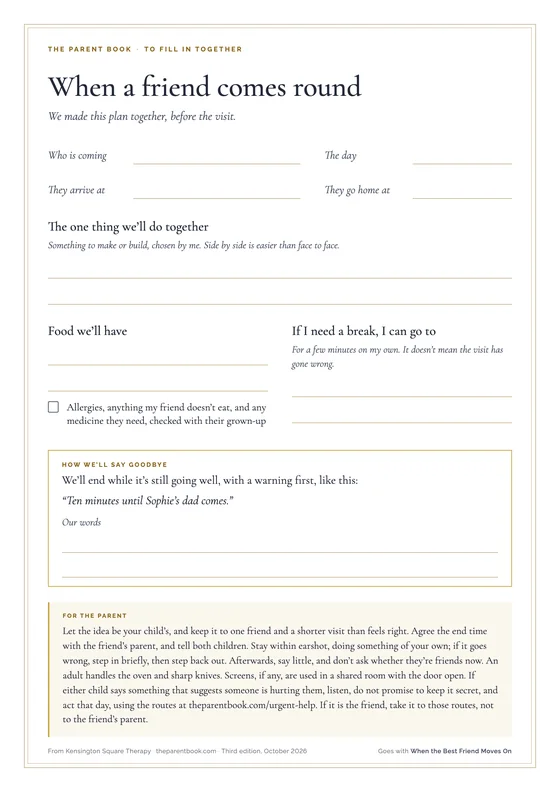 When a friend comes round
To fill in together · A4 · With a subscription
When a friend comes round
To fill in together · A4 · With a subscription
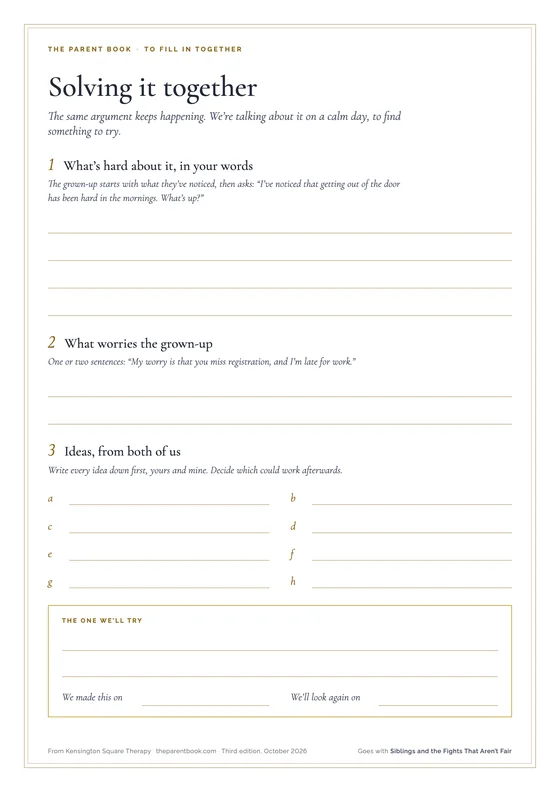 Solving it together
To fill in together · A4, two sides · With a subscription
Solving it together
To fill in together · A4, two sides · With a subscription
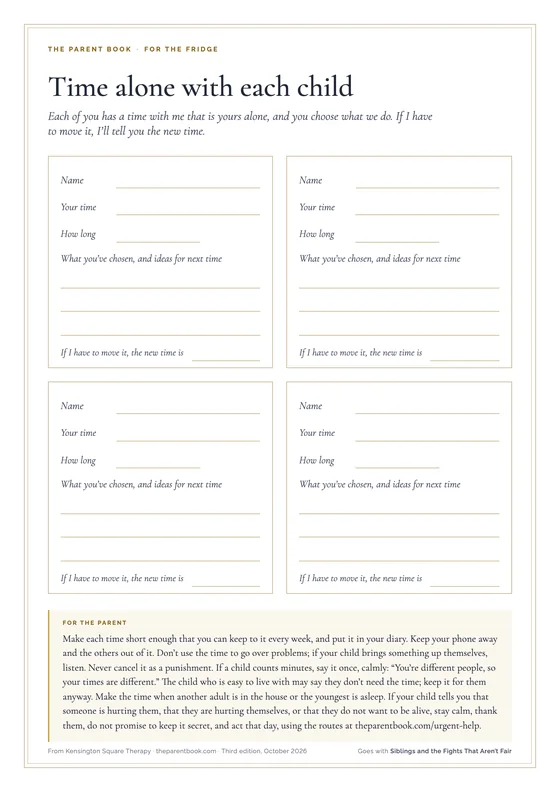 Time alone with each child
For the fridge · A4 · With a subscription
Time alone with each child
For the fridge · A4 · With a subscription
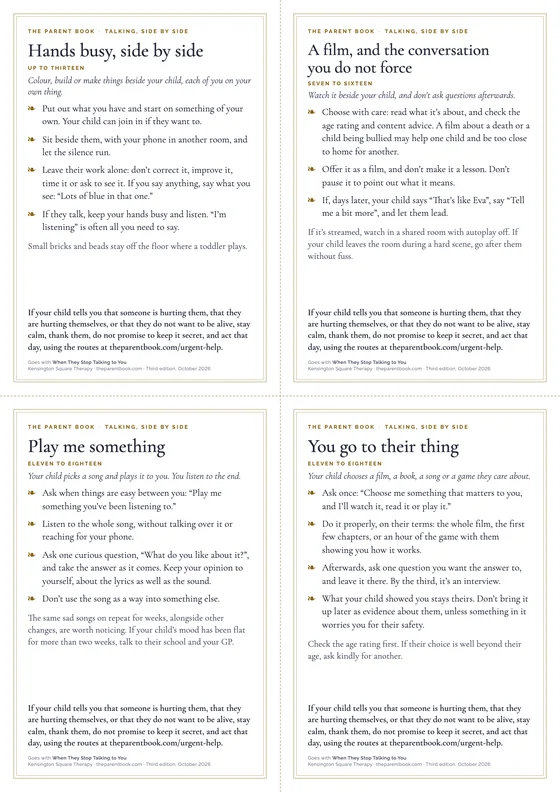 Talking, side by side
Cards to cut out · A4, four cards to cut · With a subscription
Talking, side by side
Cards to cut out · A4, four cards to cut · With a subscription
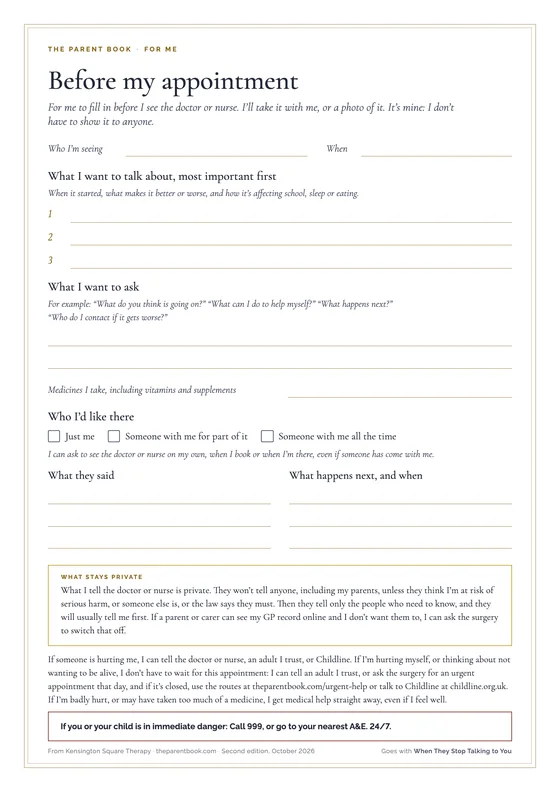 Before my appointment
For an appointment · A4, two pages · With a subscription
Before my appointment
For an appointment · A4, two pages · With a subscription
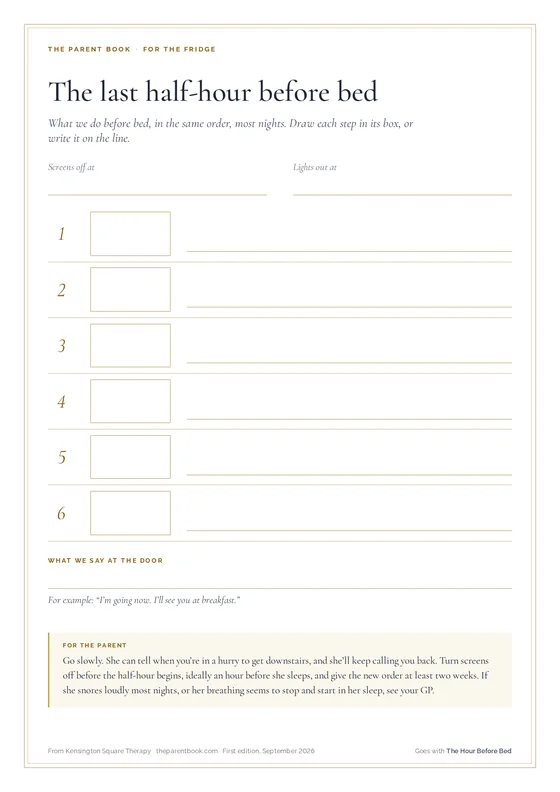 The last half-hour before bed
For the fridge · A4 · Free
The last half-hour before bed
For the fridge · A4 · Free
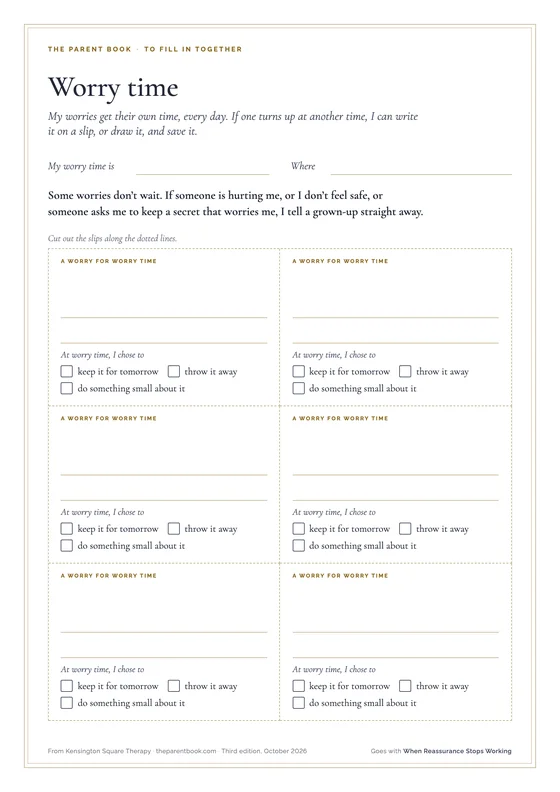 Worry time
To fill in together · A4, two pages · With a subscription
Worry time
To fill in together · A4, two pages · With a subscription
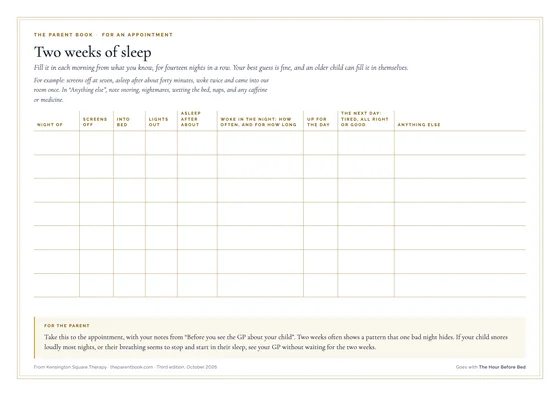 Two weeks of sleep
For an appointment · A4 landscape, two pages · With a subscription
Two weeks of sleep
For an appointment · A4 landscape, two pages · With a subscription
 What I will miss
To keep · A4, two pages · With a subscription
What I will miss
To keep · A4, two pages · With a subscription
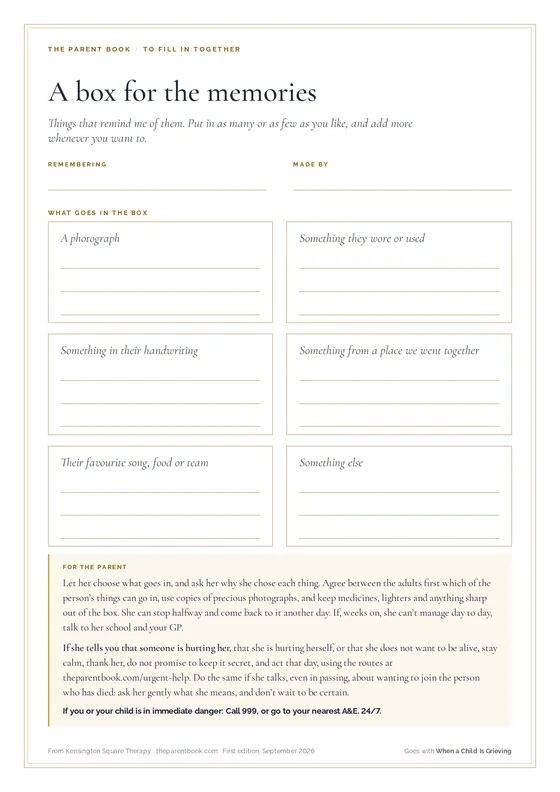 A box for the memories
To fill in together · A4, two pages · With a subscription
A box for the memories
To fill in together · A4, two pages · With a subscription
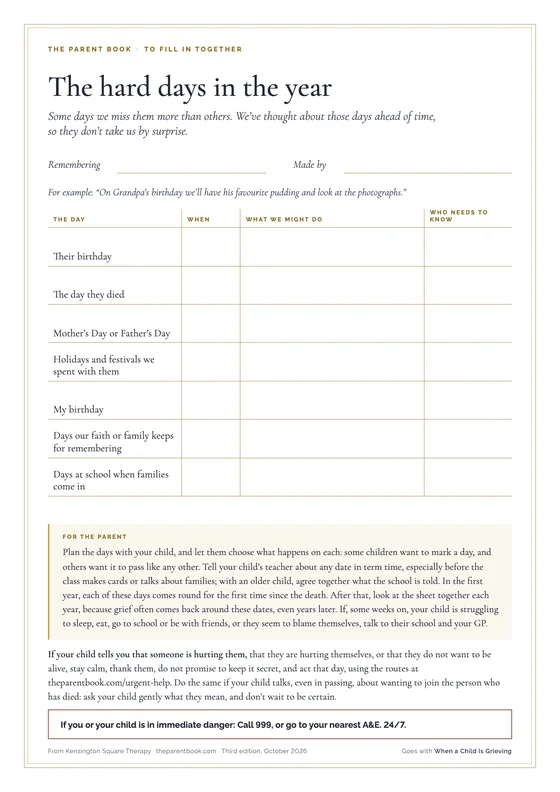 The hard days in the year
To fill in together · A4 · With a subscription
The hard days in the year
To fill in together · A4 · With a subscription
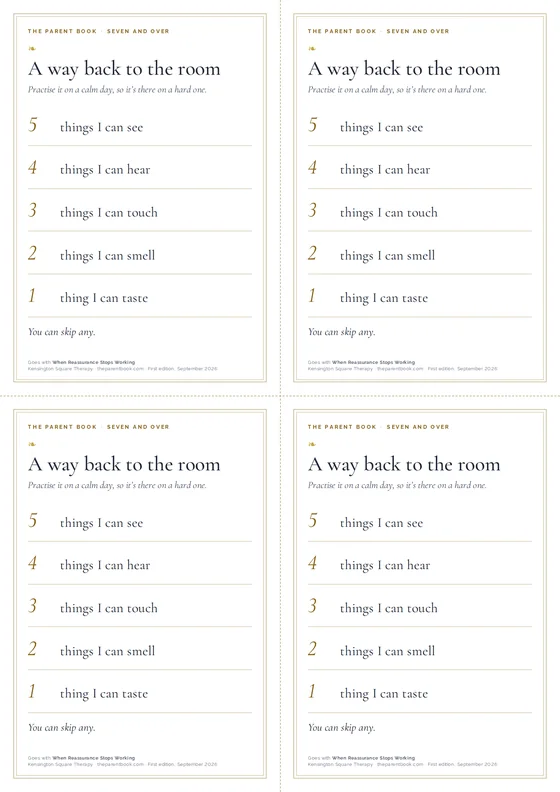 A way back to the room
Pocket card · A4, four cards to cut, two sides · With a subscription
A way back to the room
Pocket card · A4, four cards to cut, two sides · With a subscription
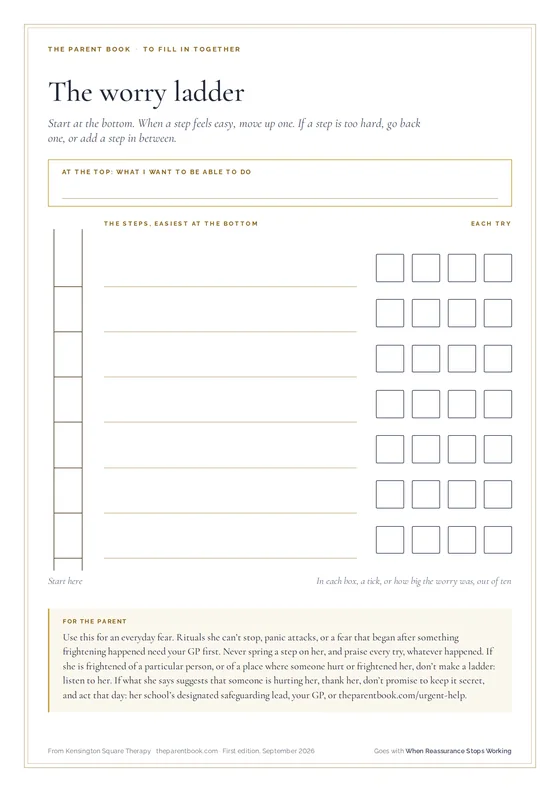 The worry ladder
To fill in together · A4 · Free
The worry ladder
To fill in together · A4 · Free
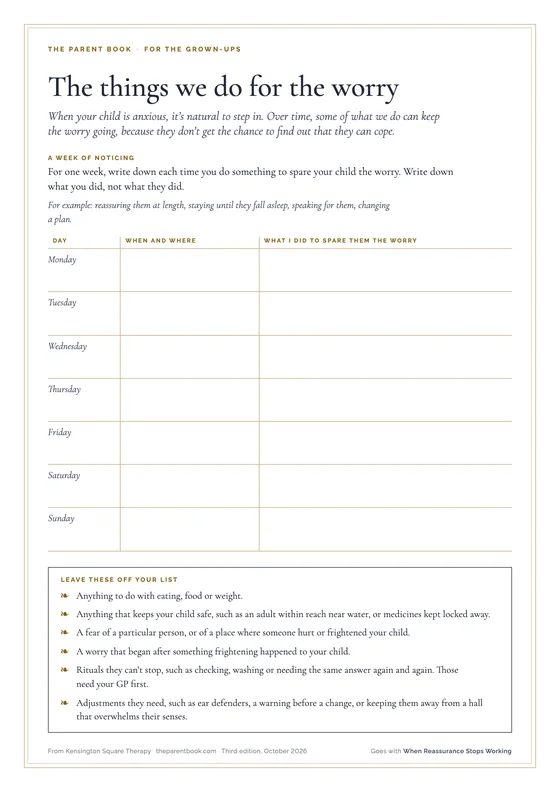 The things we do for the worry
For the grown-ups · A4, two sides · With a subscription
The things we do for the worry
For the grown-ups · A4, two sides · With a subscription
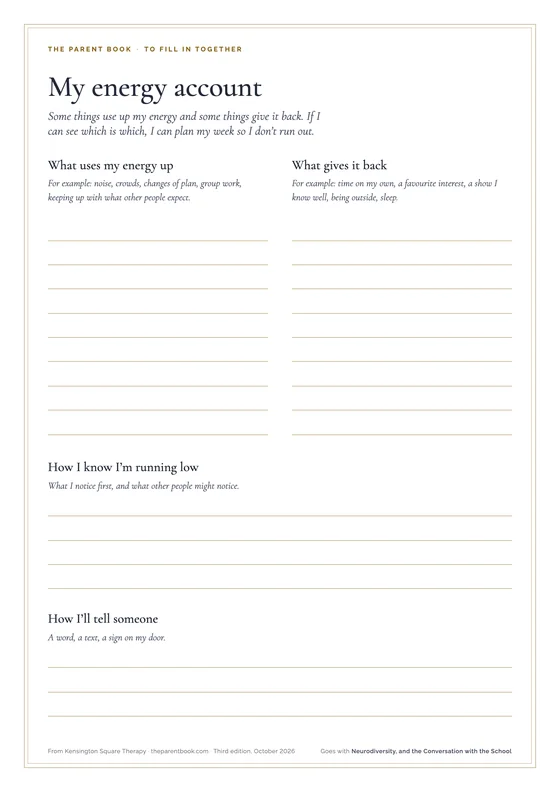 My energy account
To fill in together · A4, two sides · With a subscription
My energy account
To fill in together · A4, two sides · With a subscription
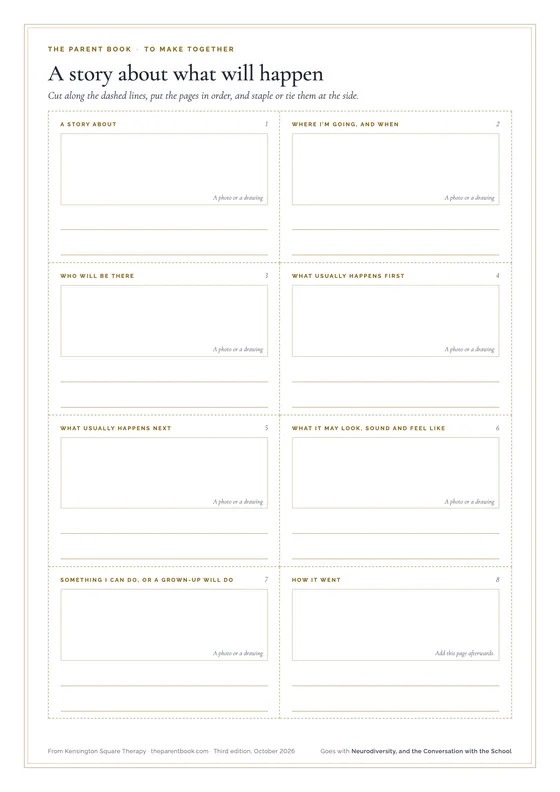 A story about what will happen
To make together · A4, two pages · With a subscription
A story about what will happen
To make together · A4, two pages · With a subscription
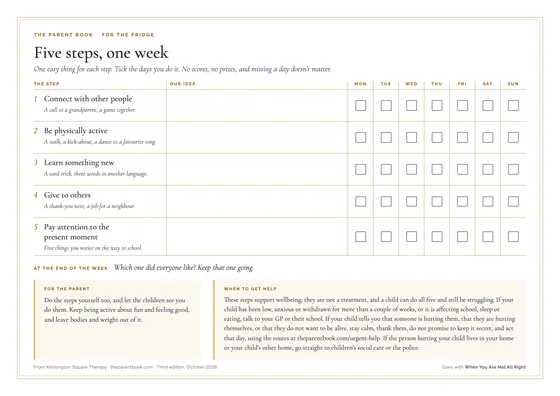 Five steps, one week
For the fridge · A4 landscape · With a subscription
Five steps, one week
For the fridge · A4 landscape · With a subscription
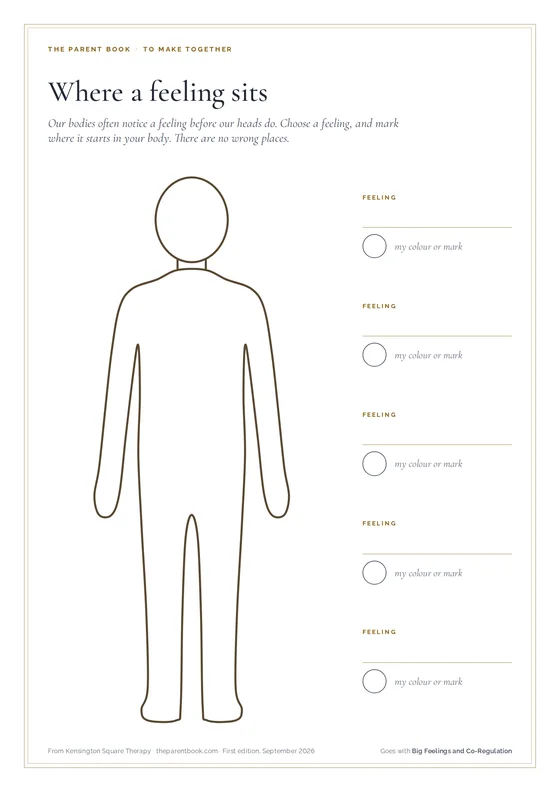 Where a feeling sits
To make together · A4, two sides · With a subscription
Where a feeling sits
To make together · A4, two sides · With a subscription
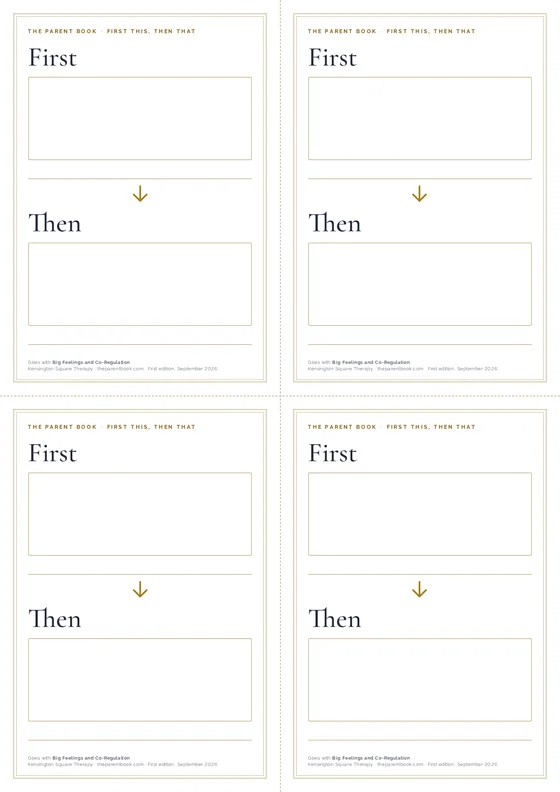 First this, then that
Cards to cut out · A4, four cards to cut, two sides · With a subscription
First this, then that
Cards to cut out · A4, four cards to cut, two sides · With a subscription
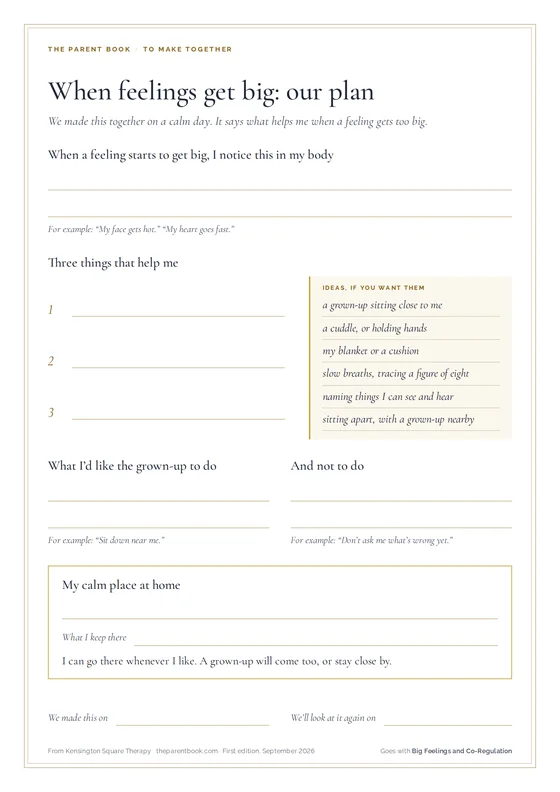 When feelings get big: our plan
To make together · A4, two sides · With a subscription
When feelings get big: our plan
To make together · A4, two sides · With a subscription
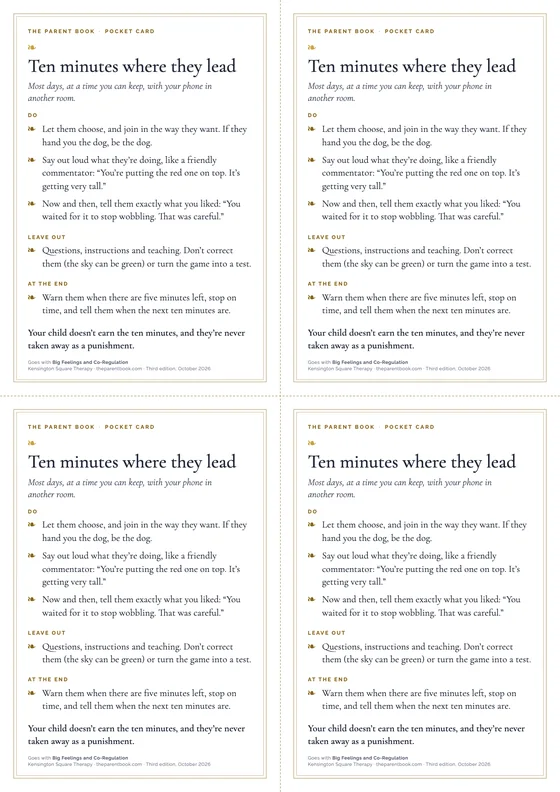 Ten minutes where they lead
Pocket card · A4, four cards to cut, two sides · With a subscription
Ten minutes where they lead
Pocket card · A4, four cards to cut, two sides · With a subscription
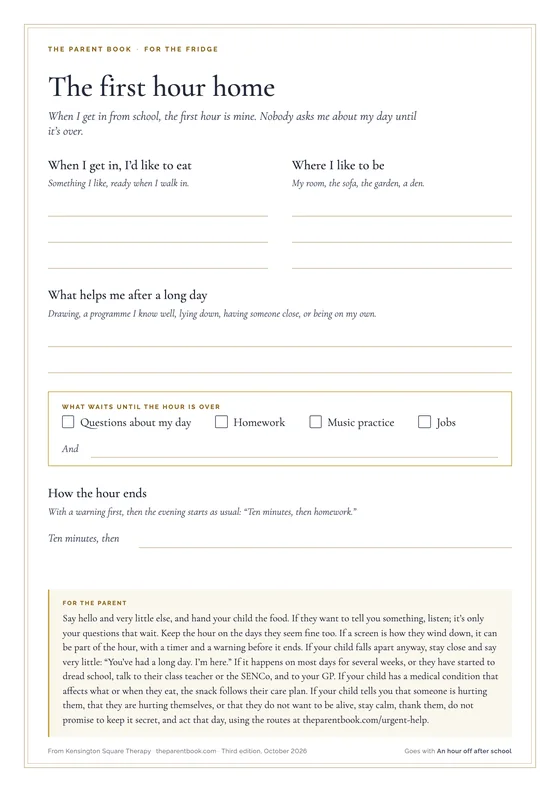 The first hour home
For the fridge · A4 · With a subscription
The first hour home
For the fridge · A4 · With a subscription
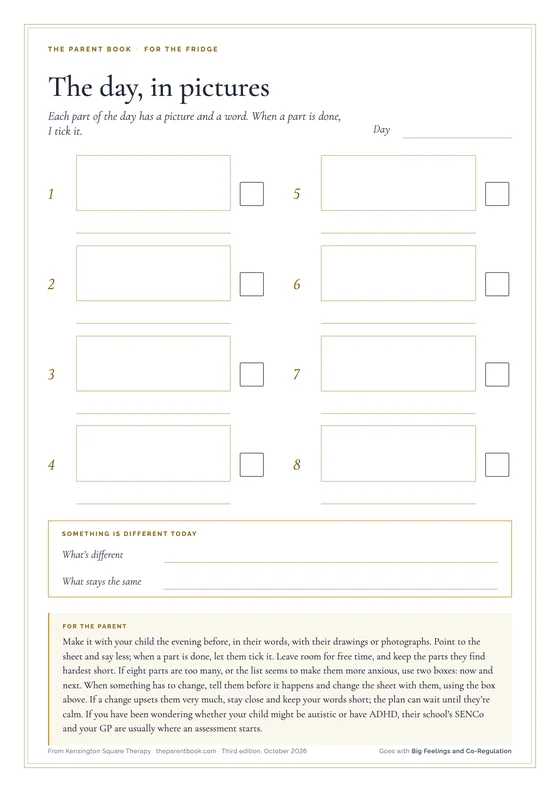 The day, in pictures
For the fridge · A4 · With a subscription
The day, in pictures
For the fridge · A4 · With a subscription
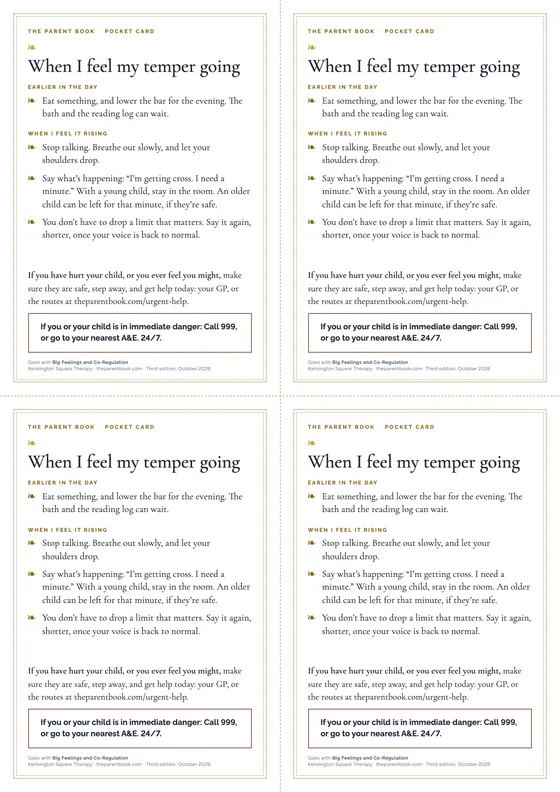 Putting it right
Pocket card · A4, four cards to cut, two sides · With a subscription
Putting it right
Pocket card · A4, four cards to cut, two sides · With a subscription
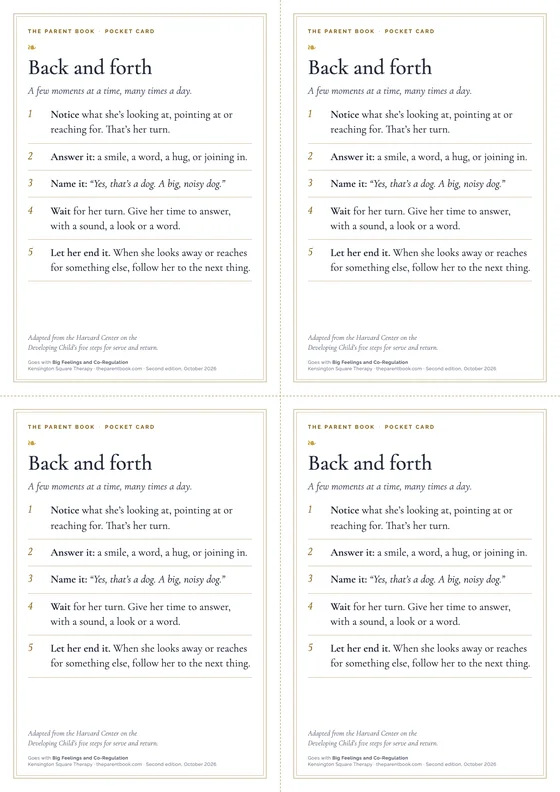 Back and forth
Pocket card · A4, four cards to cut, two sides · With a subscription
Back and forth
Pocket card · A4, four cards to cut, two sides · With a subscription
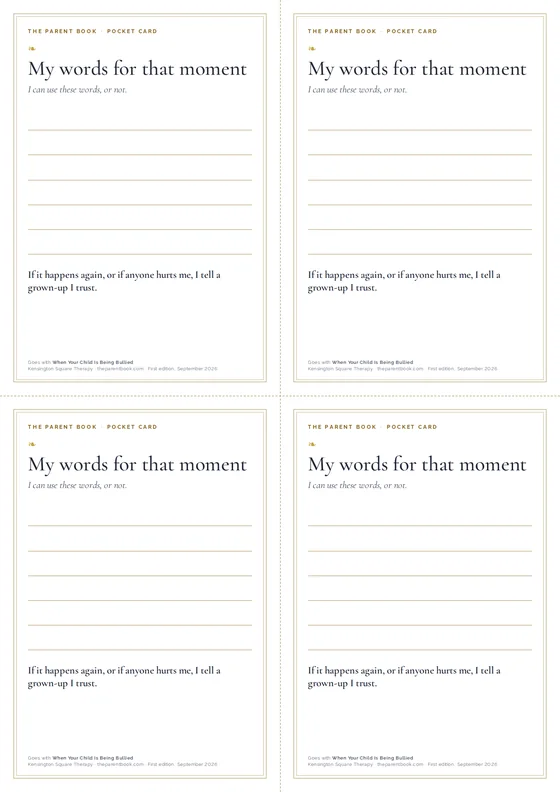 My words for that moment
Pocket card · A4, four cards to cut · With a subscription
My words for that moment
Pocket card · A4, four cards to cut · With a subscription
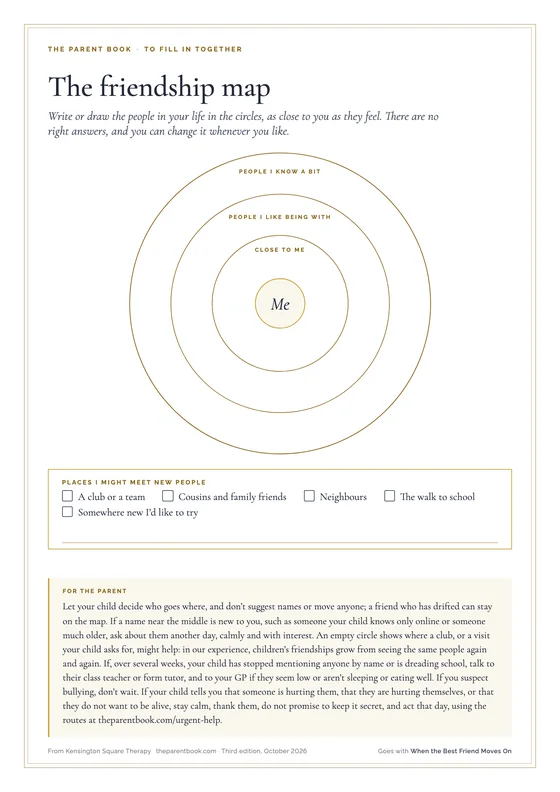 The friendship map
To fill in together · A4 · With a subscription
The friendship map
To fill in together · A4 · With a subscription
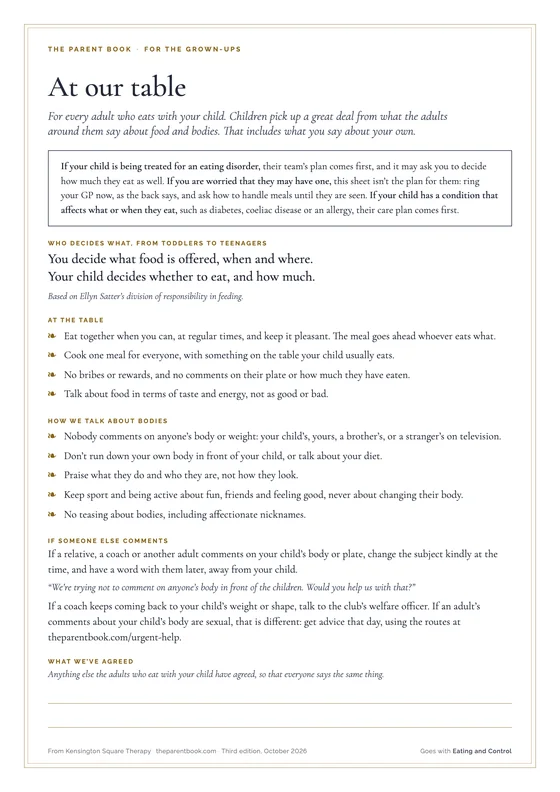 At our table
For the grown-ups · A4, two sides · With a subscription
At our table
For the grown-ups · A4, two sides · With a subscription
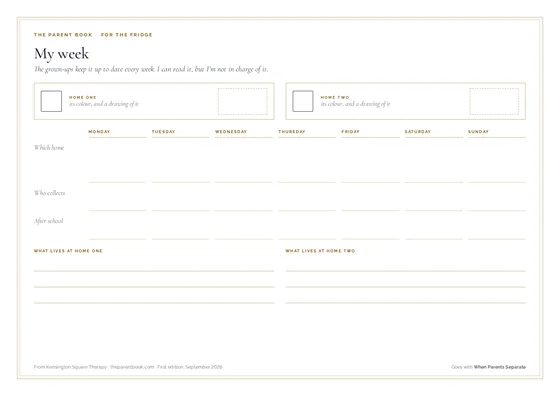 A week across two homes
For the fridge · A4 landscape, two pages · With a subscription
A week across two homes
For the fridge · A4 landscape, two pages · With a subscription
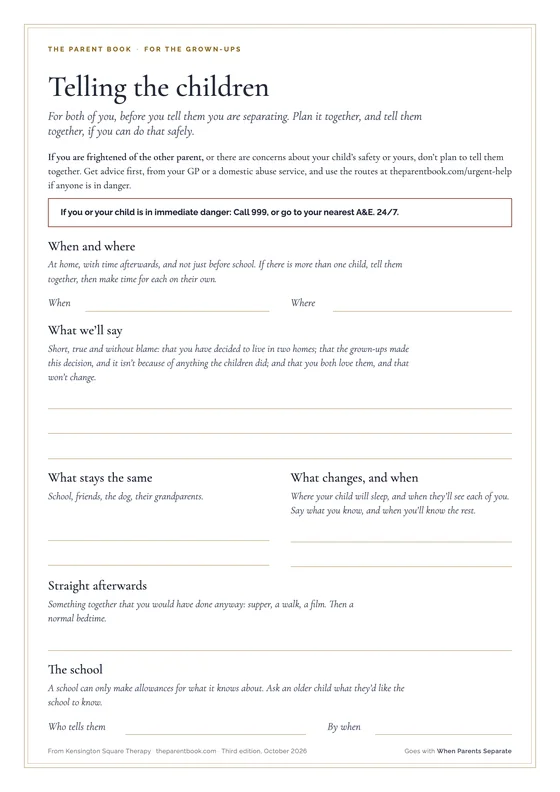 Telling the children
For the grown-ups · A4, two sides · With a subscription
Telling the children
For the grown-ups · A4, two sides · With a subscription
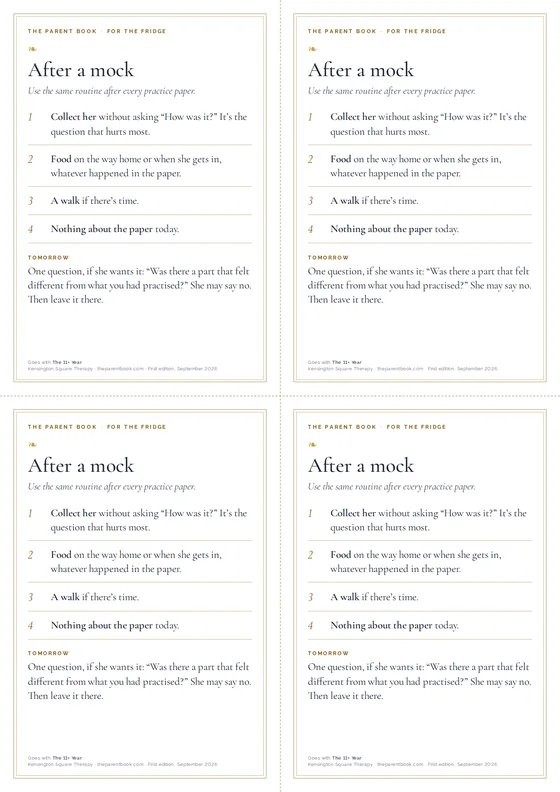 After a mock
For the fridge · A4, four cards to cut · With a subscription
After a mock
For the fridge · A4, four cards to cut · With a subscription
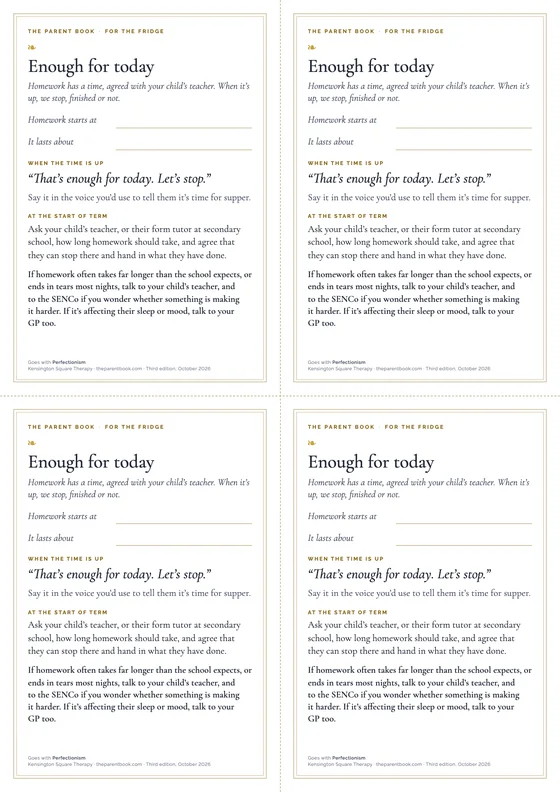 Enough for today
For the fridge · A4, four cards to cut · With a subscription
Enough for today
For the fridge · A4, four cards to cut · With a subscription
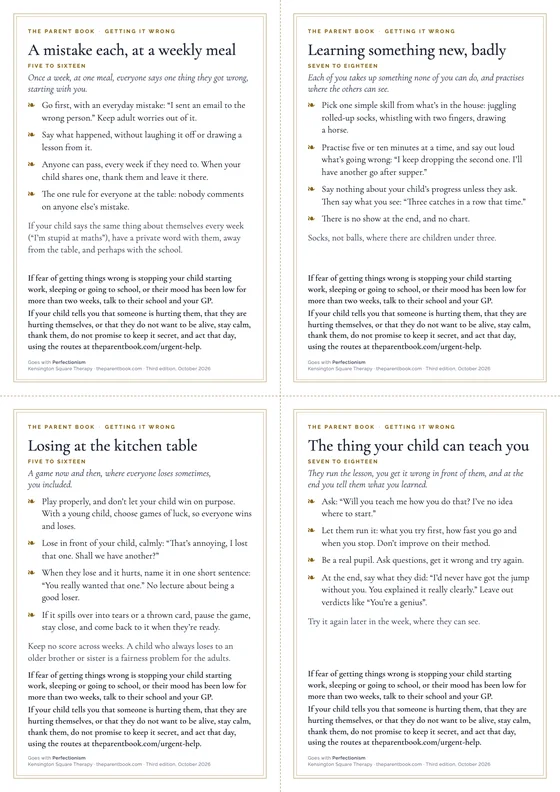 Getting it wrong
Cards to cut out · A4, four cards to cut · With a subscription
Getting it wrong
Cards to cut out · A4, four cards to cut · With a subscription
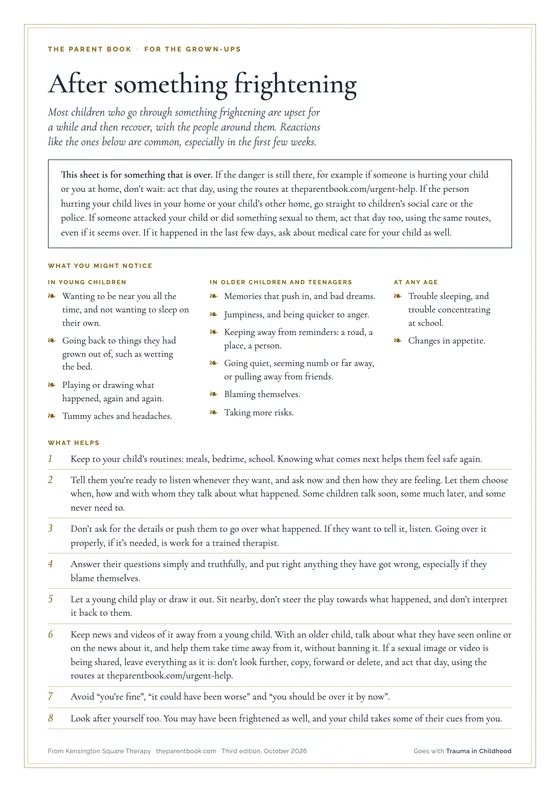 After something frightening
For the grown-ups · A4, two sides · With a subscription
After something frightening
For the grown-ups · A4, two sides · With a subscription
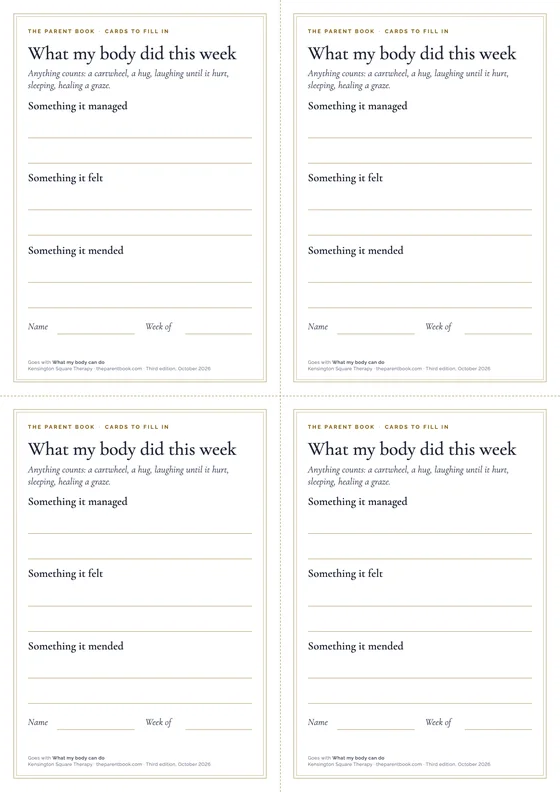 What my body can do
Cards to fill in · A4, two pages: four cards, and a page for you · With a subscription
What my body can do
Cards to fill in · A4, two pages: four cards, and a page for you · With a subscription
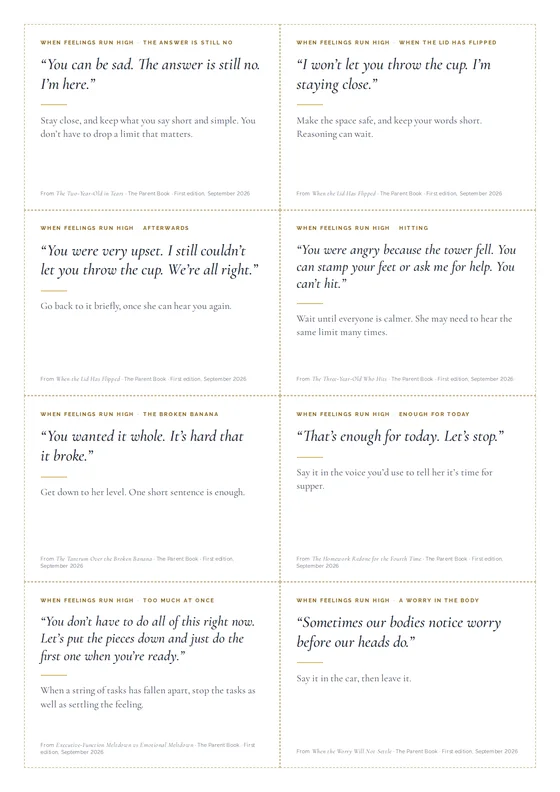 What to say: when feelings run high
Cards to cut out · A4, eight cards to cut · With a subscription
What to say: when feelings run high
Cards to cut out · A4, eight cards to cut · With a subscription
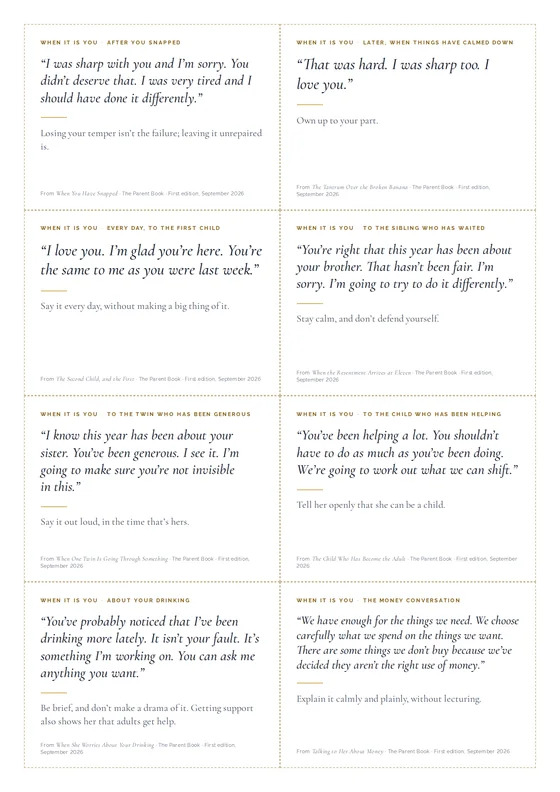 What to say: when it is you
Cards to cut out · A4, eight cards to cut · With a subscription
What to say: when it is you
Cards to cut out · A4, eight cards to cut · With a subscription
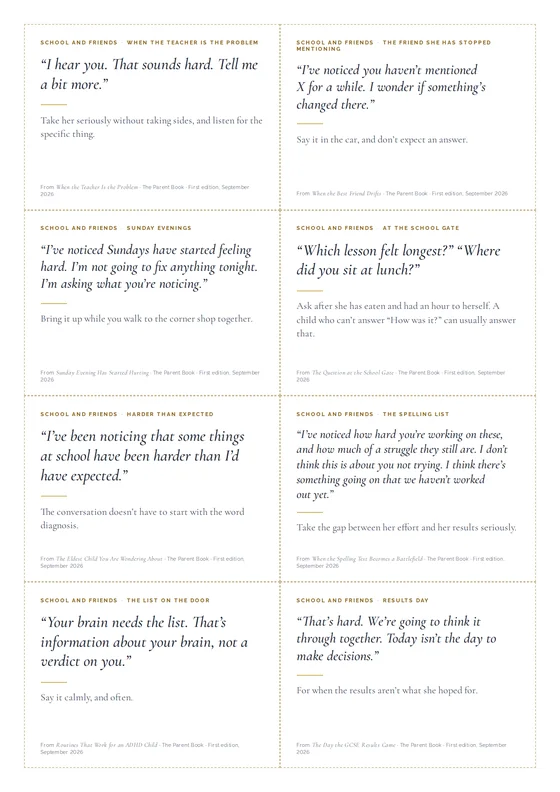 What to say: school and friends
Cards to cut out · A4, eight cards to cut · Free
What to say: school and friends
Cards to cut out · A4, eight cards to cut · Free
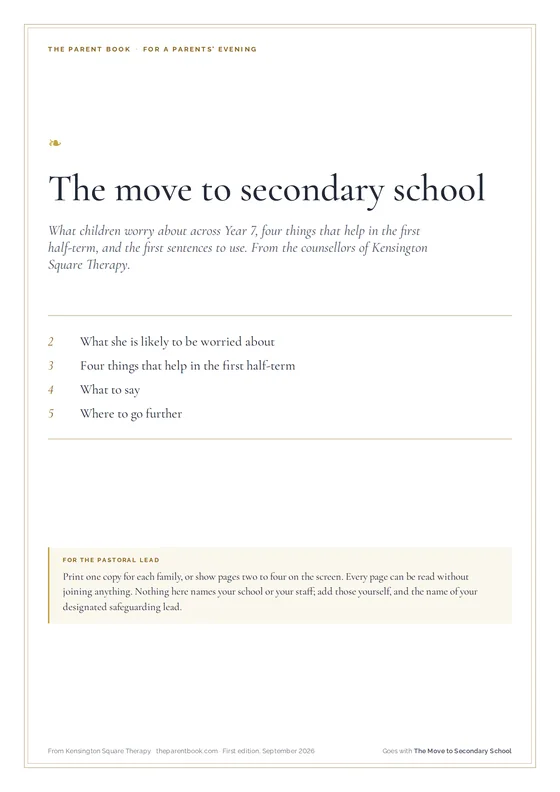 The move to secondary school, for a parents’ evening
For a parents’ evening · A4, five pages · Free
The move to secondary school, for a parents’ evening
For a parents’ evening · A4, five pages · Free
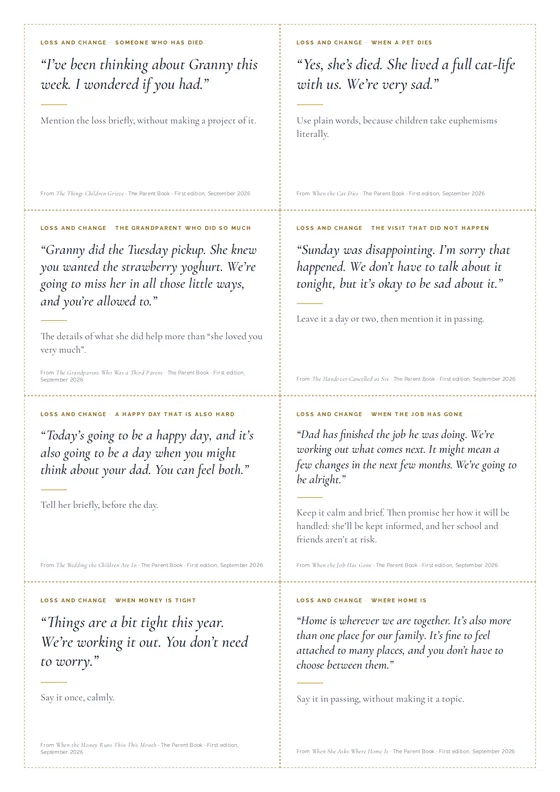 What to say: loss and change
Cards to cut out · A4, eight cards to cut · With a subscription
What to say: loss and change
Cards to cut out · A4, eight cards to cut · With a subscription
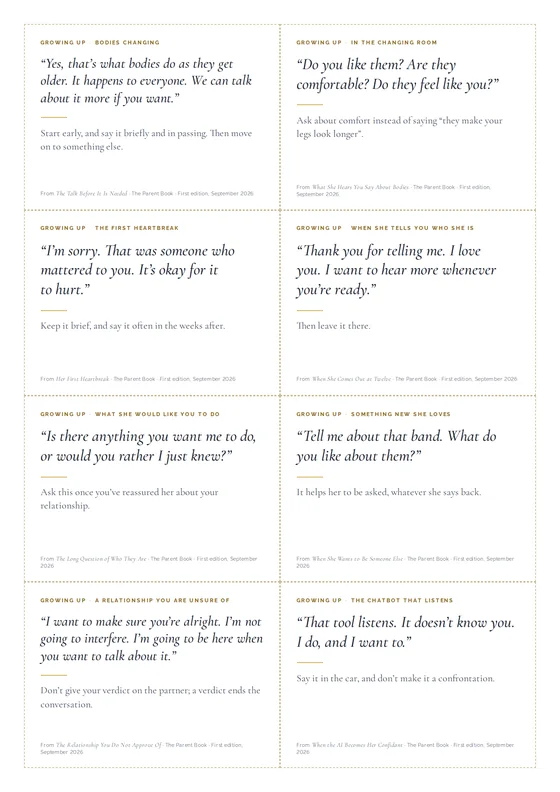 What to say: growing up
Cards to cut out · A4, eight cards to cut · With a subscription
What to say: growing up
Cards to cut out · A4, eight cards to cut · With a subscription
41 on emotional regulation
Chosen by the therapists who write the library: books for you and to read with your child, and pages from organisations we trust.
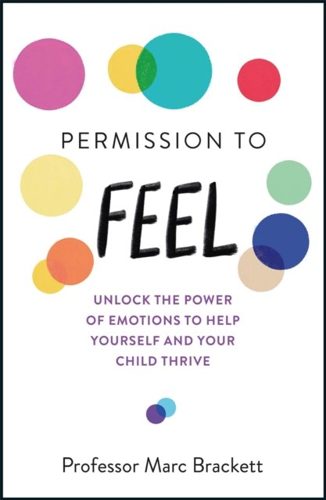
Also on this shelf

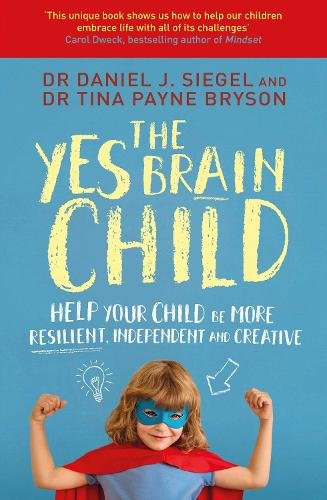
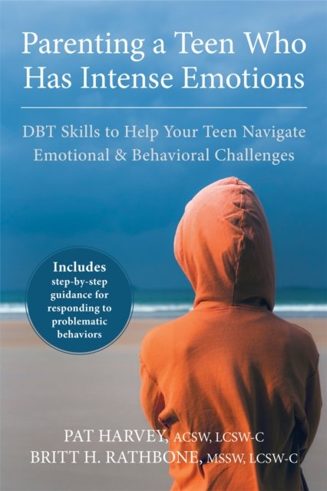
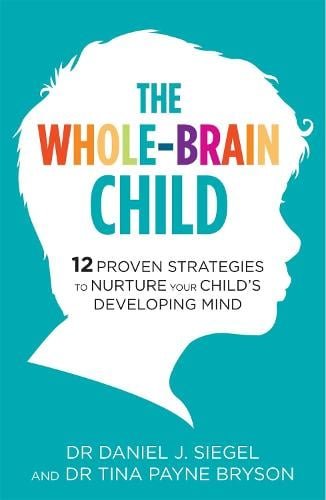
And ten more. Every book on the shelf, with a therapist’s note on what it is good for, is in the library.

Also on this shelf
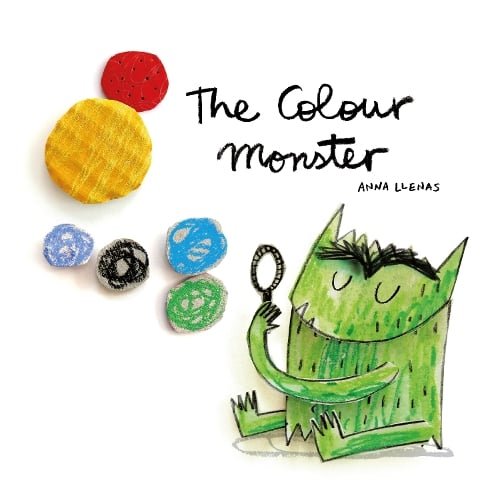
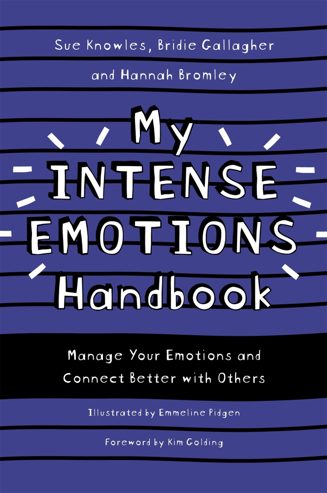
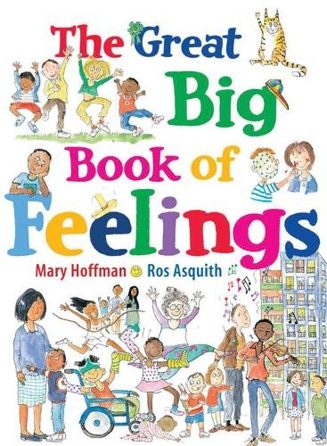
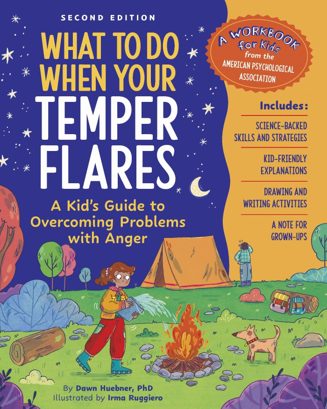
And 15 more. Every book on the shelf, with a therapist’s note on what it is good for, is in the library.
Child Mind Institute
Treats calming down as a skill children learn, not a switch they flip. It covers naming feelings early, validating before problem-solving, and planning ahead for hard moments.
NHS
How to help a child put feelings into words, including reading clues in their play, and what to do when a child is too frightened to talk or is showing it through behaviour.
Place2Be
Looks at the feelings that often hide behind angry outbursts, such as fear or shame, and offers calming techniques to use with a child before, during and after.
Child Mind Institute
Looks past the outburst to what might be driving it, such as anxiety, ADHD, sensory difficulties or learning problems, and explains why giving in tends to make meltdowns more frequent.
Place2Be
Resilience as something children build through manageable struggle and a steady adult, not something they are born with, with activities to try.
Place2Be
Walks through the escalation cycle, why both adult and child get caught in it, and specific ways to stay calm and bring the temperature down.
Nothing on this shelf is written for that age yet.
17 on emotional regulation
Podcast episodes, talks and films, each chosen for a reason.
Made by Mammas: The Podcast
A clinical psychologist on anger, big feelings and resilience in children, in a longer conversation.
Also on this shelf
The Therapy Edit
1800 Seconds on Autism
Dr Lisa Damour and Reena Ninan
ADDitude magazine
And two more. Every episode on the shelf, with a therapist’s note on what it is good for, is in the library.
YouTube · 2 min
Sesame Street, YouTube
Elmo learns to slow down his ‘monster’ feelings with belly breathing in a catchy song. A gentle way to practise calming together before it is needed.
Also on this shelf
YouTube · 8 min
Dr Dan Siegel, YouTube
YouTube · 4 min
Dr Dan Siegel, YouTube
YouTube · 5 min
Dr Ross Greene, YouTube
YouTube · 6 min
NSPCC, YouTube
And five more. Every film on the shelf, with a therapist’s note on what it is good for, is in the library.
Nothing on this shelf is written for that age yet.
Big feelings are ordinary, and the school sees more of them than you do. Tell them what you are seeing at home; see the GP if the storms are getting longer, more frequent, or frightening.
Where to start
The pastoral lead, the head of year, or the form tutor. Free, already knows your child, and often the quickest way to get something changed at school.
Before or alongside anything else. A school cannot act on what it has not been told, and what you bring is often what it did not have.
The gateway to everything the NHS offers a child: paediatric assessment, a referral to CAMHS, and support for you as the parent.
Ask for a double appointment. Describe the pattern over weeks rather than the worst single day, and say plainly what you are worried about. Bring a written list; the ten minutes go quickly.
A registered counsellor or psychotherapist, found through the BACP or NCPS directories. Waiting lists are shorter than the NHS and you choose who your child sits with.
When waiting is the problem, or when you want a particular kind of help. What to look for, and what to expect, is set out in our guide to finding a therapist.
For emotional regulation
Parenting Smart, written by the child mental health specialists who work in primary schools: short, practical articles and films on friendships, behaviour, worries and routines.
For a child of five to eleven, when you want something you can read in ten minutes and try tonight. Place2Be’s counselling itself is only through partner schools.
The UK’s young people’s mental health charity, with a free Parents Helpline, webchat and email, and a plain A to Z of the things parents worry about.
When you want to talk through a worry about your child with someone who has heard it before, or read a clear first explanation of a named concern. Not a crisis line.
Parents Helpline 0808 802 5544 · Mon, Thu, Fri 9.30am-4pm; Tue, Wed 9.30am-6pm · Webchat Mon-Fri 9.30am-4pm; email parents@youngminds.org.uk · Outside those hours the parents line is closed. The urgent routes on this page are open when it is not.
The Anna Freud Centre’s family wellbeing resources: careful, research-led reading on children’s emotional development, separation, self-care for parents, and supporting a child through treatment.
When you want depth from a clinical source rather than a quick explainer. Reading only; there is no helpline.
A free one-to-one webchat with a trained parenting coach, and a library of articles by age on behaviour, sleep, neurodiversity and family life.
When you want to talk it through with someone in writing, this week, without a referral.
Free one-to-one webchat with a parenting coach, Mon-Fri, with evening slots on Mon and Thu; check the site for current times · Parent Talk+ by phone or video for parents of children with additional needs, up to eight free sessions
Every organisation for emotional regulation, and when each is the right call Finding a therapist