The chapter to start with
When Reassurance Stops Working
For parents whose child is anxious and can’t be talked out of it, however often the adults around them try.
10 min read
Read the chapter Your first chapter is free to read in full.
↑ ↓ to moveEnter to openEsc to close
Worry, mood and big feelings

Anxiety is one of the most common things parents bring to us in therapy, and it looks different at each age: the toddler who won’t be put down, the seven-year-old who can’t sleep, the teenager who has stopped going to school. These pages are for parents at any of those stages, because what helps changes as a child grows.
What to do first, what helps and who else can help are free to read and to print. So is the first chapter you open.
What the library holds on anxiety
From the therapists
Anxiety is one of the most treatable things children bring to us. It’s the body deciding something is dangerous before the thinking part of the brain has had a say, and it isn’t a flaw in your child’s character, or in yours.
From the chapters
Sit close and slow your own breathing. Being next to a calm adult helps a child’s body settle, and that does more than anything clever you could say. Save the words for when the worst has passed.
Try “That sounds really hard” or “You look really worried.” Naming the feeling makes it seem less strange, and it shifts brain activity from the alarm centre towards the language centre.
Say “You kept going when that was hard”, not “You’re so clever”. The first tells your child what worked; the second adds pressure.
Do it often: “I burnt the dinner.” “I forgot the appointment.” “I read the email wrong.” Your child copies how you deal with your own mistakes far more than anything you tell them.
11 on anxiety
The long reads, each on one situation, written by a therapist.
The chapter to start with
For parents whose child is anxious and can’t be talked out of it, however often the adults around them try.
10 min read
Read the chapter Your first chapter is free to read in full.
Nothing on this shelf is written for that age yet.
22 on anxiety
Short pieces for the moment in front of you, each with things to try.
Big feelings
An anxious child rarely tells you they’re worried; it comes out as stomach aches, refusals and repeated questions.
Try this
From the tip
If the worry goes on for weeks, or your child needs the same answer again and again before they can settle, talk to your GP.
Friendships & social life
Many young children take a while to warm up; stay close, let your child answer in their own way, and don’t call them shy.
Try this
From the tip
Talk to your health visitor or GP if your child doesn’t warm up even when given time, if their fear is severe and gets in the way of everyday life, or if they talk freely at home but have not spoken at nursery or school for a month or more, or for two months if they have only just started there.
Tell the health visitor or GP too if your child rarely responds to their name, rarely shows you things they are interested in, or doesn’t seem to react to sounds or voices.
If your child is frightened of one person in particular, don’t coax them towards that person. If you think someone may be hurting your child, or your child tells you so, stay calm, thank them if they have told you, don’t promise to keep it secret, and act that day. If the person lives in your home or your child’s other home, go straight to children’s social care or the police. A national child protection helpline will talk it through with you. NSPCC, 0808 800 5000. Email help@nspcc.org.uk. Mon-Fri 10am-4pm by phone; email 11am-4pm, seven days a week. An email sent when the service is closed is not received. If the NSPCC service is closed and the concern cannot wait, call the police on 101. You can also contact the child’s local out-of-hours children’s social care, social work or social services team. If a child is in immediate danger, call 999. Help is free.
Big feelings
A teenager with good grades and teachers who say everything’s fine can still be anxious and exhausted.
Try this
More quick tips on anxiety
Friendships & social life
Your child’s stomach ache is real, and pushing them through party after party makes the next one harder.
2 min read · Ages 7 to 13
Big feelings
An anxious high achiever can look exactly like a teenager with healthy ambition.
2 min read · Ages 11 to 18
School & pressure
Staying away from school can make a child’s anxiety about going in worse, so start working with the school early.
2 min read · Ages 11 to 16
School & pressure
Say goodbye the same short way every morning, and hand your child to an adult they know.
2 min read · Under 7
Big feelings
If your child needs the same answer again and again before they can settle, it may be OCD, so talk to your GP.
2 min read · Ages 7 to 18
Big feelings
Most teenagers recover from something frightening with the people around them; keep your teenager’s routines going, and let them choose when to talk.
2 min read · Ages 11 to 18
Big feelings
A change in your child’s dose is information, and in most cases it doesn’t mean anything is going wrong.
2 min read · Ages 11 to 18
Bodies & growing up
At this age a monster can feel real, so what settles your child is a room that stays the same all night and a parent who comes back when promised.
2 min read · Under 7
Big feelings
A diagnosis puts a name to what your child has been going through.
2 min read · Ages 11 to 18
Big feelings
Intrusive thoughts are part of OCD, and even the most frightening say nothing about who a child is or what they want.
2 min read · Ages 9 to 16
School & pressure
In the week before exams, protect your teenager’s sleep, meals and some peace at home.
2 min read · Ages 13 to 18
Family transitions
After a long absence, your child’s place at school is still there, but stepping back into it takes planning.
2 min read · Ages 7 to 13
School & pressure
When Sunday evenings start to hurt, there is usually more than one reason, so slow down before deciding which conversation to have.
2 min read · Ages 7 to 13
School & pressure
If every mark changes how your teenager sees themselves, talk about the work more than the grade.
2 min read · Ages 13 to 18
Neurodiversity
Keep the evening before an assessment as much like any other evening as you can.
2 min read · Ages 5 to 13
Parent wellbeing
Lying awake night after night is a sign of overload, and a reason to see your GP.
2 min read
Big feelings
Children often hide OCD at school, and a short conversation can help stop staff feeding it without meaning to.
2 min read · Ages 7 to 18
Big feelings
Ordinary bedtime routines comfort a child; an OCD ritual runs on fear, and it changes best one step at a time.
2 min read · Ages 5 to 11
School & pressure
Put the admissions file away three evenings a week, so your child isn’t doing the test for two people.
2 min read · Ages 9 to 11
The rest of each tip, with more to try and why it works, is in the library.
Nothing on this shelf is written for that age yet.
9 on anxiety
Small, repeatable things to do with your child, with what to watch for and when to get help.
To do together · About 5 min
A short noticing game, and for younger children a slow breath traced with a finger. Practise them together on calm days, so your child already knows them on a hard one.
What it is for. In our experience, an anxious child is helped more by something they can do themselves than by reassurance. If they learn this when nothing is wrong, they will already know it on a harder day.
Safety. After something frightening, let your child choose their senses, and do not ask them to close their eyes.
When to get help. This is practice, not a treatment. Talk to your GP about recurring panic, worry that stops your child going to school, sleeping or eating, frightening intrusive thoughts, or several weeks of waking in fear. If your child tells you that someone is hurting them, that they are hurting themselves, or that they do not want to be alive, stay calm, thank them for telling you, do not promise to keep it secret, and act that day, using the routes under “If you need help right now”, at the foot of every page.
The other five steps, and your part in it, are in the library.
More to do together
To do together
For an everyday fear, such as dogs, the dark or a new club: together you write the steps from easiest to hardest, and your child practises each one until it feels easy before they move up.
About 15 min · Ages 5 to 16 · With a sheet to print
To do together
Notice what you do to spare your child a worry, then change one thing, telling them first and staying kind.
About 15 min · Ages 7 to 16 · With a sheet to print
To do together
Ten minutes at the same time each afternoon for your child’s worries. If one comes up at another time, you listen, write it down and save it for then.
About 10 min · Ages 5 to 13 · With a sheet to print
To do together
Agree with the school and your child how they get into school each morning: who meets them, and where they go first.
About 30 min · Ages 7 to 16 · With a sheet to print
To do together
On a plain outline of a body, your child marks where they first notice anger, worry and sadness.
About 20 min · Under 11 · With a sheet to print
To do together
The same routine after every practice paper: collect your child, give them something to eat, walk home, and ask nothing about the paper that day.
About 30 min · Ages 9 to 18 · With a sheet to print
To do together
Before term, do the route once together and once with your child leading, and draw the few rooms that matter.
Two trips, and an afternoon · Ages 9 to 13 · With a sheet to print
To do together
Before something new, such as the dentist or a new classroom, write a short story with your child about what usually happens there, and read it together in the days before.
About 20 min · Under 11 · With a sheet to print
Nothing on this shelf is written for that age yet.
38 on anxiety
Made to be printed, kept, and handed on.
To print and keep
What to do first, what helps, a few things to try and who else can help, together in one guide. Free to print and keep, or to hand to the other parent, a grandparent or the school.
Who else can help with anxiety, on a sheet of its own.
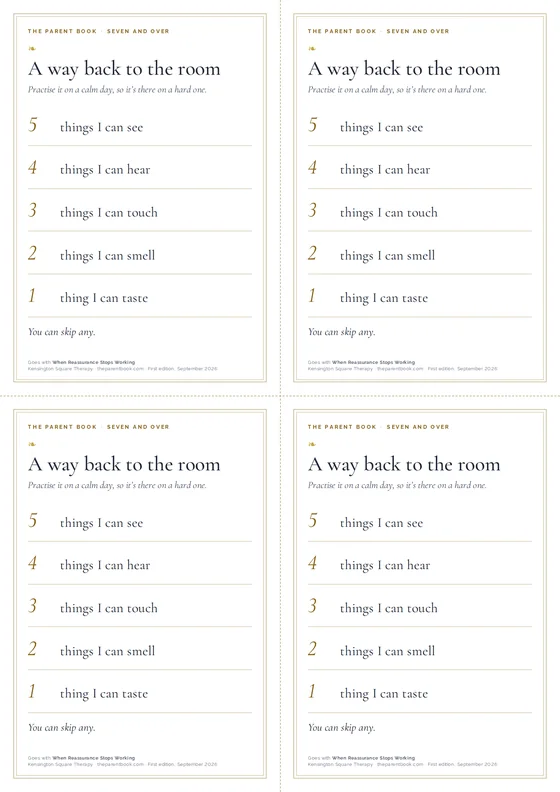 A way back to the room
Pocket card · A4, four cards to cut, two sides · With a subscription
A way back to the room
Pocket card · A4, four cards to cut, two sides · With a subscription
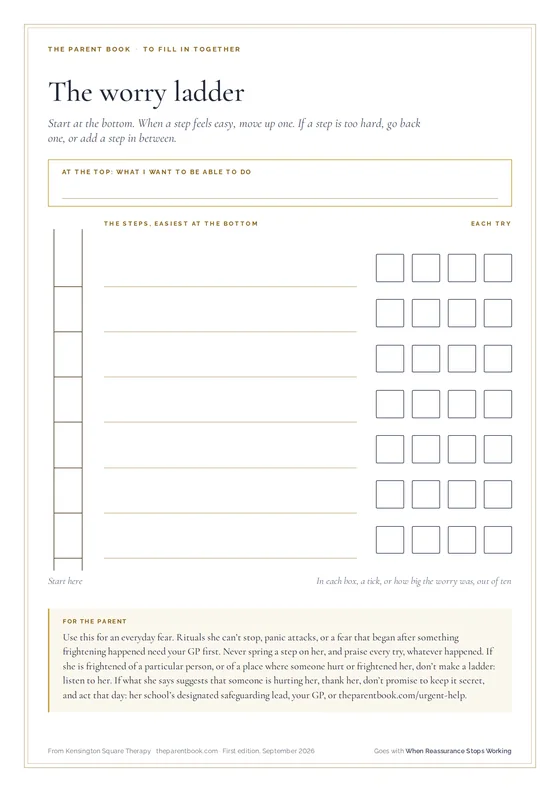 The worry ladder
To fill in together · A4 · Free
The worry ladder
To fill in together · A4 · Free
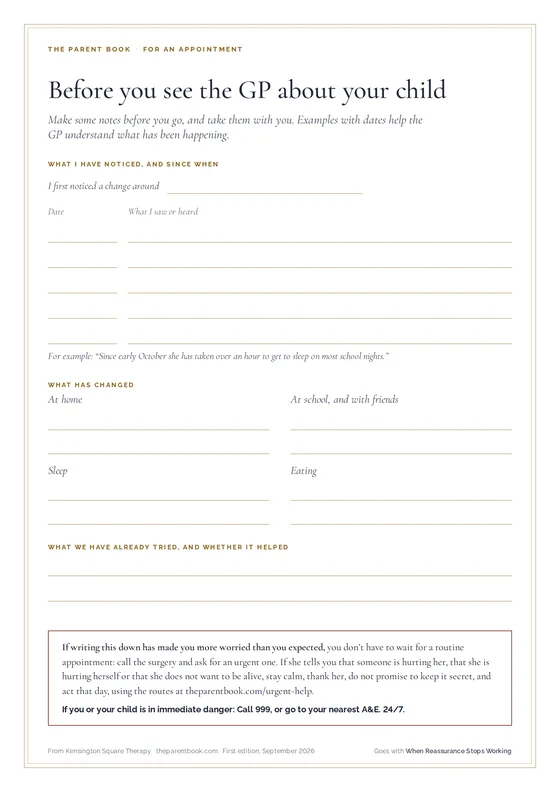 Before you see the GP about your child
For an appointment · A4, two sides · Free
Before you see the GP about your child
For an appointment · A4, two sides · Free
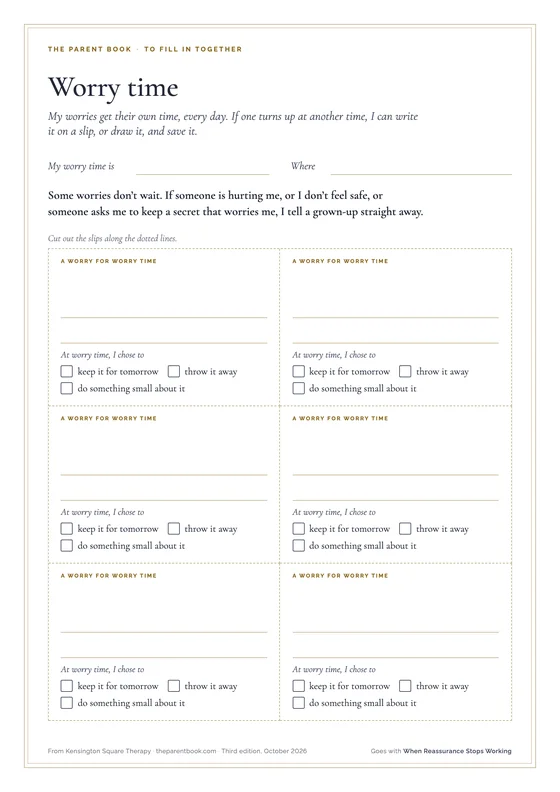 Worry time
To fill in together · A4, two pages · With a subscription
Worry time
To fill in together · A4, two pages · With a subscription
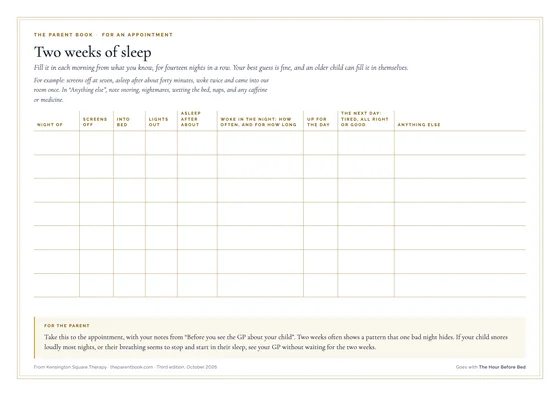 Two weeks of sleep
For an appointment · A4 landscape, two pages · With a subscription
Two weeks of sleep
For an appointment · A4 landscape, two pages · With a subscription
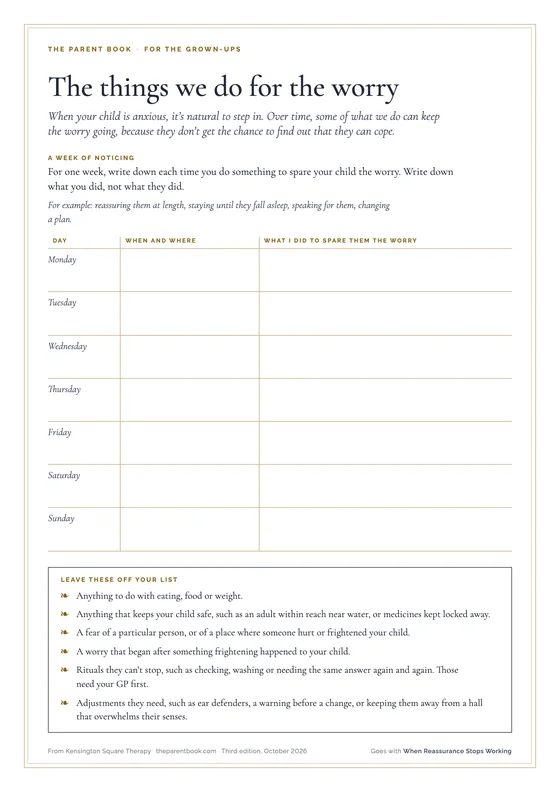 The things we do for the worry
For the grown-ups · A4, two sides · With a subscription
The things we do for the worry
For the grown-ups · A4, two sides · With a subscription
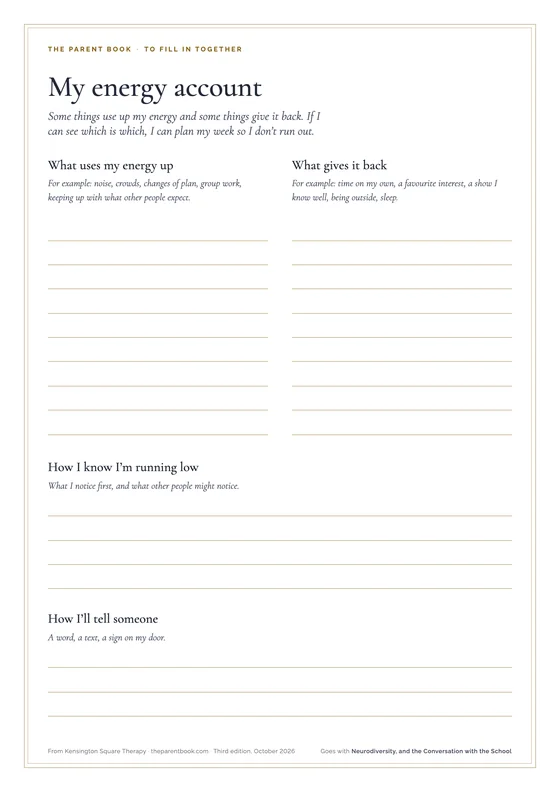 My energy account
To fill in together · A4, two sides · With a subscription
My energy account
To fill in together · A4, two sides · With a subscription
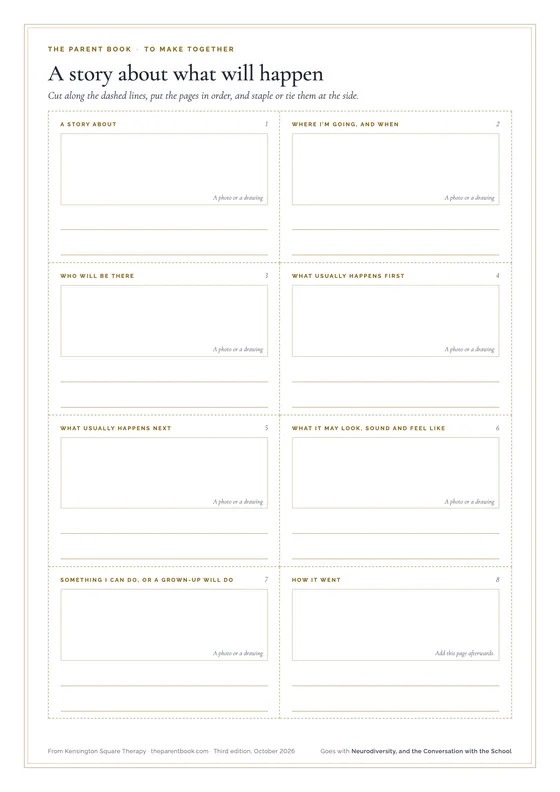 A story about what will happen
To make together · A4, two pages · With a subscription
A story about what will happen
To make together · A4, two pages · With a subscription
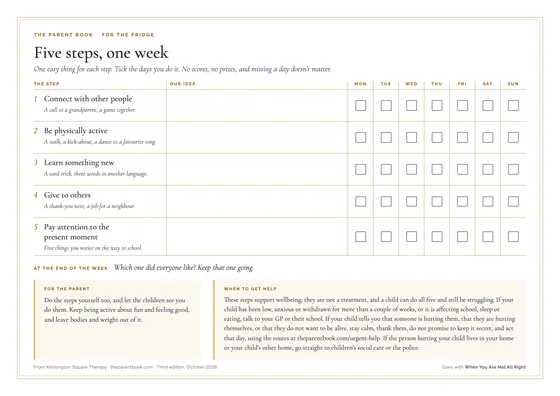 Five steps, one week
For the fridge · A4 landscape · With a subscription
Five steps, one week
For the fridge · A4 landscape · With a subscription
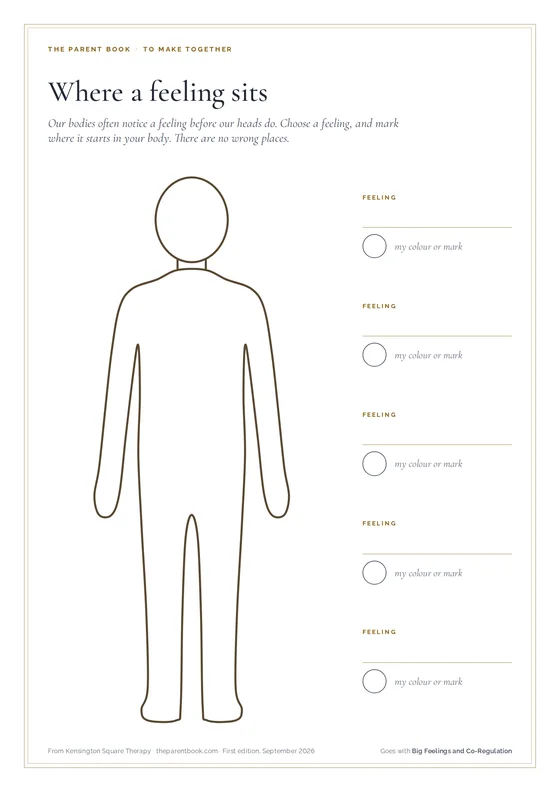 Where a feeling sits
To make together · A4, two sides · With a subscription
Where a feeling sits
To make together · A4, two sides · With a subscription
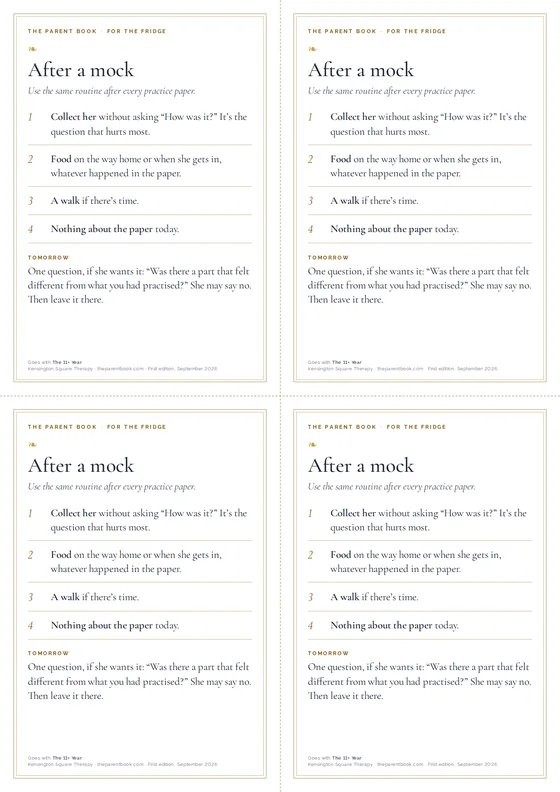 After a mock
For the fridge · A4, four cards to cut · With a subscription
After a mock
For the fridge · A4, four cards to cut · With a subscription
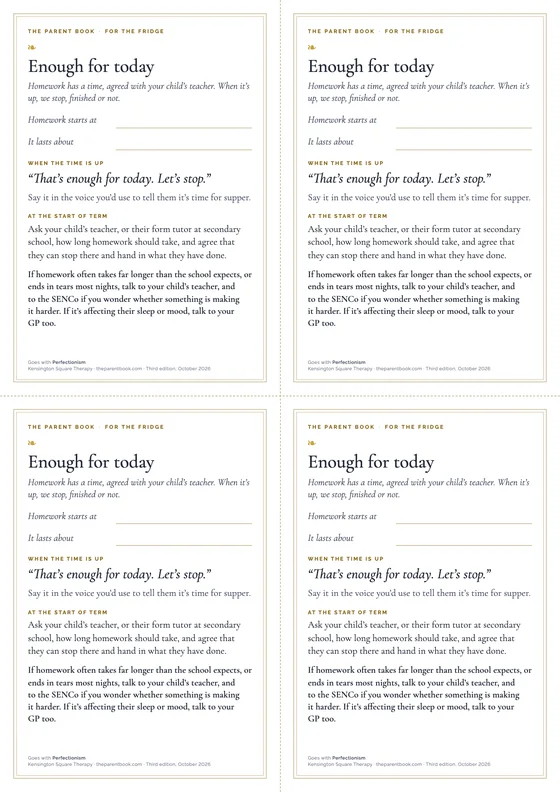 Enough for today
For the fridge · A4, four cards to cut · With a subscription
Enough for today
For the fridge · A4, four cards to cut · With a subscription
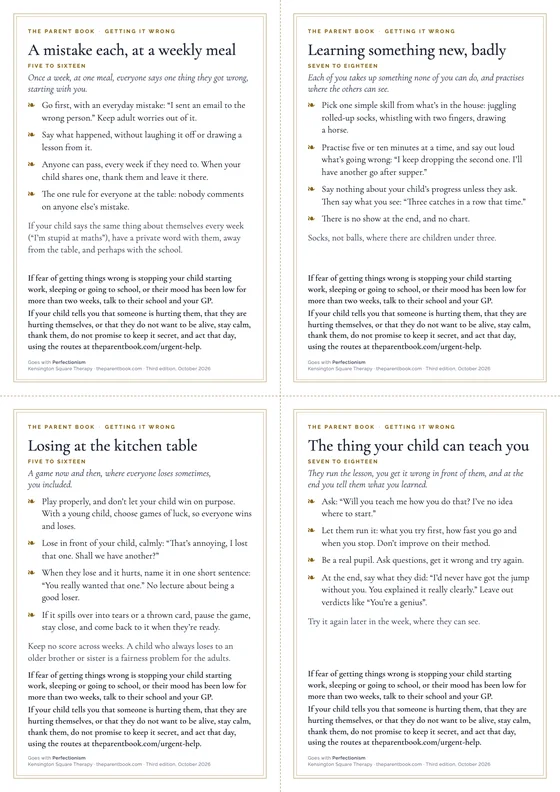 Getting it wrong
Cards to cut out · A4, four cards to cut · With a subscription
Getting it wrong
Cards to cut out · A4, four cards to cut · With a subscription
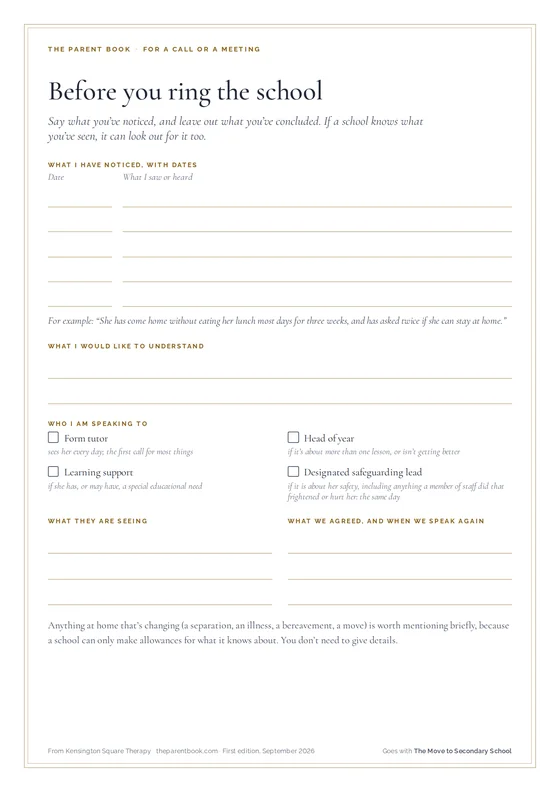 Before you ring the school
For a call or a meeting · A4 · Free
Before you ring the school
For a call or a meeting · A4 · Free
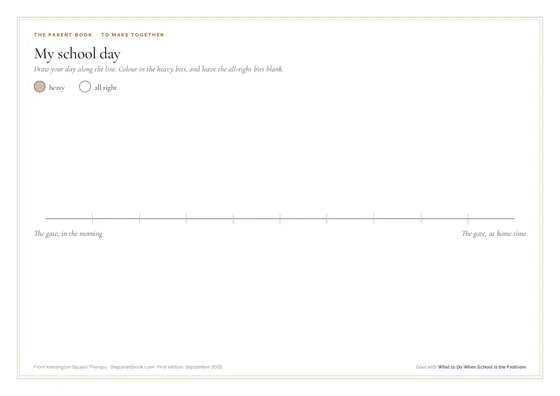 The school day, drawn as a line
To make together · A4 landscape, two pages · With a subscription
The school day, drawn as a line
To make together · A4 landscape, two pages · With a subscription
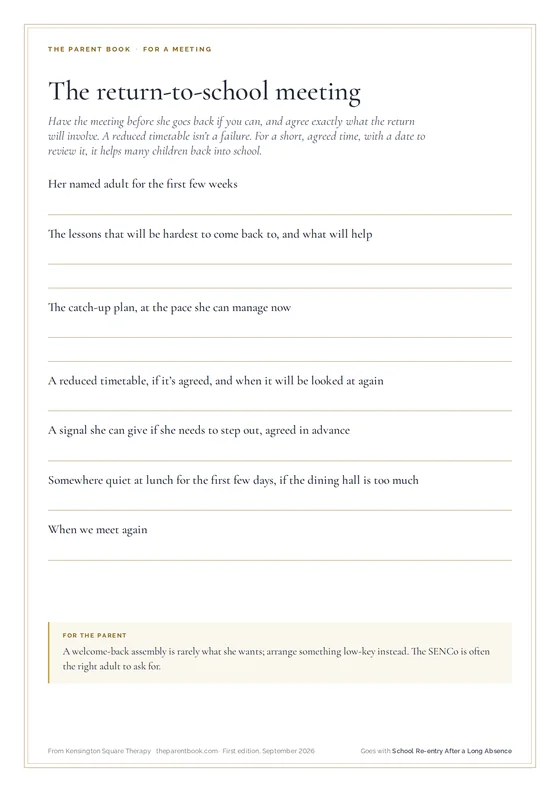 The return-to-school meeting
For a meeting · A4 · Free
The return-to-school meeting
For a meeting · A4 · Free
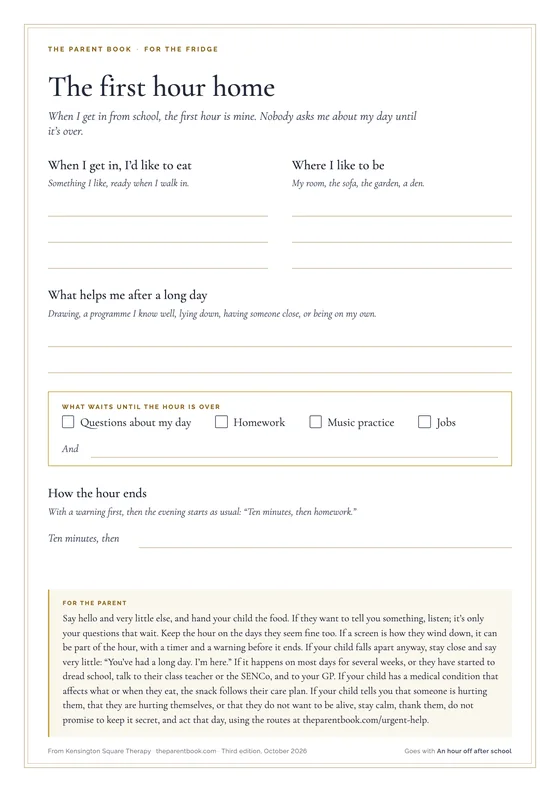 The first hour home
For the fridge · A4 · With a subscription
The first hour home
For the fridge · A4 · With a subscription
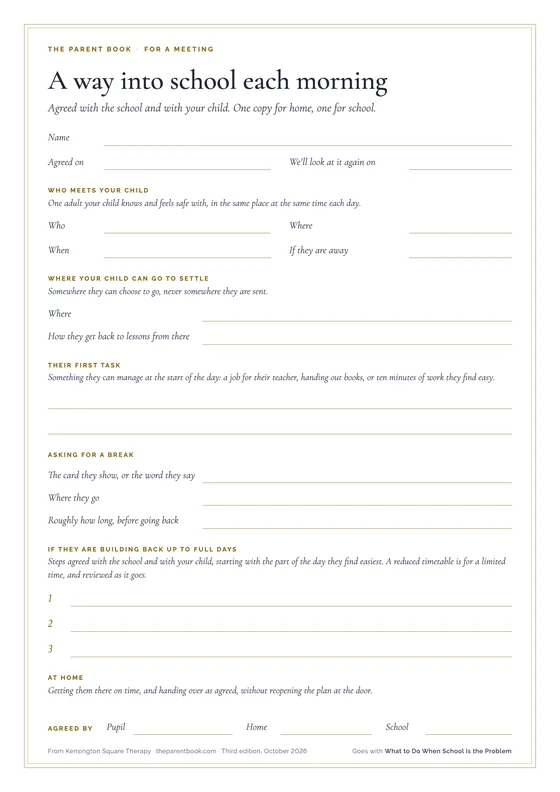 A way into school each morning
For a meeting · A4, two pages · With a subscription
A way into school each morning
For a meeting · A4, two pages · With a subscription
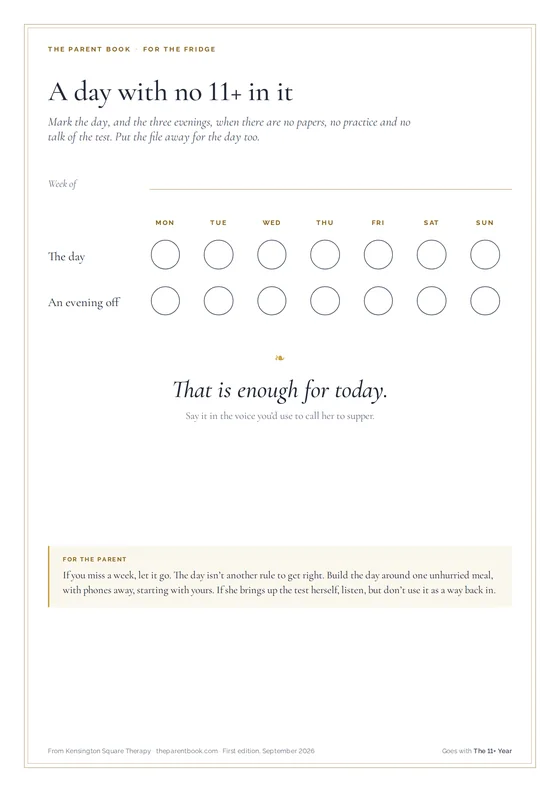 A day with no 11+ in it
For the fridge · A4 · With a subscription
A day with no 11+ in it
For the fridge · A4 · With a subscription
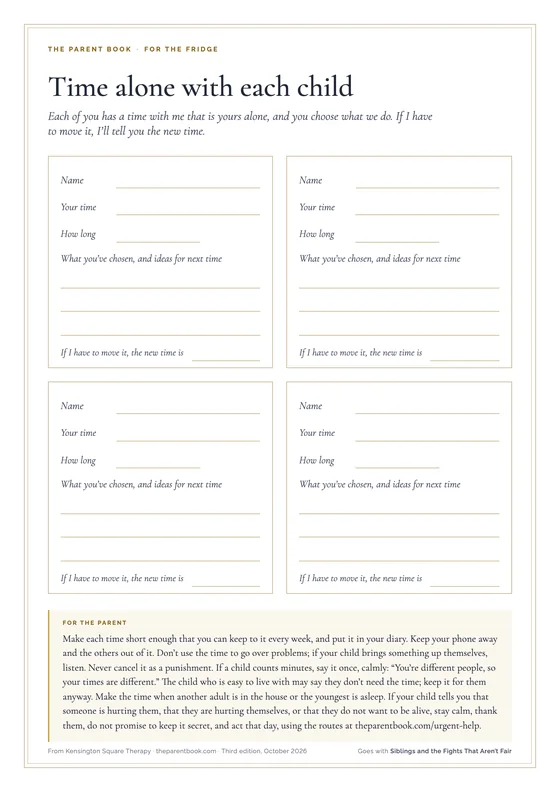 Time alone with each child
For the fridge · A4 · With a subscription
Time alone with each child
For the fridge · A4 · With a subscription
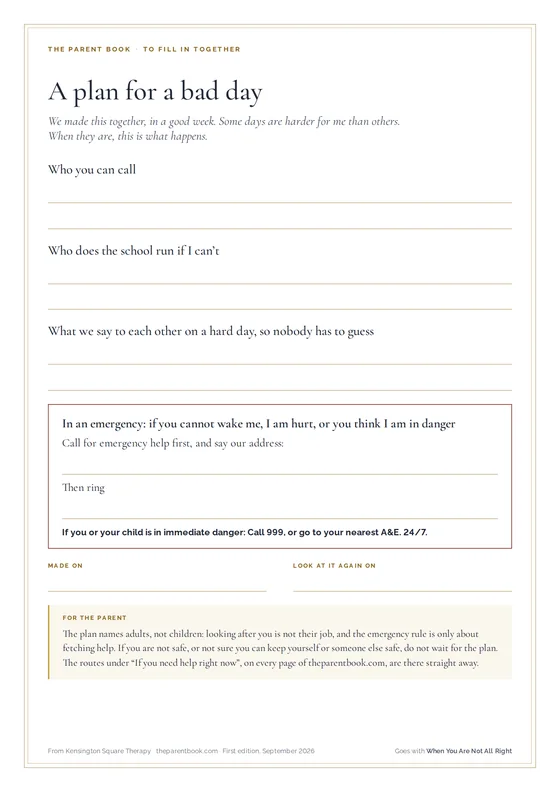 A plan for a bad day
To fill in together · A4 · Free
A plan for a bad day
To fill in together · A4 · Free
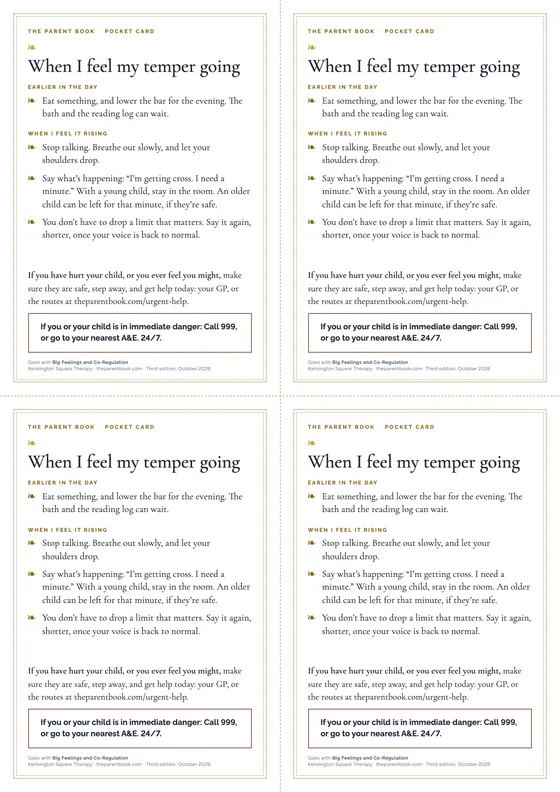 Putting it right
Pocket card · A4, four cards to cut, two sides · With a subscription
Putting it right
Pocket card · A4, four cards to cut, two sides · With a subscription
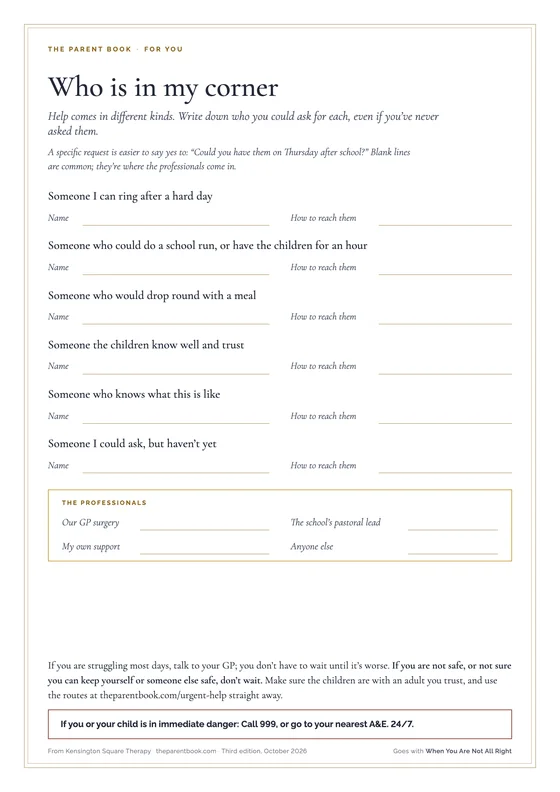 Who is in my corner
For you · A4 · With a subscription
Who is in my corner
For you · A4 · With a subscription
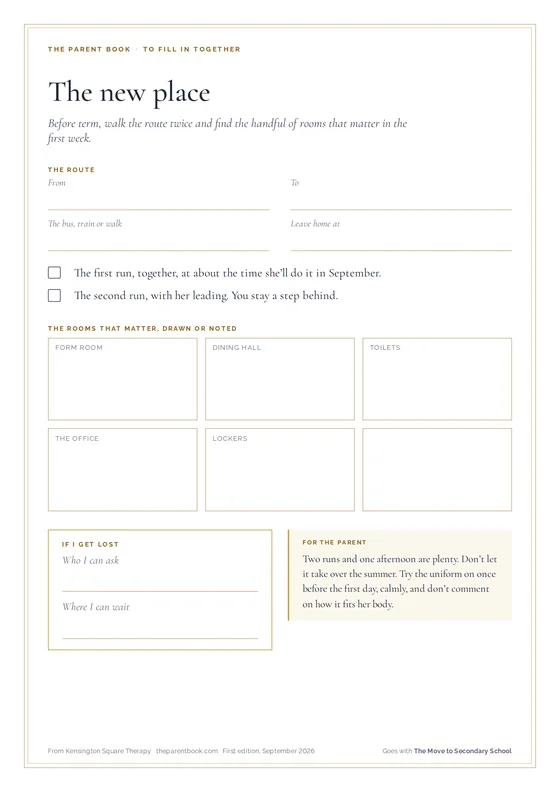 The new place
To fill in together · A4 · With a subscription
The new place
To fill in together · A4 · With a subscription
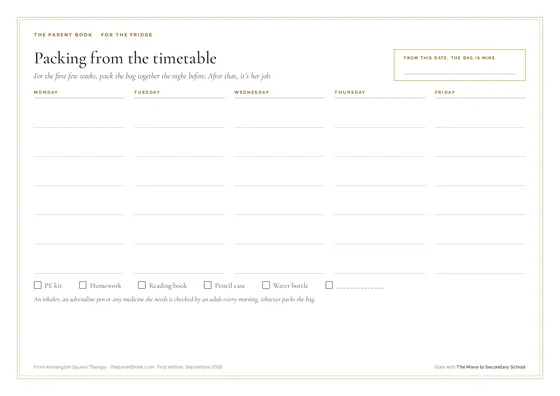 Packing from the timetable
For the fridge · A4 landscape · With a subscription
Packing from the timetable
For the fridge · A4 landscape · With a subscription
 What I will miss
To keep · A4, two pages · With a subscription
What I will miss
To keep · A4, two pages · With a subscription
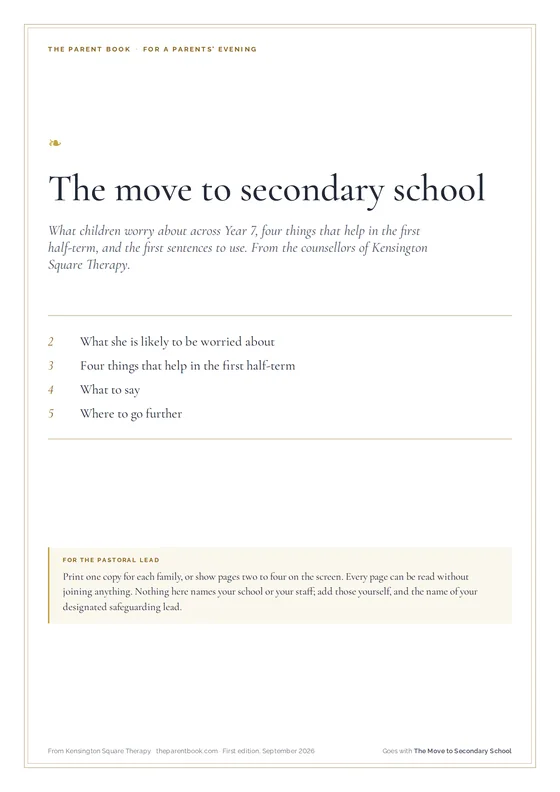 The move to secondary school, for a parents’ evening
For a parents’ evening · A4, five pages · Free
The move to secondary school, for a parents’ evening
For a parents’ evening · A4, five pages · Free
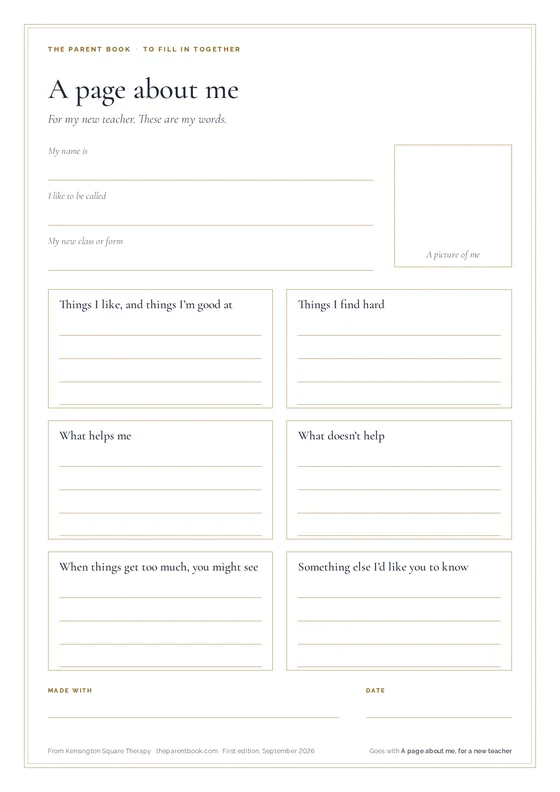 A page about me
To fill in together · A4, two pages · With a subscription
A page about me
To fill in together · A4, two pages · With a subscription
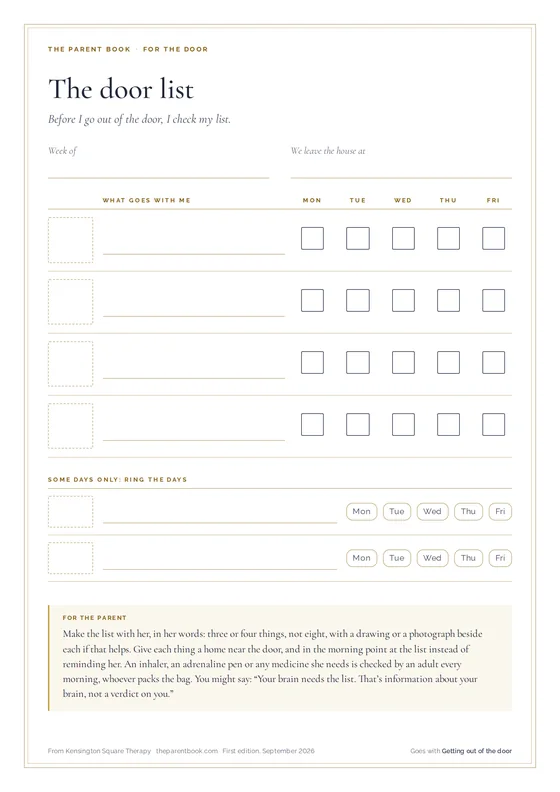 The door list
For the door · A4 · With a subscription
The door list
For the door · A4 · With a subscription
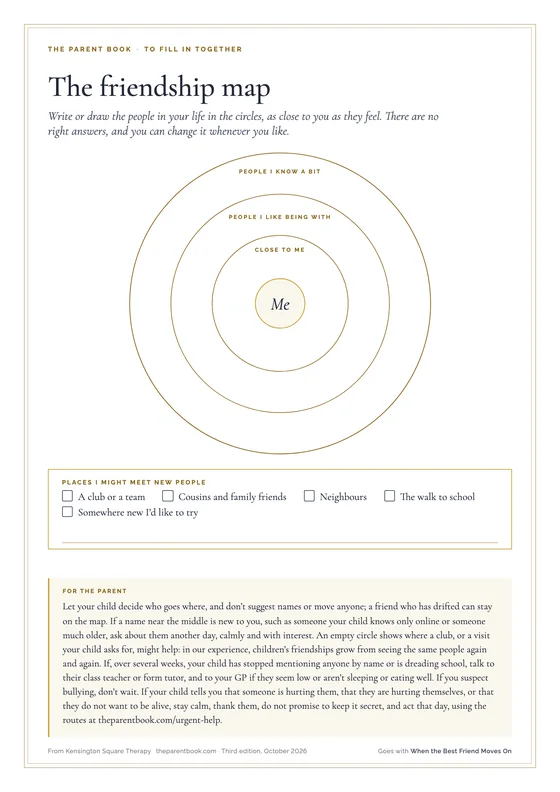 The friendship map
To fill in together · A4 · With a subscription
The friendship map
To fill in together · A4 · With a subscription
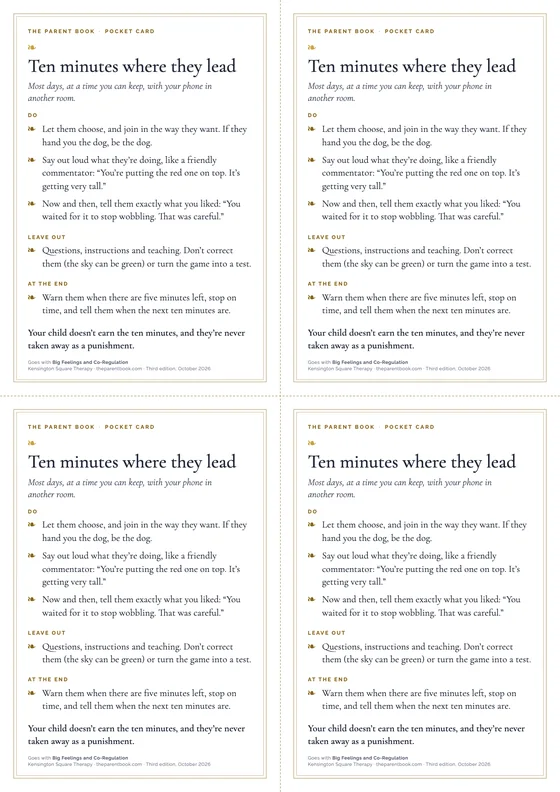 Ten minutes where they lead
Pocket card · A4, four cards to cut, two sides · With a subscription
Ten minutes where they lead
Pocket card · A4, four cards to cut, two sides · With a subscription
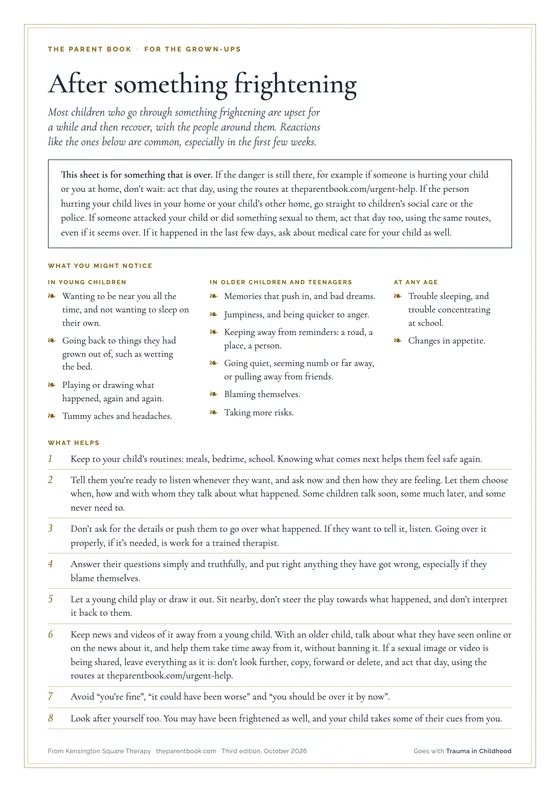 After something frightening
For the grown-ups · A4, two sides · With a subscription
After something frightening
For the grown-ups · A4, two sides · With a subscription
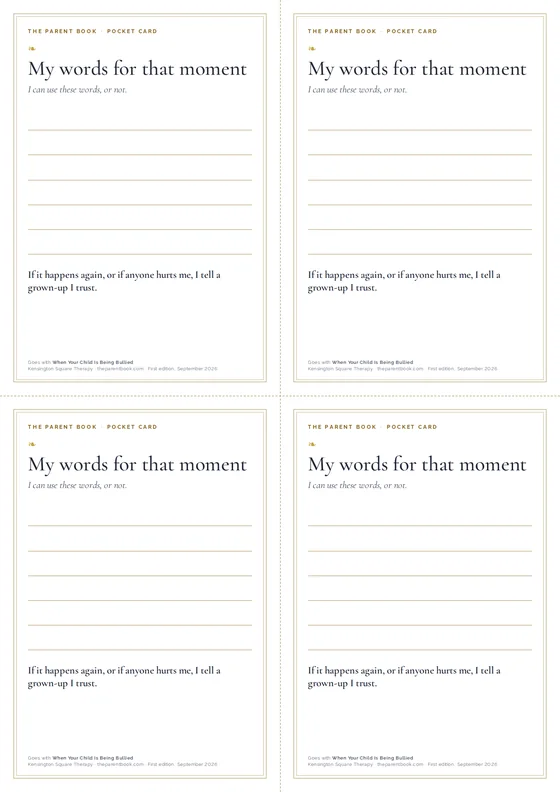 My words for that moment
Pocket card · A4, four cards to cut · With a subscription
My words for that moment
Pocket card · A4, four cards to cut · With a subscription
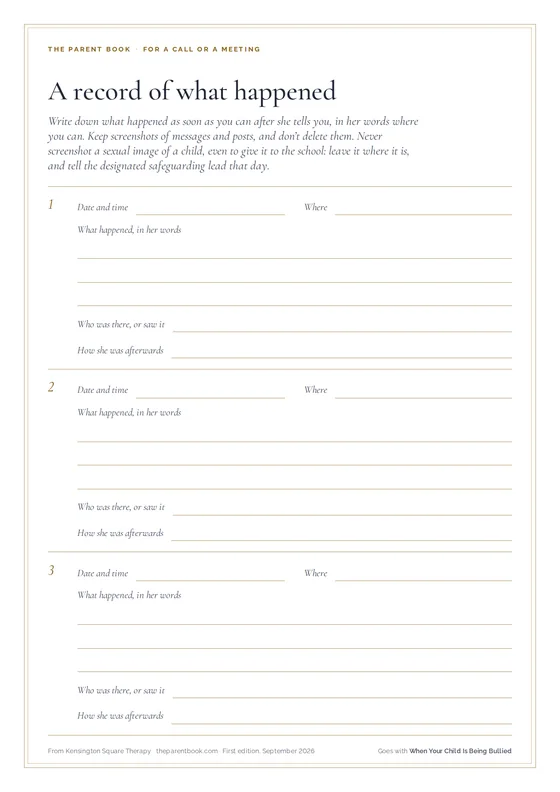 A record of what happened
For a call or a meeting · A4, two pages · Free
A record of what happened
For a call or a meeting · A4, two pages · Free
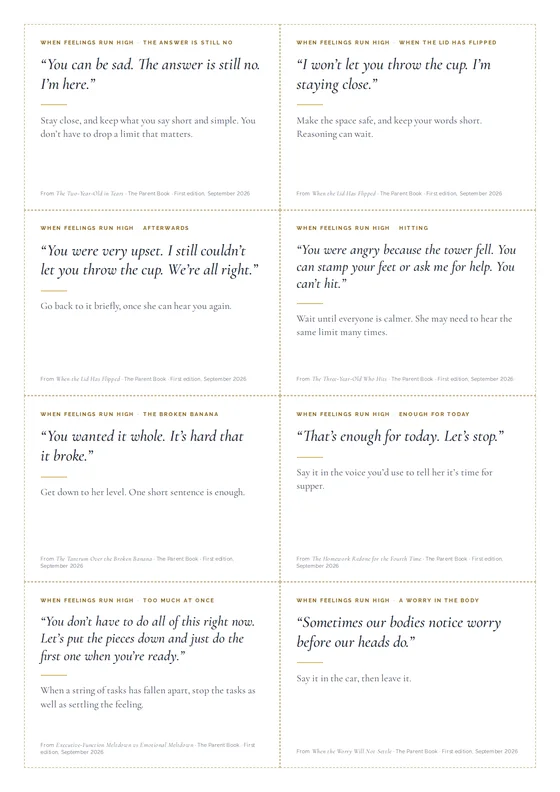 What to say: when feelings run high
Cards to cut out · A4, eight cards to cut · With a subscription
What to say: when feelings run high
Cards to cut out · A4, eight cards to cut · With a subscription
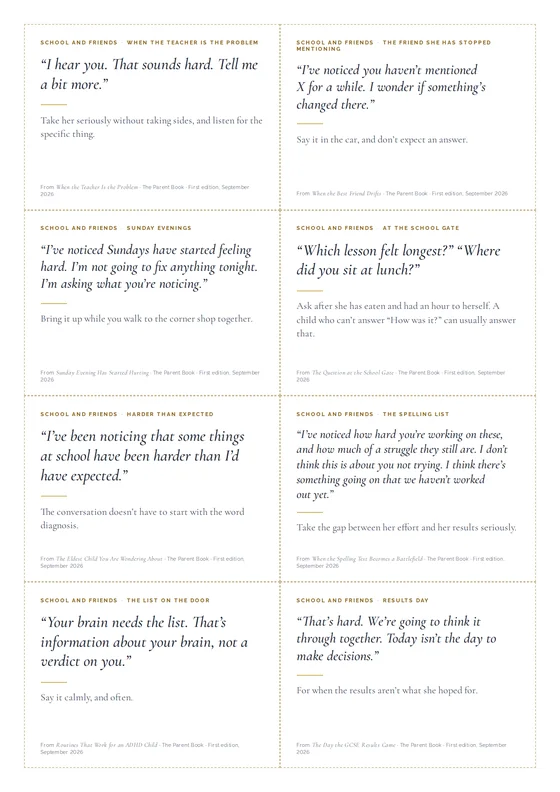 What to say: school and friends
Cards to cut out · A4, eight cards to cut · Free
What to say: school and friends
Cards to cut out · A4, eight cards to cut · Free
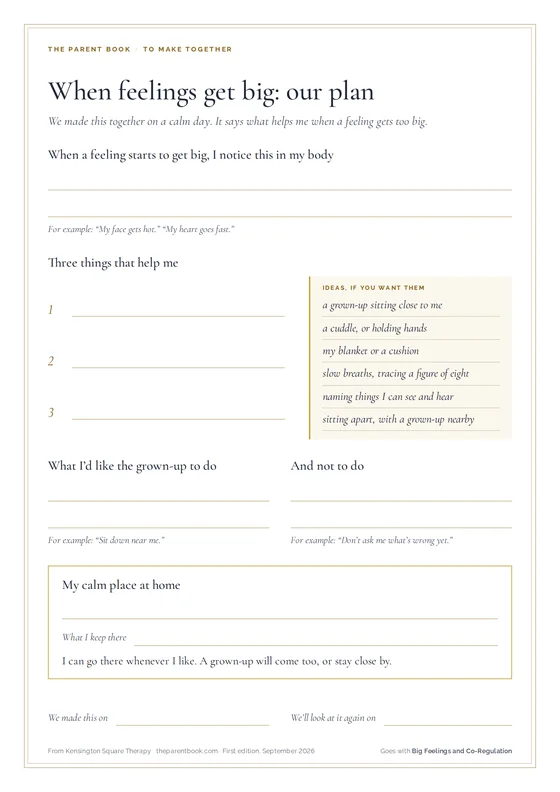 When feelings get big: our plan
To make together · A4, two sides · With a subscription
When feelings get big: our plan
To make together · A4, two sides · With a subscription
56 on anxiety
Chosen by the therapists who write the library: books for you and to read with your child, and pages from organisations we trust.
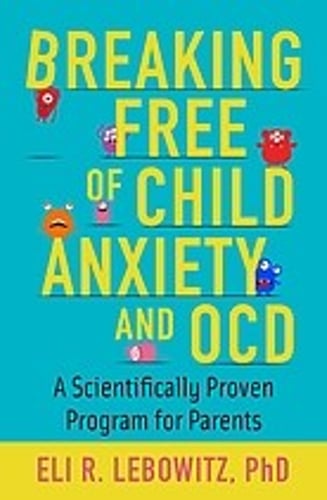
Also on this shelf
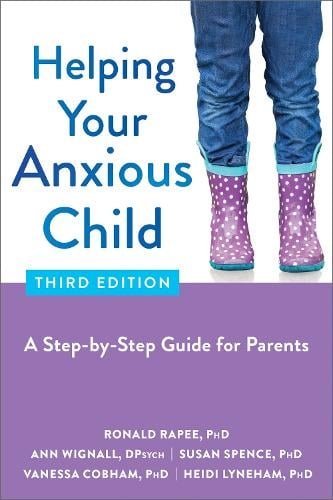
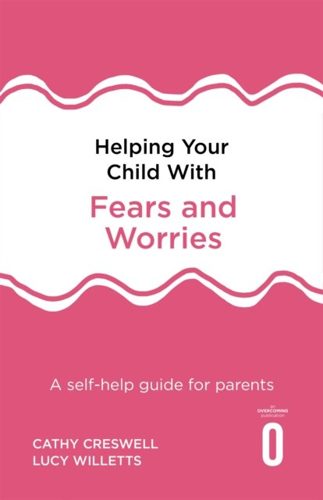
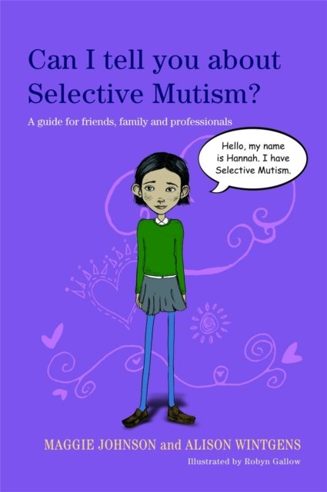
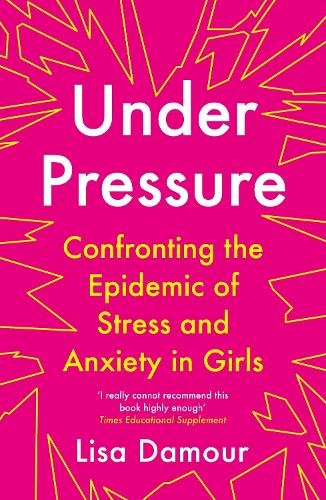
And five more. Every book on the shelf, with a therapist’s note on what it is good for, is in the library.
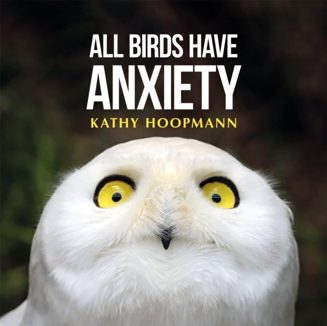
Also on this shelf
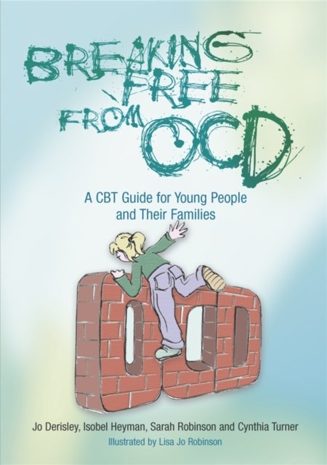
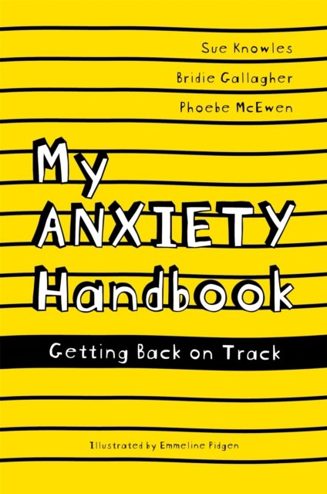
And 34 more. Every book on the shelf, with a therapist’s note on what it is good for, is in the library.
NHS
What normal worry looks like at different ages, the signs that anxiety has become a problem, how to help at home, and when to see a GP.
YoungMinds
A full parent guide: what anxiety is, what tends to trigger it, how to help in a panicky moment, and how to support a child over time, with tips from young people.
Childline
Written for young people themselves: what anxiety feels like, ways to cope such as breathing and writing things down, and when to ask a doctor for help. Good to pass to a teenager.
Child Mind Institute
Ten clear principles, starting with the counterintuitive one: the goal is not to remove a child’s anxiety but to help them manage it, because avoidance makes fear grow.
NHS
A calm checklist for exam season: signs of stress, food and sleep, being flexible about chores, not adding pressure, and when to get help.
Child Mind Institute
For the anxious parent of an anxious child. It explains how children learn from what they see us do with worry, and why saying how you cope, out loud, can help them.
YoungMinds
The most thorough UK parent guide to a child who cannot get to school: finding the cause with an ‘anxiety iceberg’, what to ask the school for, and helping a return after absence.
Nothing on this shelf is written for that age yet.
29 on anxiety
Podcast episodes, talks and films, each chosen for a reason.
Ask Lisa: Untangling Family Life
Lisa Damour on how to help a teenager back out into the world when anxiety makes school, and adults outside the home, very hard.
Also on this shelf
Raising Good Humans
Talking Sense with Dr Martha
Ask Lisa: Untangling Family Life
Get a Grip - Evidence-Based Conversations for Parents and Educators
And eight more. Every episode on the shelf, with a therapist’s note on what it is good for, is in the library.
YouTube · 6 min
Child Mind Institute, YouTube
Ten concise tips from a clinical psychologist, including not avoiding everything that frightens a child, expressing confidence rather than fear, and keeping the anticipation period short.
Also on this shelf
YouTube · 15 min
Dr Eli Lebowitz, YouTube
YouTube · 7 min
Oxford Health NHS Foundation Trust, YouTube
YouTube · 6 min
Child Mind Institute, YouTube
YouTube · 3 min
BBC Newsround, YouTube
And eleven more. Every film on the shelf, with a therapist’s note on what it is good for, is in the library.
Nothing on this shelf is written for that age yet.
For almost everything, the NHS is the right first move, and it costs nothing.
Where to start
The gateway to everything the NHS offers a child: paediatric assessment, a referral to CAMHS, and support for you as the parent.
Ask for a double appointment. Describe the pattern over weeks rather than the worst single day, and say plainly what you are worried about. Bring a written list; the ten minutes go quickly.
The mental health crisis line for your area. Free, confidential and answered twenty-four hours a day, every day of the year.
When you or your child is in mental health crisis and it will not wait for a GP appointment.
England, Scotland and Wales: call 111 and choose the mental-health option
Northern Ireland: call Lifeline on 0808 808 8000
Free NHS therapy for adults in England, for anxiety and low mood. You can refer yourself; you do not need to go through your GP first.
For the parent. A great many of the parents we sit with are carrying something of their own, and waiting for someone to ask.
www.nhs.uk/service-search/mental-health/find-an-NHS-talking-therapies-service
The pastoral lead, the head of year, or the form tutor. Free, already knows your child, and often the quickest way to get something changed at school.
Before or alongside anything else. A school cannot act on what it has not been told, and what you bring is often what it did not have.
For anxiety
The UK’s young people’s mental health charity, with a free Parents Helpline, webchat and email, and a plain A to Z of the things parents worry about.
When you want to talk through a worry about your child with someone who has heard it before, or read a clear first explanation of a named concern. Not a crisis line.
Parents Helpline 0808 802 5544 · Mon, Thu, Fri 9.30am-4pm; Tue, Wed 9.30am-6pm · Webchat Mon-Fri 9.30am-4pm; email parents@youngminds.org.uk · Outside those hours the parents line is closed. The urgent routes on this page are open when it is not.
The NHS’s pages for parents, in one place: anxiety, low mood, anger, bereavement, arguments with teenagers, exam stress, and how to talk about feelings.
When you want the NHS’s own account before anyone else’s.
www.nhs.uk/mental-health/children-and-young-adults/advice-for-parents
Parenting Smart, written by the child mental health specialists who work in primary schools: short, practical articles and films on friendships, behaviour, worries and routines.
For a child of five to eleven, when you want something you can read in ten minutes and try tonight. Place2Be’s counselling itself is only through partner schools.
Confidential online support for young people, free in the areas where the NHS or the council funds it: articles, moderated forums and drop-in text chat with a qualified practitioner.
For a teenager who will not talk to you but might talk to someone. Whether it is available depends on where you live; they check at sign-up.
A national charity whose single subject is anxiety, with free downloadable guides on helping an anxious child.
For reading written by people who do only this. There is no free helpline to ring; the number is a recorded information line.
Charged at your standard call rate, not free.
Anxiety UK self-care infoline 03444 775 774 · 24/7 recorded self-care information
Every organisation for anxiety, and when each is the right call Finding a therapist