The chapter to start with
When Your Child Has Gone Flat
A chapter for parents watching a child lose interest in the things they used to love.
21 min read · Ages 9 to 16
Read the chapter Your first chapter is free to read in full.
↑ ↓ to moveEnter to openEsc to close
Worry, mood and big feelings
This is about how your child is doing in general, without pinning it to one diagnosis or one moment. These pages look at how mood, sleep, appetite, friendship and energy change over months and years, for the parent learning to look beyond a single bad week to the longer pattern.
What to do first and who else can help are free to read and to print. So is the first chapter you open.
What the library holds on general mental health
From the therapists
You don’t need a diagnosis, or certainty, to act. Most parents who bring us a worry have kept it to themselves for months, and almost all of them wish they’d spoken sooner.
1 on general mental health
The long reads, each on one situation, written by a therapist.
The chapter to start with
A chapter for parents watching a child lose interest in the things they used to love.
21 min read · Ages 9 to 16
Read the chapter Your first chapter is free to read in full.
Nothing on this shelf is written for that age yet.
15 on general mental health
Short pieces for the moment in front of you, each with things to try.
Family transitions
The doctors can always listen to what you’ve seen, even when they can’t tell you about your child’s care.
Try this
From the tip
What you can always do is tell the doctors what you’ve seen. The same guidance says doctors should not refuse to listen to a family’s concerns on grounds of confidentiality, and so does a government statement on suicide prevention in England. They may tell your child you were in touch, and may neither confirm nor deny what you tell them. You can also ask for general information, such as how to get help in a crisis.
Doctors are told to ask patients this and to record the answer, so suggest your child tells their GP and anyone treating them.
If your child tells you they have hurt themselves, or talks about not wanting to be alive, act that day: help them ask their surgery for an urgent appointment, and if it is closed, use the crisis line for the nation they are in, not the one you are calling from. England, Scotland and Wales: call 111 and choose the mental-health option. Northern Ireland: call Lifeline on 0808 808 8000. Help is free, confidential and available at any hour. Whoever answers may share information to arrange care or keep someone safe.
If your child is badly hurt, or may have taken too much of a medicine, get medical help straight away, even if they seem well. Call 999. Or go to your nearest A&E. Help is free and available at any hour. If you’re calling from elsewhere, give the operator your child’s full address.
Big feelings
The diagnosis is part of family life now, but most of life isn’t about it.
Try this
Big feelings
A change in your child’s dose is information, and in most cases it doesn’t mean anything is going wrong.
Try this
More quick tips on general mental health
Family transitions
Seeing a doctor on their own is part of growing up; know what stays private, what doesn’t, and how you can still help.
2 min read · Ages 13 to 18
Big feelings
A diagnosis puts a name to what your child has been going through.
2 min read · Ages 11 to 18
Home And Belonging
Primary care, secondary care, CAMHS, A&E, the urgent advice lines. The map is worth holding.
2 min read
Big feelings
If your teenager has been flat for more than a fortnight, ask how they are, and help them see the GP on their own terms.
2 min read · Ages 16 to 18
Bodies & growing up
The risks are greatest with daily use of strong cannabis, so ask how often your teenager uses it, and why.
2 min read · Ages 13 to 18
Big feelings
If your child needs the same answer again and again before they can settle, it may be OCD, so talk to your GP.
2 min read · Ages 7 to 18
Big feelings
Boredom can be a sign of low mood when it takes in almost everything, friends included, and lasts a fortnight or more.
2 min read · Ages 7 to 11
Big feelings
A teenager who refuses the GP may agree to a different way of going, and if they won’t, you can still go.
2 min read · Ages 11 to 16
Parent wellbeing
Irritability can be a sign of poor sleep, low mood, anxiety or perimenopause, so a shortened fuse is worth looking into.
2 min read · Under 19
Home And Belonging
Register with a GP as soon as you arrive; in the UK, almost all NHS care starts there.
2 min read
Health and difference
For the parent who has not named their own medication out loud.
2 min read · Ages 7 to 16
Big feelings
Intrusive thoughts are part of OCD, and even the most frightening say nothing about who a child is or what they want.
2 min read · Ages 9 to 16
The rest of each tip, with more to try and why it works, is in the library.
Nothing on this shelf is written for that age yet.
2 on general mental health
Small, repeatable things to do with your child, with what to watch for and when to get help.
To do together · About 20 min
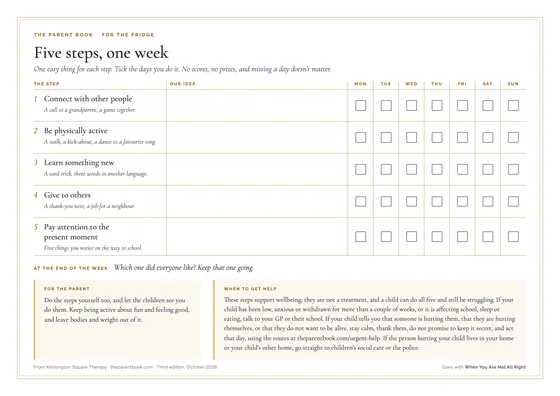
For one week, the family tries one easy thing for each of the NHS’s five steps to mental wellbeing: connecting with people, being active, learning something, giving, and paying attention to the moment.
What it is for. The five steps are simple things that support wellbeing, children’s and parents’ alike. Doing them together for a week turns them into something the family does, so nobody is being told to look after themselves.
Safety. If your child is being treated or assessed for an eating disorder, their team’s plan comes first, including for the active step.
When to get help. These steps support wellbeing; they are not a treatment for mental illness, and a child can do all five and still be struggling. If your child has been low, anxious or withdrawn for more than a couple of weeks, or it is affecting school, sleep or eating, talk to your GP or their school. If your child tells you that someone is hurting them, that they are hurting themselves, or that they don’t want to be alive, stay calm, thank them for telling you, don’t promise to keep it secret, and act that day, using the routes under “If you need help right now”, at the foot of every page.
The other four steps, and your part in it, are in the library.
More to do together
To do together
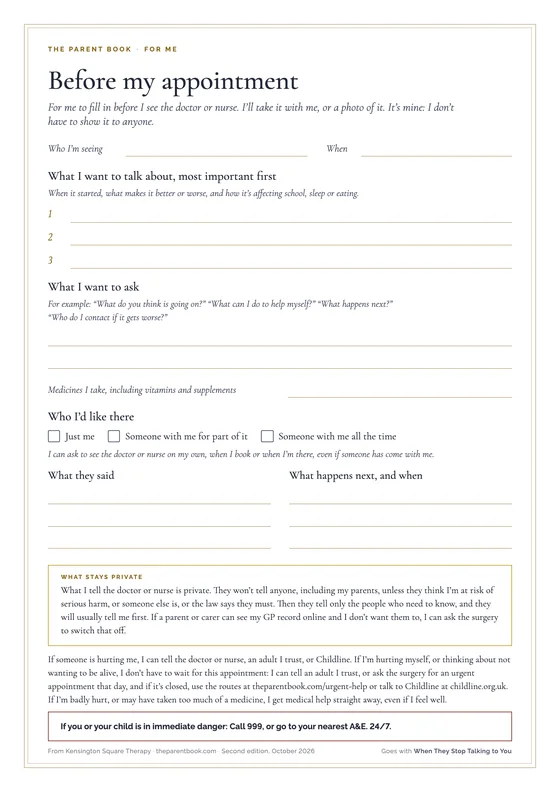
Help your teenager get ready for a GP appointment and book it, then step back in stages until they can manage it alone.
About 30 min · Ages 13 to 18 · With a sheet to print
Nothing on this shelf is written for that age yet.
3 on general mental health
Made to be printed, kept, and handed on.
To print and keep
What to do first, a few things to try and who else can help, together in one guide. Free to print and keep, or to hand to the other parent, a grandparent or the school.
Who else can help with general mental health, on a sheet of its own.
31 on general mental health
Chosen by the therapists who write the library: books for you and to read with your child, and pages from organisations we trust.
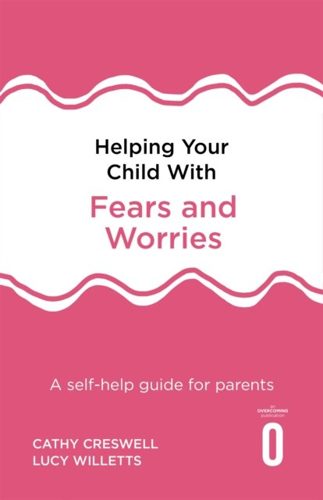
Also on this shelf
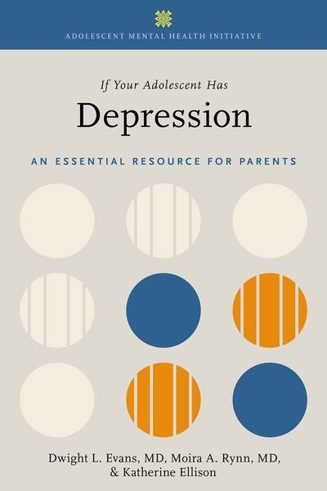
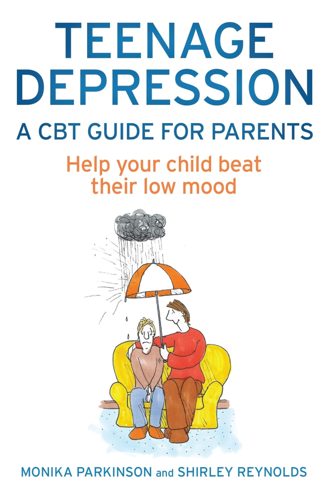
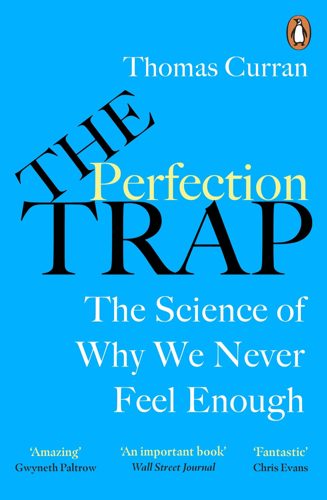
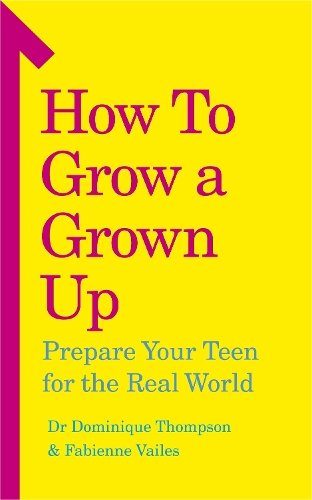
And four more. Every book on the shelf, with a therapist’s note on what it is good for, is in the library.
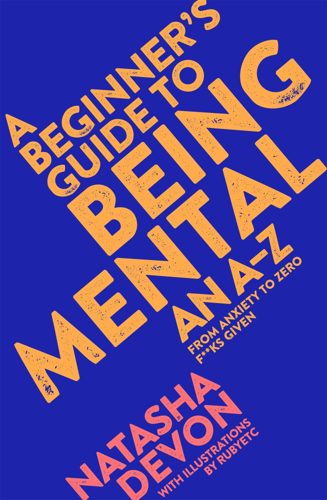
Also on this shelf
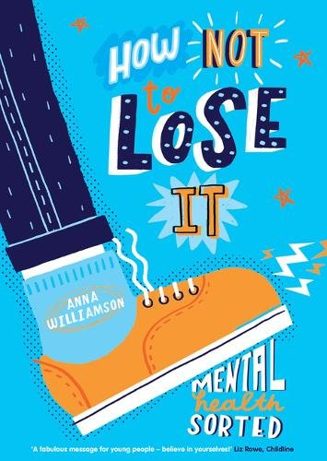
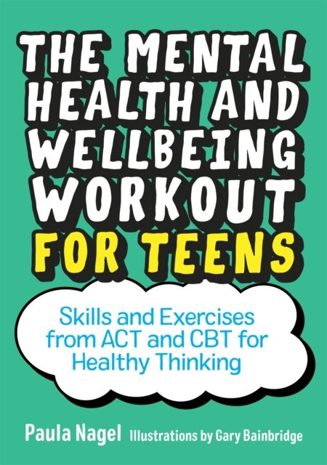
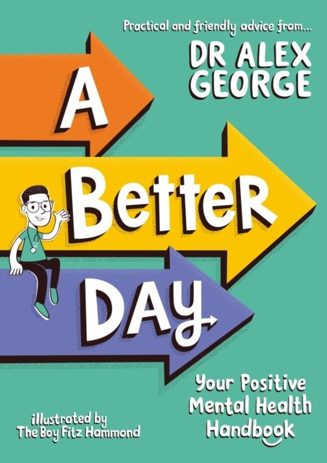
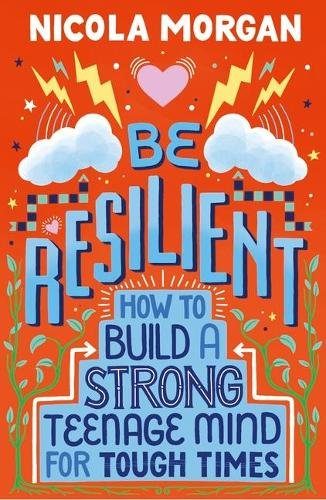
And ten more. Every book on the shelf, with a therapist’s note on what it is good for, is in the library.
NHS Every Mind Matters
The NHS’s overview for parents: everyday ways to support a child’s mental health, signs they might be struggling, and when to get professional help. A good first stop.
NHS
Helps parents tell ordinary teenage ups and downs from signs of depression, eating problems, self-harm or drug use, and what to do next.
YoungMinds
What CAMHS is, how to get a referral, what happens at an assessment, how to work with the team, and what to do if CAMHS does not offer support.
YoungMinds
For the long wait before help arrives: how your child and you might feel, ways to support them meanwhile, other kinds of support, and what to do if things get worse.
Childline
Written for young people themselves: what anxiety feels like, ways to cope such as breathing and writing things down, and when to ask a doctor for help. Good to pass to a teenager.
YoungMinds
Covers every kind of change, from school moves and family changes to friendship loss and identity, why change can be so hard, and extra support for neurodivergent children.
YoungMinds
What trauma is, signs a child is affected, how PTSD and complex PTSD differ, how to support a child afterwards, and the overlap with neurodiversity.
Nothing on this shelf is written for that age yet.
14 on general mental health
Podcast episodes, talks and films, each chosen for a reason.
Ask Lisa: Untangling Family Life
Damour gives a neutral guide to the kinds of therapy a child might be offered, including CBT, DBT, play, family and talking therapies, and which tend to suit which difficulties.
Also on this shelf
Claudia Hammond (BBC Radio 4)
Raising Good Humans
ACAMH (Dr Jane Gilmour, Prof Umar Toseeb, Dr Clara Faria)
Dr Dave Anderson (Child Mind Institute)
And one more. Every episode on the shelf, with a therapist’s note on what it is good for, is in the library.
YouTube · 5 min
Anna Freud, YouTube
An animation for primary-age children introducing the idea that everyone has mental health, and that feelings can be talked about. A calm opener for a first family conversation.
Also on this shelf
YouTube · 6 min
Anna Freud, YouTube
YouTube · 2 min
YoungMinds, YouTube
YouTube
Child Mind Institute, YouTube
YouTube · 5 min
Anna Freud, YouTube
And three more. Every film on the shelf, with a therapist’s note on what it is good for, is in the library.
Nothing on this shelf is written for that age yet.
For almost everything, the NHS is the right first move, and it costs nothing.
Where to start
The gateway to everything the NHS offers a child: paediatric assessment, a referral to CAMHS, and support for you as the parent.
Ask for a double appointment. Describe the pattern over weeks rather than the worst single day, and say plainly what you are worried about. Bring a written list; the ten minutes go quickly.
The mental health crisis line for your area. Free, confidential and answered twenty-four hours a day, every day of the year.
When you or your child is in mental health crisis and it will not wait for a GP appointment.
England, Scotland and Wales: call 111 and choose the mental-health option
Northern Ireland: call Lifeline on 0808 808 8000
Free NHS therapy for adults in England, for anxiety and low mood. You can refer yourself; you do not need to go through your GP first.
For the parent. A great many of the parents we sit with are carrying something of their own, and waiting for someone to ask.
www.nhs.uk/service-search/mental-health/find-an-NHS-talking-therapies-service
The pastoral lead, the head of year, or the form tutor. Free, already knows your child, and often the quickest way to get something changed at school.
Before or alongside anything else. A school cannot act on what it has not been told, and what you bring is often what it did not have.
For general mental health
The UK’s young people’s mental health charity, with a free Parents Helpline, webchat and email, and a plain A to Z of the things parents worry about.
When you want to talk through a worry about your child with someone who has heard it before, or read a clear first explanation of a named concern. Not a crisis line.
Parents Helpline 0808 802 5544 · Mon, Thu, Fri 9.30am-4pm; Tue, Wed 9.30am-6pm · Webchat Mon-Fri 9.30am-4pm; email parents@youngminds.org.uk · Outside those hours the parents line is closed. The urgent routes on this page are open when it is not.
The NHS’s pages for parents, in one place: anxiety, low mood, anger, bereavement, arguments with teenagers, exam stress, and how to talk about feelings.
When you want the NHS’s own account before anyone else’s.
www.nhs.uk/mental-health/children-and-young-adults/advice-for-parents
The UK’s mental health charity. Pages written for parents of a struggling young person, an Infoline that points you to the right service, and a Support Line that will simply listen.
When your own reserves are running low and you want to talk to someone who is not the GP, your partner or a friend. Not for a crisis.
If tonight is urgent, use the numbers under “If you need help right now”, at the end of this page.
Charged at your standard call rate, not free.
Mind Infoline 0300 123 3393 · Mon-Fri 9am-6pm (except bank holidays) · Mind Support Line 0300 102 1234, Mon-Fri 9am-6pm, for emotional support rather than signposting · Outside those hours the line is closed. Samaritans answer at any hour on 116 123, and Shout answer if you text the word SHOUT to 85258.
A free directory of local and national mental health services, searched by postcode and by what you need, with separate routes for under-twenty-fives and for urgent help.
When you want to know what actually exists near you, for you or for your child.
A free service for under-twenty-fives on anything at all: a twenty-four-hour crisis text line, peer chat, short-term counselling and discussion boards.
Something to give your teenager rather than use yourself. The text line is there at three in the morning.
Crisis text 24/7; counselling, peer chat and boards by arrangement
Plain-English leaflets written by psychiatrists for parents on ADHD, autism, behaviour, sleep, trauma, and on how CAMHS works.
When you want the professional body’s account of a condition or of what an NHS referral will involve. Reading only.
Every organisation for general mental health, and when each is the right call Finding a therapist