The Parent Book·From the library
Siblings and the Fights That Aren’t Fair
For parents whose children keep finding new ways to fall out with each other.
A thirteen-minute read · Published 25 May 2026

It’s early on a Saturday morning, and for the third time already your eight-year-old has taken the small blue car your four-year-old was playing with, held it up out of reach and watched the younger one dissolve into the kind of crying that goes on long past the original injury. You’ve been making toast and haven’t seen how it started. You hear only the second half: the wailing, the older one insisting in an aggrieved voice that it was their car first, and the younger one running across the room with their face screwed up the way four-year-olds’ faces go when the world has been unfair to them.
By now you’ve broken up the same fight more times than you can count. You’ve tried praise, consequences, a family meeting and making everyone say sorry. By lunchtime you’re in the loo with the door locked, wondering whether it’s normal to love your children so much and have so little patience for the noise they make at each other.
It is normal, and parents bring this to us often. Sibling fighting is the most reliably exhausting part of family life. If you’ve decided by Wednesday that you’re being asked to referee a war you never declared, you’re right about that, and it doesn’t mean you’re failing.
Put it into practice
What this chapter looks like in practice: one-minute ideas for tonight, things to do together and sheets to print and keep.
Quick tipsOne minute each
- The Second Child, and the FirstWhen a new baby arrives, every first child wants to know whether they are still the one.
- The Sibling Who Stops AskingWhile one child struggles, the other may become very easy to live with and keep their worries to themselves.
- The Sibling Who Has Noticed EverythingYour child has already noticed something is different at home, so tell them briefly what it is.
Thirteen quick tips on this in the library
To do togetherActivities
- Losing at the kitchen tableA game now and then, where everyone loses sometimes, you included, and it is all right to be upset about losing.About 30 minutes · with a sheet to print
- Ten minutes where your child leadsTen minutes most days when your child chooses what you play and you follow their lead. You don’t teach, correct or ask questions, and they never have to earn it.About 10 minutes · with a sheet to print
- Time alone with each childA regular time with each of your children on their own, doing something they choose. Keep it short enough to protect every week.About 15 minutes · with a sheet to print
To printSheets to keep
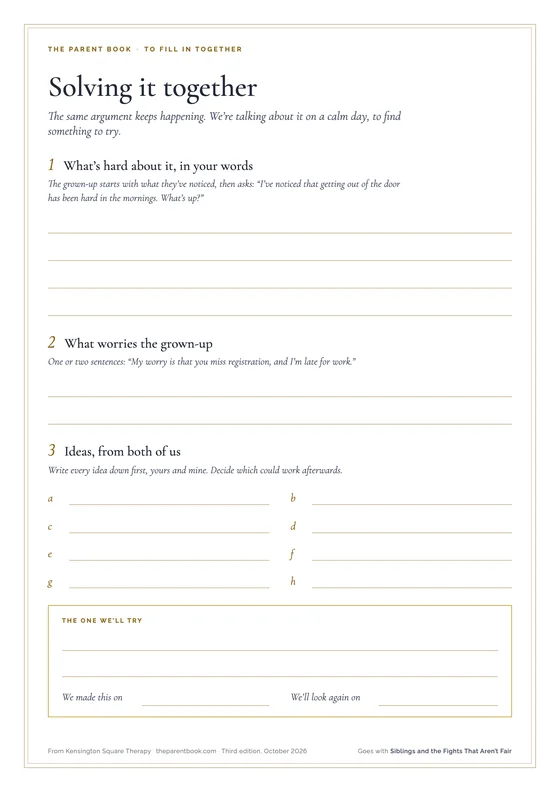
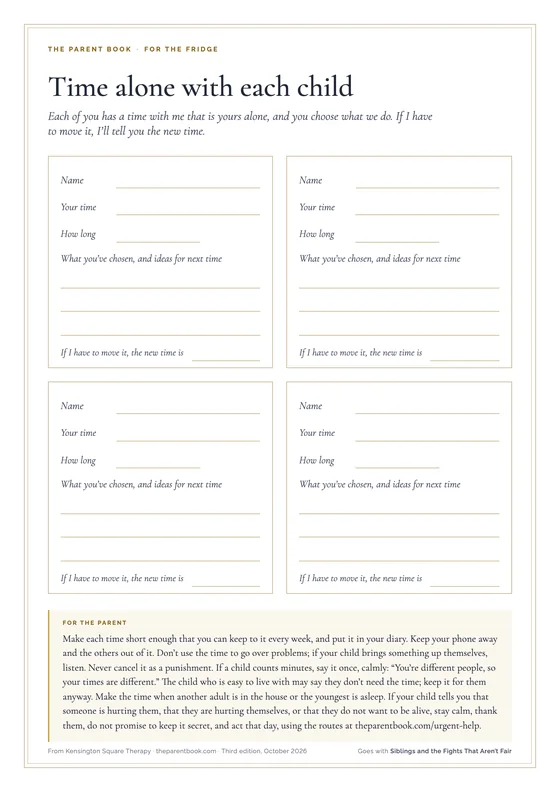

The quick tips and activities are for subscribers, and so are the sheets to print. What a subscription includes.
Who else can help
Coram Family Lives
A free, confidential helpline for any parenting or family worry, by phone, live chat, WhatsApp or email, staffed by trained family support workers.
0808 800 2222 · Mon-Fri 9am-9pm; weekends 10am-3pm; closed bank holidays
Outside those hours the line is closed. Samaritans answer at any hour on 116 123, and Shout answer if you text the word SHOUT to 85258.
coramfamilylives.org.uk/how-we-can-help/confidential-helpline
Place2Be
Parenting Smart, written by the child mental health specialists who work in primary schools: short, practical articles and films on friendships, behaviour, worries and routines.
Anna Freud
The Anna Freud Centre’s family wellbeing resources: careful, research-led reading on children’s emotional development, separation, self-care for parents, and supporting a child through treatment.