The chapter to start with
Trauma in Childhood
For parents whose child has been through something hard, or whose family has.
16 min read
↑ ↓ to moveEnter to openEsc to close
Worry, mood and big feelings
These pages are for parents whose child has been through something difficult. They cover how it can affect a child’s nervous system, and the long process of helping the child live with it. We’ve written them carefully; they don’t replace clinical help where it’s needed, and we show clearly where to find it.
What to do first and who else can help are free to read and to print.
What the library holds on trauma
From the therapists
Most children who go through something frightening don’t develop lasting trauma, particularly when there’s an adult who stays calm, lets them talk and doesn’t press them. Being that adult does more than you can see.
1 on trauma
The long reads, each on one situation, written by a therapist.
The chapter to start with
For parents whose child has been through something hard, or whose family has.
16 min read
Nothing on this shelf is written for that age yet.
6 on trauma
Short pieces for the moment in front of you, each with things to try.
Big feelings
Early help shortens recovery, so don’t wait until your child seems sick enough to need it.
Try this
From the tip
Any of these is worth bringing to your GP, and so is distress that is severe at any point, or anything else that worries you.
The GP is the way into NHS services, including community paediatrics and CAMHS.
Big feelings
A young child rarely has words for something hard; give them a simple phrase for what their body feels.
Try this
Big feelings
Most teenagers recover from something frightening with the people around them; keep your teenager’s routines going, and let them choose when to talk.
Try this
From the tip
Keep to school, meals and a regular bedtime as far as you can. Tell your teenager you’re ready to listen, check in now and then, and let them choose when, how and with whom; some would rather talk to someone outside the family. Don’t ask for the details or push them to go over it: if that is needed, it is work for a trained therapist. Avoid “you’re fine” and “it could have been worse”. If it is being shared online, talk about what they have seen and help them take time away from it. If a sexual image or video is being shared, never view, copy, print, share, store or save it; a screenshot is a copy. Report it to the police. CEOP (the police’s online child protection command). Report at https://www.ceop.police.uk/safety-centre/.
Talk to your GP if, about a month after it happened, your teenager is still very upset and finding it hard to get on with everyday life.
If someone is hurting your teenager, or attacked them or did something sexual to them, or could still reach them, stay calm, thank your teenager if they have told you, don’t promise to keep it secret, and act that day, even if it seems over. If the person lives in your home or your child’s other home, go straight to children’s social care or the police. A national child protection helpline will talk it through with you. NSPCC, 0808 800 5000. Email help@nspcc.org.uk. Mon-Fri 10am-4pm by phone; email 11am-4pm, seven days a week. An email sent when the service is closed is not received. If the NSPCC service is closed and the concern cannot wait, call the police on 101. You can also contact the child’s local out-of-hours children’s social care, social work or social services team. If a child is in immediate danger, call 999. Help is free.
If your teenager has hurt themselves, or talks about not wanting to be alive, stay calm, thank them if they have told you, don’t promise to keep it secret, and act that day: ask the surgery for an urgent appointment, and if it is closed, use the crisis line. England, Scotland and Wales: call 111 and choose the mental-health option. Northern Ireland: call Lifeline on 0808 808 8000. Help is free, confidential and available at any hour. Whoever answers may share information to arrange care or keep someone safe.
More quick tips on trauma
Big feelings
After something hard, a young child needs adults who are predictable, calm and in the room with them.
2 min read · Under 7
Big feelings
Young children usually show trauma in their bodies and behaviour before they can put it into words.
2 min read · Under 7
Family dynamics
When a fostered child asks about their past, take the question seriously and ask their social worker about it together.
2 min read · Ages 7 to 13
The rest of each tip, with more to try and why it works, is in the library.
Nothing on this shelf is written for that age yet.
1 on trauma
Small, repeatable things to do with your child, with what to watch for and when to get help.
To do together · About 5 min
A short noticing game, and for younger children a slow breath traced with a finger. Practise them together on calm days, so your child already knows them on a hard one.
What it is for. In our experience, an anxious child is helped more by something they can do themselves than by reassurance. If they learn this when nothing is wrong, they will already know it on a harder day.
Safety. After something frightening, let your child choose their senses, and do not ask them to close their eyes.
When to get help. This is practice, not a treatment. Talk to your GP about recurring panic, worry that stops your child going to school, sleeping or eating, frightening intrusive thoughts, or several weeks of waking in fear. If your child tells you that someone is hurting them, that they are hurting themselves, or that they do not want to be alive, stay calm, thank them for telling you, do not promise to keep it secret, and act that day, using the routes under “If you need help right now”, at the foot of every page.
The other five steps, and your part in it, are in the library.
Nothing on this shelf is written for that age yet.
5 on trauma
Made to be printed, kept, and handed on.
To print and keep
What to do first, a few things to try and who else can help, together in one guide. Free to print and keep, or to hand to the other parent, a grandparent or the school.
Who else can help with trauma, on a sheet of its own.
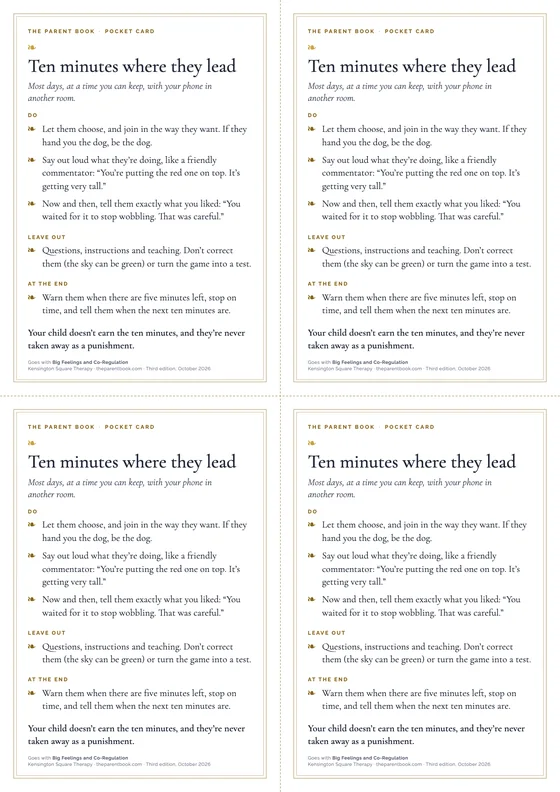 Ten minutes where they lead
Pocket card · A4, four cards to cut, two sides · With a subscription
Ten minutes where they lead
Pocket card · A4, four cards to cut, two sides · With a subscription
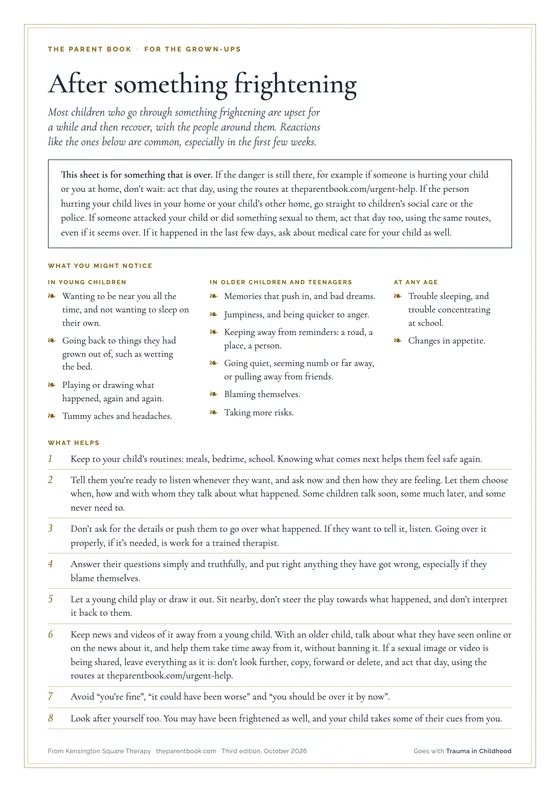 After something frightening
For the grown-ups · A4, two sides · With a subscription
After something frightening
For the grown-ups · A4, two sides · With a subscription
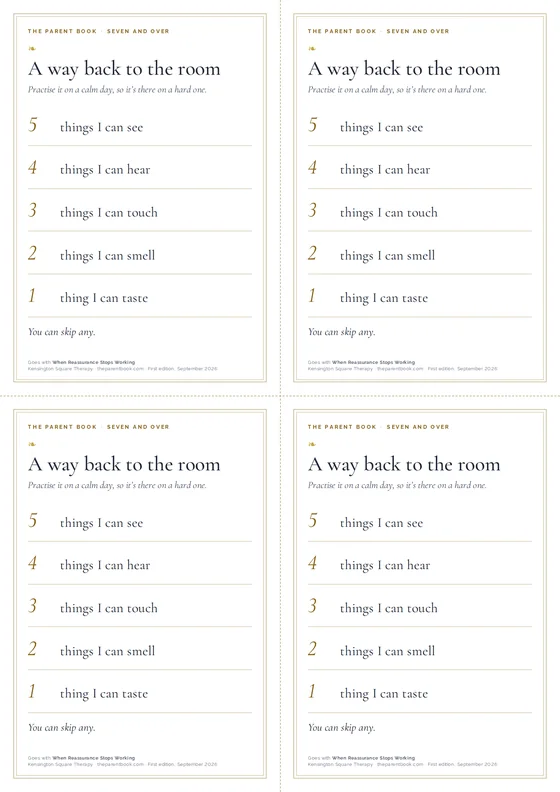 A way back to the room
Pocket card · A4, four cards to cut, two sides · With a subscription
A way back to the room
Pocket card · A4, four cards to cut, two sides · With a subscription
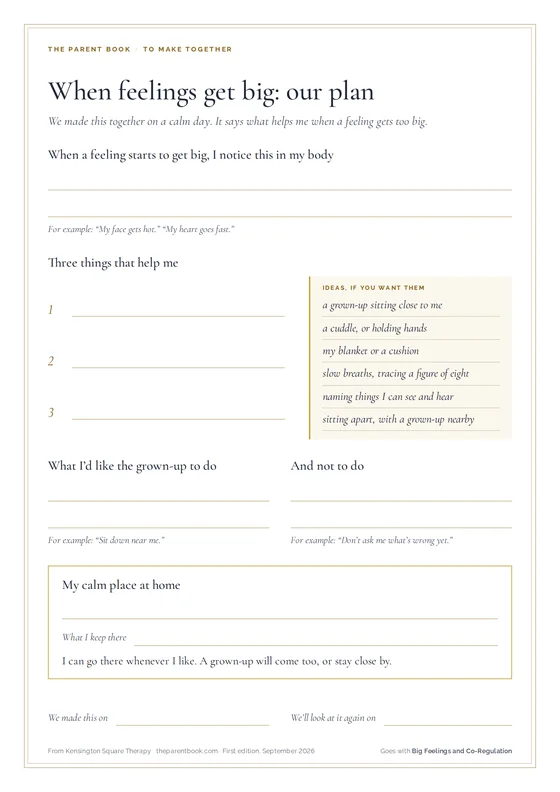 When feelings get big: our plan
To make together · A4, two sides · With a subscription
When feelings get big: our plan
To make together · A4, two sides · With a subscription
29 on trauma
Chosen by the therapists who write the library: books for you and to read with your child, and pages from organisations we trust.
Also on this shelf
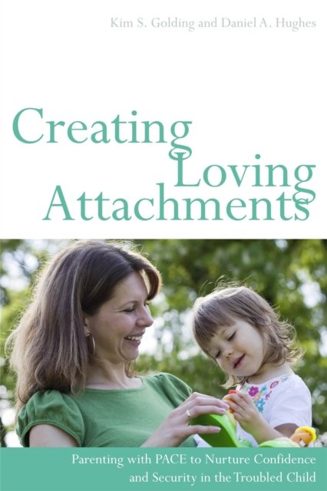
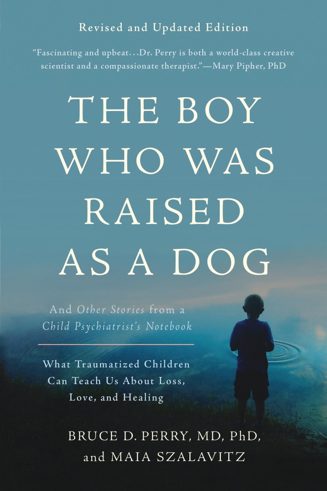
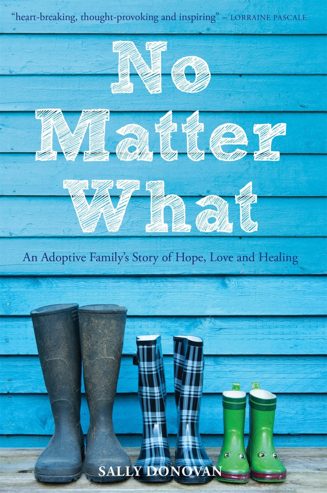
And ten more. Every book on the shelf, with a therapist’s note on what it is good for, is in the library.
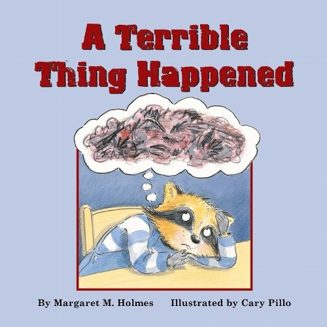
Also on this shelf
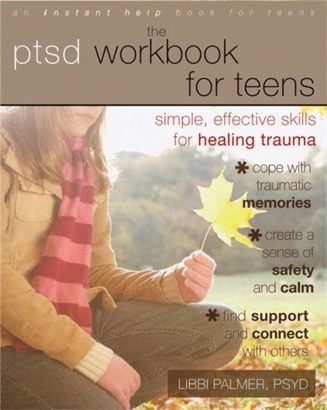
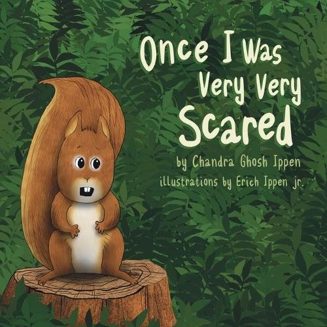
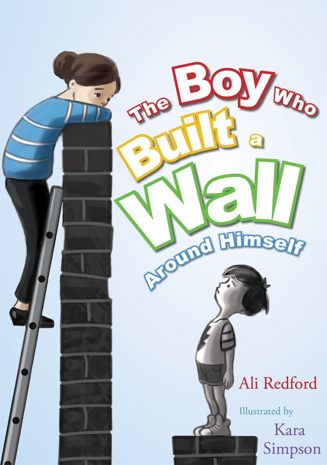
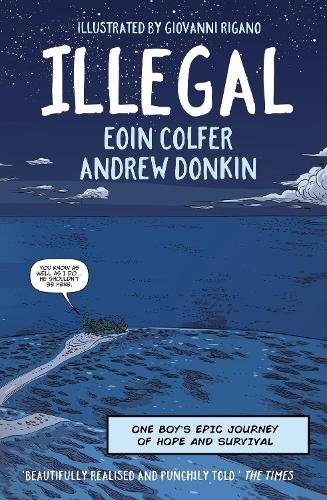
And six more. Every book on the shelf, with a therapist’s note on what it is good for, is in the library.
Child Mind Institute
A free guide written by trauma specialists and organised by age, from infants to teenagers, on what reactions to expect after a frightening event and how adults can help.
Place2Be
What children may feel and do after something frightening, from an accident to violence in the news, and how routine, honesty and closeness help them recover.
YoungMinds
What trauma is, signs a child is affected, how PTSD and complex PTSD differ, how to support a child afterwards, and the overlap with neurodiversity.
Nothing on this shelf is written for that age yet.
12 on trauma
Podcast episodes, talks and films, each chosen for a reason.
Speaking of Psychology
Psychologist Robin Gurwitch explains how disasters and frightening events affect children, how to support them in the weeks afterwards, and how to talk with them about traumatic news.
Also on this shelf
MQ Open Mind
NSPCC Learning Podcast
Emerging Minds Families
Every episode on the shelf, with a therapist’s note on what it is good for, is in the library.
YouTube · 5 min
UK Trauma Council, YouTube
An animation explaining how abuse and neglect can change the way a child’s brain processes threat, reward and memory, and how supportive relationships help. Clear and not sensational.
Also on this shelf
other
UK Trauma Council, other
YouTube · 3 min
UK Trauma Council, YouTube
YouTube · 2 min
Center on the Developing Child at Harvard University, YouTube
YouTube · 4 min
UK Trauma Council, YouTube
And three more. Every film on the shelf, with a therapist’s note on what it is good for, is in the library.
Nothing on this shelf is written for that age yet.
For almost everything, the NHS is the right first move, and it costs nothing.
Where to start
The gateway to everything the NHS offers a child: paediatric assessment, a referral to CAMHS, and support for you as the parent.
Ask for a double appointment. Describe the pattern over weeks rather than the worst single day, and say plainly what you are worried about. Bring a written list; the ten minutes go quickly.
The pastoral lead, the head of year, or the form tutor. Free, already knows your child, and often the quickest way to get something changed at school.
Before or alongside anything else. A school cannot act on what it has not been told, and what you bring is often what it did not have.
A registered counsellor or psychotherapist, found through the BACP or NCPS directories. Waiting lists are shorter than the NHS and you choose who your child sits with.
When waiting is the problem, or when you want a particular kind of help. What to look for, and what to expect, is set out in our guide to finding a therapist.
For trauma
The Anna Freud Centre’s family wellbeing resources: careful, research-led reading on children’s emotional development, separation, self-care for parents, and supporting a child through treatment.
When you want depth from a clinical source rather than a quick explainer. Reading only; there is no helpline.
The NSPCC helpline is for adults worried about a child. You do not have to be sure, you can call anonymously, and they will tell you whether it needs to go further and help you take that step.
When something has been said or seen and you do not know what to do with it. Childline, 0800 1111, is the line for a child to call themselves.
NSPCC Helpline (for adults) 0808 800 5000 · Mon-Fri 10am-4pm by phone; email 11am-4pm, seven days a week. An email sent when the service is closed is not received. · If the NSPCC service is closed and the concern cannot wait, call the police on 101. You can also contact the child’s local out-of-hours children’s social care, social work or social services team. If a child is in immediate danger, call 999.
www.nspcc.org.uk/keeping-children-safe/reporting-abuse/nspcc-helpline
The UK’s young people’s mental health charity, with a free Parents Helpline, webchat and email, and a plain A to Z of the things parents worry about.
When you want to talk through a worry about your child with someone who has heard it before, or read a clear first explanation of a named concern. Not a crisis line.
Parents Helpline 0808 802 5544 · Mon, Thu, Fri 9.30am-4pm; Tue, Wed 9.30am-6pm · Webchat Mon-Fri 9.30am-4pm; email parents@youngminds.org.uk · Outside those hours the parents line is closed. The urgent routes on this page are open when it is not.
Every organisation for trauma, and when each is the right call Finding a therapist