
The chapter to start with
The Conversations Parents Avoid
For parents who need to tell their child something hard and don’t know how to start.
13 min read
Read the chapter Your first chapter is free to read in full.
↑ ↓ to moveEnter to openEsc to close
Family life and behaviour

Parents put some conversations off, often for years, because the right moment never quite arrives: death, sex, divorce, their own diagnosis, or a family secret their child is starting to sense. If you’re dreading one of them, these pages suggest how to start, what to say first and what to do if it goes badly.
What to do first and who else can help are free to read and to print. So is the first chapter you open.
What the library holds on difficult conversations
From the therapists
The conversation you’re dreading almost always does less damage than the silence around it. Children already know something is happening; what they don’t have is the words for it.
3 on difficult conversations
The long reads, each on one situation, written by a therapist.
The chapter to start with
For parents who need to tell their child something hard and don’t know how to start.
13 min read
Read the chapter Your first chapter is free to read in full.
Nothing on this shelf is written for that age yet.
62 on difficult conversations
Short pieces for the moment in front of you, each with things to try.
Friendships & social life
Talk about drink before the first party, so your teenager knows your rules and that they can always ring you.
Try this
From the tip
If your teenager seems to be drinking to cope, drinks alone, or you are worried about how much they drink, talk to your GP.
Spiking can look like being very drunk. If you suspect it, get medical help early and report it to the police. The person who was spiked is never to blame. If your teenager tells you someone did something sexual to them while your teenager was drunk, or an older person is giving them alcohol, stay calm, thank them for telling you, don’t promise to keep it secret, and act that day. If that person lives in your home, go straight to children’s social care or the police. A national child protection helpline will talk it through with you. NSPCC, 0808 800 5000. Email help@nspcc.org.uk. Mon-Fri 10am-4pm by phone; email 11am-4pm, seven days a week. An email sent when the service is closed is not received. If the NSPCC service is closed and the concern cannot wait, call the police on 101. You can also contact the child’s local out-of-hours children’s social care, social work or social services team. If a child is in immediate danger, call 999. Help is free.
Alcohol poisoning can look like confusion, being sick, slow or irregular breathing, pale or blue-tinged skin, a fit, or passing out and being hard to wake. If your teenager is very drunk, stay with them and don’t leave them to sleep it off alone: they could be sick while drowsy and choke. If you think they have alcohol poisoning, call for emergency help. Call 999. Help is free and available at any hour.
Bodies & growing up
Give a brief, accurate answer when your child asks how babies are made, then stop.
Try this
Bodies & growing up
Aim for eighteen short conversations about puberty over two or three years, starting early.
Try this
From the tip
Start talking about puberty early, briefly and in passing, long before anyone in the family has an urgent reason to. When a seven-year-old asks why their older cousin’s voice sounds different, answer them then and there. Do the same when an eight-year-old comments on the bra on the washing line: “Yes, that’s what bodies do as they get older. It happens to everyone. We can talk about it more if you want.” Then move on to something else. Your child has the information, and knows it’s a subject the family doesn’t flinch at.
More quick tips on difficult conversations
Bodies & growing up
The risks are greatest with daily use of strong cannabis, so ask how often your teenager uses it, and why.
2 min read · Ages 13 to 18
Family dynamics
When a fostered child asks about their past, take the question seriously and ask their social worker about it together.
2 min read · Ages 7 to 13
Health and difference
Fit what you tell the children to their age, and expect to come back to it over weeks.
1 min read · Ages 5 to 18
Health and difference
After a serious diagnosis, let the children know something is happening; the full conversation can wait a few days.
1 min read · Ages 5 to 16
Health and difference
For the parent who has not named their own medication out loud.
2 min read · Ages 7 to 16
Family transitions
A grieving child’s questions often come out of nowhere; answer them briefly, in your everyday voice.
1 min read · Ages 5 to 13
Family dynamics
At six, a child may ask out of the blue where their mum is; give them a short, honest answer.
2 min read · Ages 5 to 11
Family dynamics
If you and your partner differ on faith, tell your child openly, in words that suit their age.
2 min read · Ages 5 to 13
Family dynamics
Set a boundary with your own parent calmly and briefly, before resentment builds up.
2 min read
Family dynamics
A grandparent’s advice is given with love, but you still need to set it aside calmly.
2 min read
Family dynamics
You can be clear about how your own house runs without proving a grandparent wrong.
2 min read
Big feelings
A child who was told a baby was coming grieves too, so acknowledge their grief openly.
2 min read · Under 11
Friendships & social life
Your teenager has chosen someone you wouldn’t have chosen for them.
2 min read · Ages 13 to 18
Family dynamics
Teach your child that surprises get told in the end, and that a secret that worries them is one they can always tell you.
2 min read · Under 9
Family dynamics
Your child has already noticed something is different at home, so tell them briefly what it is.
2 min read · Ages 5 to 11
Parent wellbeing
A child who is told nothing makes up their own explanation, and in it they are often to blame.
2 min read · Ages 5 to 16
Parent wellbeing
Children notice when a job or income is lost, so give them a short, honest explanation.
2 min read · Ages 7 to 16
School & pressure
Take your child seriously without taking sides, and listen for specific incidents you can act on.
2 min read · Ages 5 to 11
Bodies & growing up
Most teenagers don’t vape, and most who have tried were given their first one, usually by a friend.
2 min read · Ages 11 to 18
Family dynamics
Tell your child about your recovery at their level, and take your own feelings about it to other adults.
2 min read · Ages 7 to 16
Family dynamics
Your child can’t fix the other parent’s substance use, and they need to hear that often.
2 min read · Ages 7 to 16
Family dynamics
Your child has noticed, and without an explanation they will imagine something worse than the truth.
2 min read · Ages 7 to 16
Parent wellbeing
Your teenager doesn’t have to accept your apology tonight for it to count; say it once, and leave them free to come round.
2 min read · Ages 11 to 18
Online life
Many children come across pornography by accident, often on social media, so talk to your child about it before someone shows them.
2 min read · Ages 9 to 13
Health and difference
Other children will ask about your disability or illness, and your child will need words ready to answer.
2 min read · Ages 5 to 11
Bodies & growing up
Once your son’s voice starts to crack, have a short, matter-of-fact talk with him about puberty.
1 min read · Ages 9 to 16
Bodies & growing up
Take your daughter’s question about a first bra seriously, and treat the shopping as an everyday errand.
1 min read · Ages 7 to 13
Neurodiversity
When a friend says it’s just a phase, one short, warm sentence can close the conversation.
2 min read
School & pressure
In the first weeks at a new school, children are often too tired to answer questions at the gate.
2 min read · Ages 9 to 13
Family transitions
A year out is your teenager’s decision to make; your part is to ask them calmly what they are thinking.
2 min read · Ages 16 and over
Family dynamics
Assignments like the family tree can be hard for adopted children, and most schools will adapt them if asked.
2 min read · Ages 5 to 11
Family transitions
If the other parent misses a promised call, it falls to you to help your child through the evening.
2 min read · Ages 5 to 11
Family dynamics
At fifteen, most of what you know about your teenager’s life is what they choose to tell you, so keep a few rules and let the rest go.
2 min read · Ages 13 to 18
Parent wellbeing
A calm “We can’t afford that” gives your child a way to talk about money that they’ll keep.
2 min read · Ages 5 to 13
Family transitions
Find out what’s behind it before you decide anything, and if it’s about your child’s safety, act on it that day.
2 min read · Ages 5 to 13
Friendships & social life
Hear the facts first, then be clear with your child that it stops and that they’ll help put it right.
2 min read · Ages 7 to 13
Parent wellbeing
Money is something you can talk about with your child, though most families don’t.
2 min read · Ages 7 to 13
Neurodiversity
Brothers and sisters have usually noticed already, so tell them briefly, like any other family news.
1 min read · Ages 5 to 11
Neurodiversity
Start soon after the diagnosis, say a little at a time in words that fit your child’s age, and treat it as the first of many conversations.
2 min read · Ages 5 to 13
Neurodiversity
The decision about medication is yours, made with the prescribing team.
2 min read · Ages 7 to 16
Family dynamics
Answer truthfully and briefly when your child asks why their friend is going skiing and they aren’t.
1 min read · Ages 9 to 16
Health and difference
In the days after a diagnosis, tell your child often that the condition doesn’t change who they are.
2 min read · Ages 5 to 13
Bodies & growing up
When your daughter’s first period starts at school, take her home and treat the rest of the afternoon as normal.
1 min read · Ages 9 to 13
Family dynamics
When your child asks about their birth parents at seven, what helps is a short, honest answer.
2 min read · Under 9
Health and difference
The school needs the medical specifics, and your child needs to be known for more than their condition.
2 min read · Ages 5 to 13
Big feelings
Intrusive thoughts are part of OCD, and even the most frightening say nothing about who a child is or what they want.
2 min read · Ages 9 to 16
Bodies & growing up
Some of what a boy needs to know about puberty is awkward to ask, so tell him before he has to.
2 min read · Ages 9 to 16
School & pressure
If your teenager decides not to go to university, treat it as their decision and ask what they want instead.
2 min read · Ages 13 and over
Big feelings
A teenager who refuses the GP may agree to a different way of going, and if they won’t, you can still go.
2 min read · Ages 11 to 16
Neurodiversity
Ask for the meeting in a short email, and bring three to five specific examples in writing.
1 min read · Ages 5 to 11
Family dynamics
Ask your child which words they use, use those, and let them tell you when you get it wrong.
2 min read · Ages 11 to 16
Family dynamics
Wanting to search for a birth family is almost always healthy, so offer to help your teenager.
2 min read · Ages 13 to 16
Family transitions
Let your child choose the part they play in the wedding.
2 min read · Ages 7 to 16
Family dynamics
If a school misreads your child’s culture, specific examples usually help it adjust.
2 min read · Ages 5 to 13
Family dynamics
Most sibling conflict is rivalry, but some of it crosses the line into bullying.
2 min read · Ages 7 to 13
Family dynamics
When your child tells you something that doesn’t fit what the family assumed, keep your first reply brief and warm.
2 min read · Ages 11 to 13
Family dynamics
When your teenager comes out at sixteen, let them decide who in the family is told next, and when.
2 min read · Ages 13 to 18
Bodies & growing up
In a girl, puberty at eight is within the normal range, and girls who feel prepared and accepted at home tend to fare better.
2 min read · Ages 7 to 11
Neurodiversity
Be specific when you first raise an EHCP with the school, and treat it as a partnership.
2 min read · Ages 5 to 11
The rest of each tip, with more to try and why it works, is in the library.
Nothing on this shelf is written for that age yet.
13 on difficult conversations
Small, repeatable things to do with your child, with what to watch for and when to get help.
To do together · About 20 min
Walk with your child at the same time each week, side by side. Some weeks they will talk, and you still go on the weeks they do not.
What it is for. Many children say the hardest things when nobody is looking straight at them. A regular walk gives your child a chance to say them, without any pressure to.
Safety. For under-fives, hold hands near traffic; the looking walk is best on a quiet route.
When to get help. If your child tells you that someone is hurting them, that they are hurting themselves, or that they do not want to be alive, finish the walk calmly, thank them for telling you, do not promise to keep it secret, and act that day, using the routes under “If you need help right now”, at the foot of every page. If a change in your child’s mood or behaviour lasts for several weeks, gets worse, or begins to affect sleep, eating or school, talk to their school and your GP.
The other four steps, and your part in it, are in the library.
More to do together
To do together
Agree a code word with your teenager that means “come and get me”, with no telling-off that night, so that they can always leave somewhere they don’t want to be.
About 15 min · Ages 11 to 18
To do together
Cook one dish together each week, side by side, and give your child a real job. If they want to talk, they can do it while they chop.
About 45 min · Under 18 · With a sheet to print
To do together
After a death, make a box together for things that remind your child of the person, and a page of what they remember. Your child chooses what goes in, and the box is theirs.
An afternoon to start · Ages 5 to 16 · With a sheet to print
To do together
Choose a film with some care, watch it side by side, and do not ask questions afterwards. If your child wants to talk, they will.
The length of a film · Ages 7 to 16 · With a sheet to print
To do together
Agree a plan with your teenager before each party, including how they get home and what they do if things go wrong.
About 15 min · Ages 13 to 18
To do together
Colour, build or make things side by side, each of you on your own thing. Nothing is asked of your child, and nothing they make is marked.
About 20 min · Under 13 · With a sheet to print
To do together
Your child picks a song and plays it to you. You listen to the end, and ask one question about it.
About 10 min · Ages 11 to 18 · With a sheet to print
To do together
When nobody is upset, pick one problem that keeps causing rows, hear your child’s side of it first, then say yours, and work out a plan you can both keep.
About 20 min · Ages 9 to 18
To do together
Ask your child one question at the end of the day, at supper or on the way home: what was interesting, and what was hard. Then answer it yourself.
About 5 min · Ages 5 to 13
To do together
Your child chooses a film, a book, a song or a game they care about. You watch it, read it or play it, and ask one curious question.
An evening, or an afternoon · Ages 11 to 18 · With a sheet to print
To do together
Teach your child the NSPCC’s Underwear Rule a few minutes at a time, at bath time or getting dressed: their body belongs to them, and they can tell you any secret that worries them.
About 5 min · Under 11 · With a sheet to print
To do together
If your teenager may be working out who they are, a short letter can tell them what is hard to say face to face: that you love them, and that they don’t have to reply.
About 20 min · Ages 11 to 18
Nothing on this shelf is written for that age yet.
22 on difficult conversations
Made to be printed, kept, and handed on.
To print and keep
What to do first, a few things to try and who else can help, together in one guide. Free to print and keep, or to hand to the other parent, a grandparent or the school.
Who else can help with difficult conversations, on a sheet of its own.
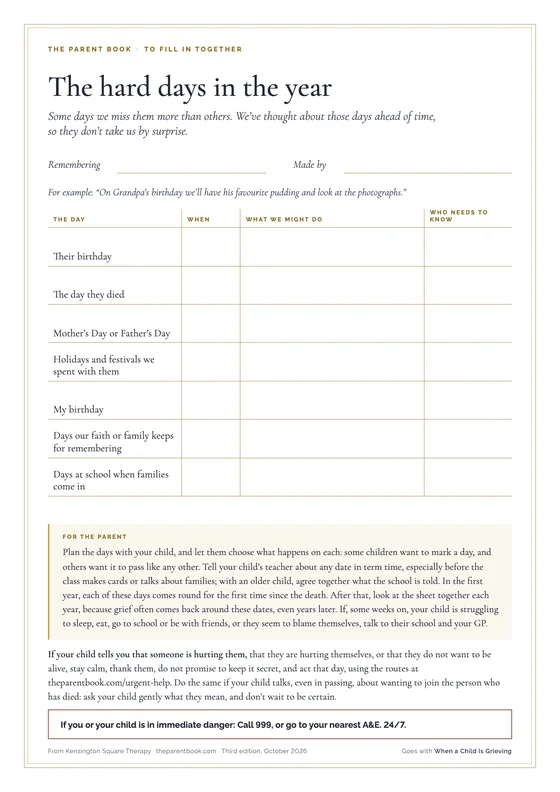 The hard days in the year
To fill in together · A4 · With a subscription
The hard days in the year
To fill in together · A4 · With a subscription
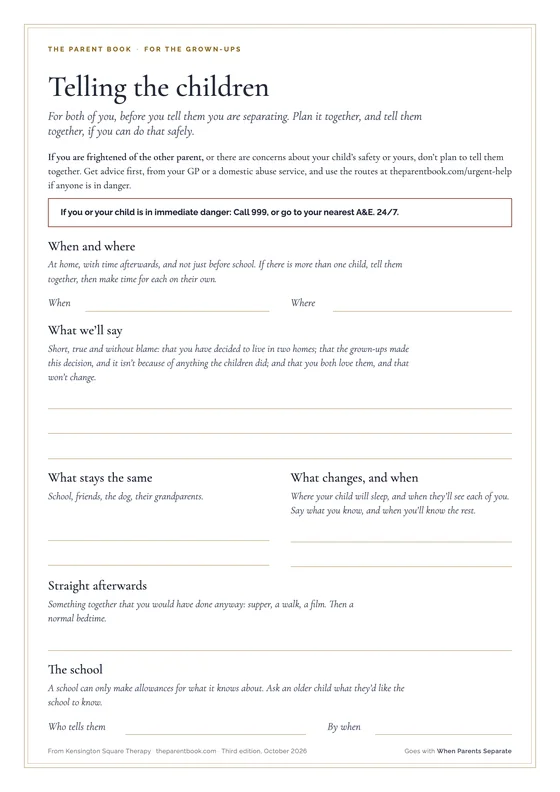 Telling the children
For the grown-ups · A4, two sides · With a subscription
Telling the children
For the grown-ups · A4, two sides · With a subscription
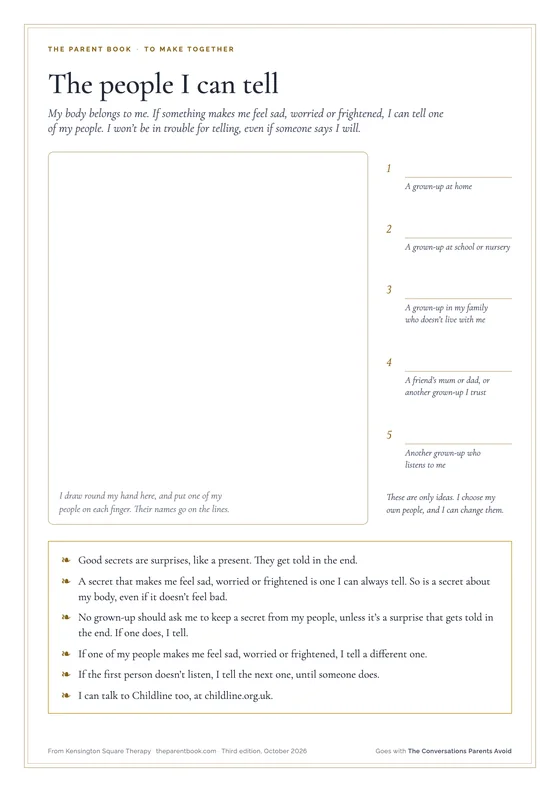 The people I can tell
To make together · A4, two pages · Free
The people I can tell
To make together · A4, two pages · Free
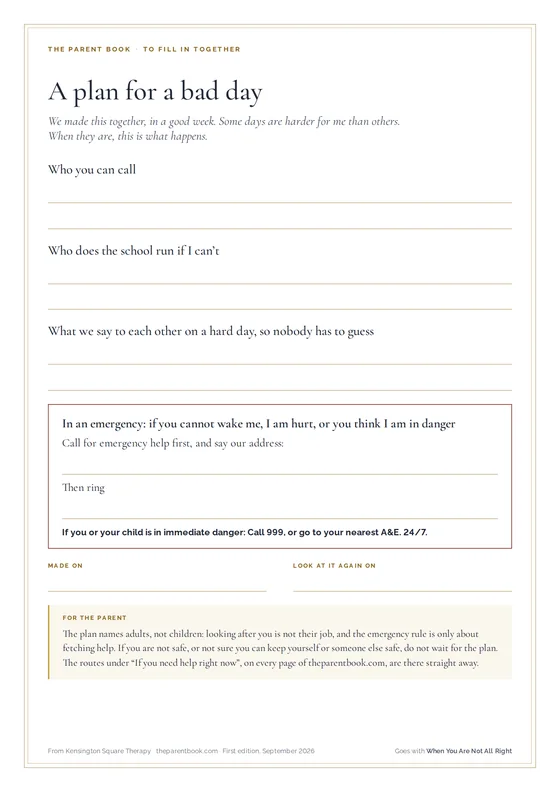 A plan for a bad day
To fill in together · A4 · Free
A plan for a bad day
To fill in together · A4 · Free
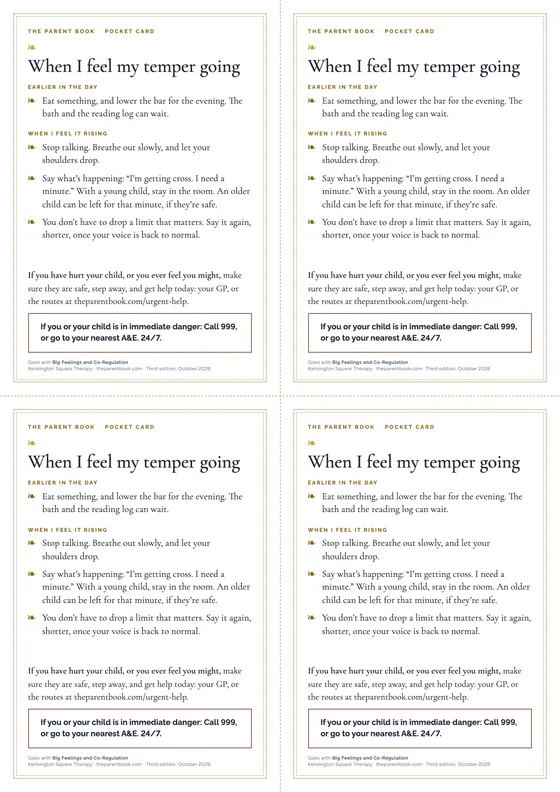 Putting it right
Pocket card · A4, four cards to cut, two sides · With a subscription
Putting it right
Pocket card · A4, four cards to cut, two sides · With a subscription
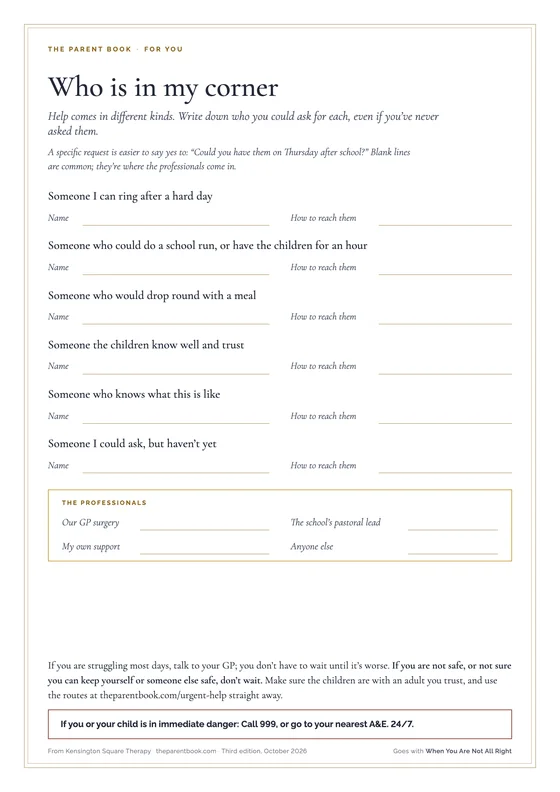 Who is in my corner
For you · A4 · With a subscription
Who is in my corner
For you · A4 · With a subscription
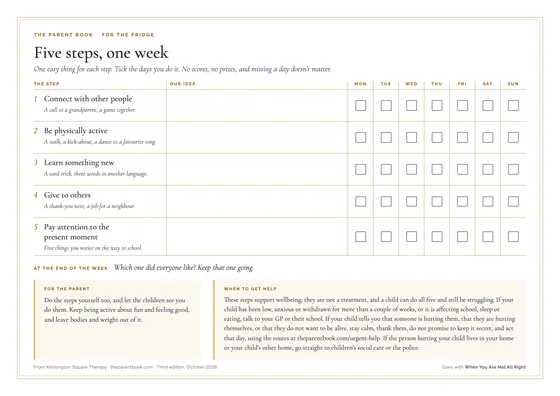 Five steps, one week
For the fridge · A4 landscape · With a subscription
Five steps, one week
For the fridge · A4 landscape · With a subscription
 What to say: growing up
Cards to cut out · A4, eight cards to cut · With a subscription
What to say: growing up
Cards to cut out · A4, eight cards to cut · With a subscription
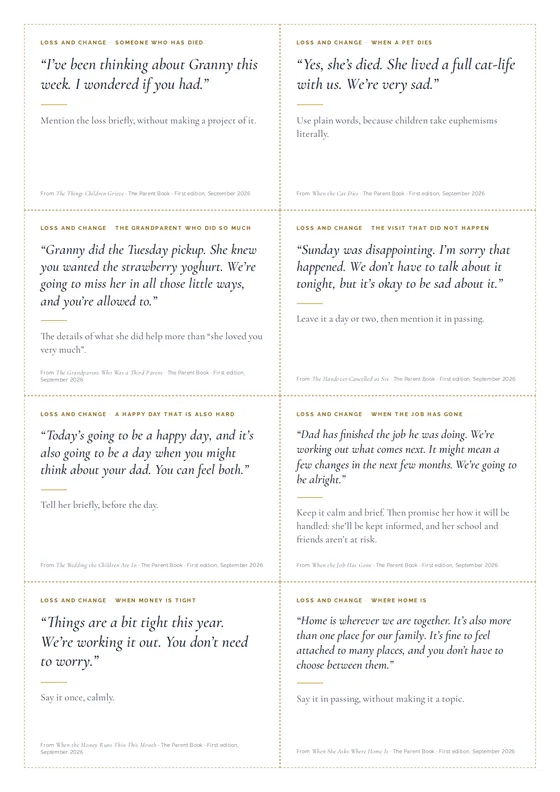 What to say: loss and change
Cards to cut out · A4, eight cards to cut · With a subscription
What to say: loss and change
Cards to cut out · A4, eight cards to cut · With a subscription
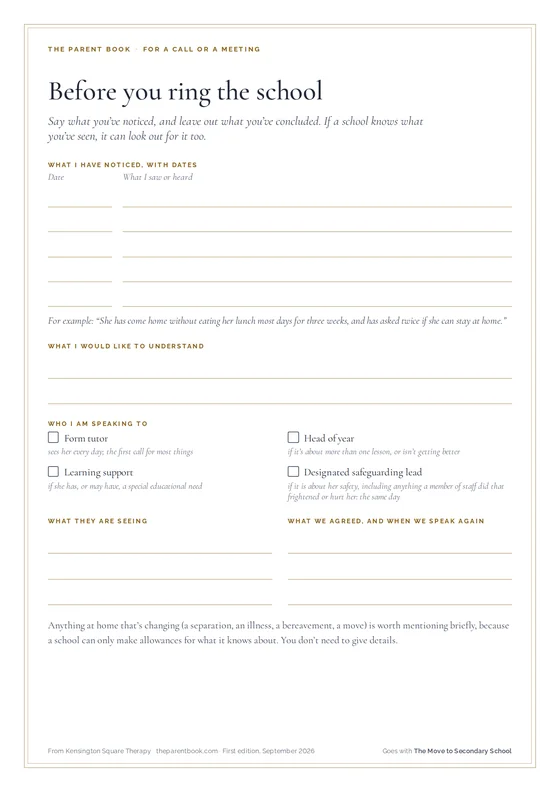 Before you ring the school
For a call or a meeting · A4 · Free
Before you ring the school
For a call or a meeting · A4 · Free
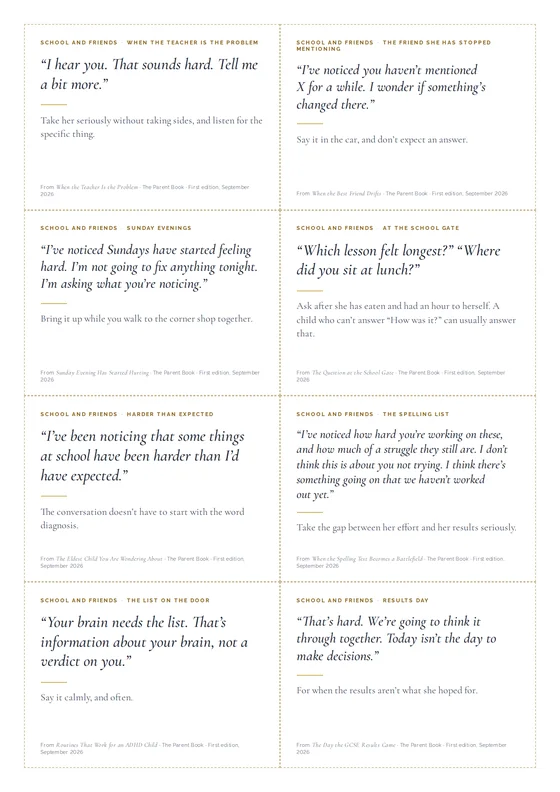 What to say: school and friends
Cards to cut out · A4, eight cards to cut · Free
What to say: school and friends
Cards to cut out · A4, eight cards to cut · Free
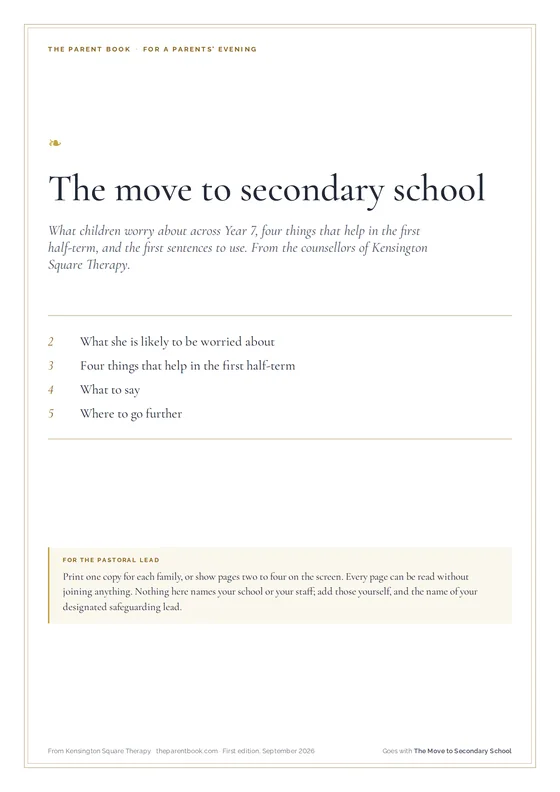 The move to secondary school, for a parents’ evening
For a parents’ evening · A4, five pages · Free
The move to secondary school, for a parents’ evening
For a parents’ evening · A4, five pages · Free
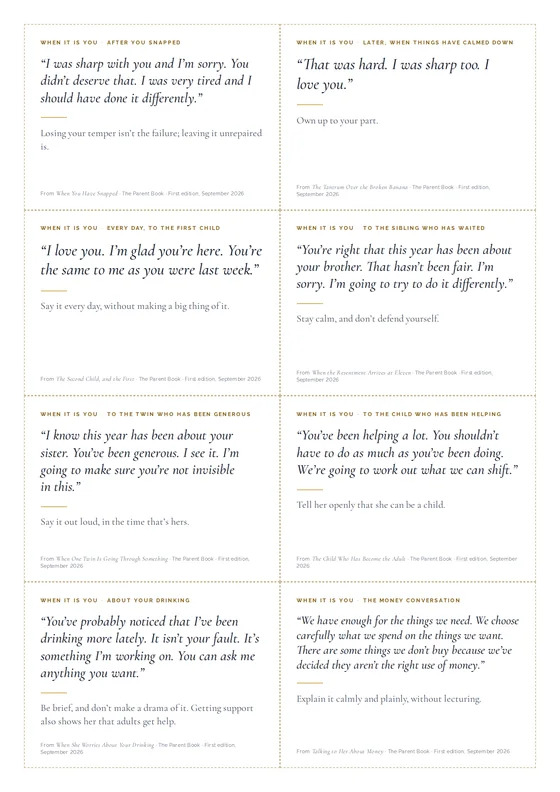 What to say: when it is you
Cards to cut out · A4, eight cards to cut · With a subscription
What to say: when it is you
Cards to cut out · A4, eight cards to cut · With a subscription
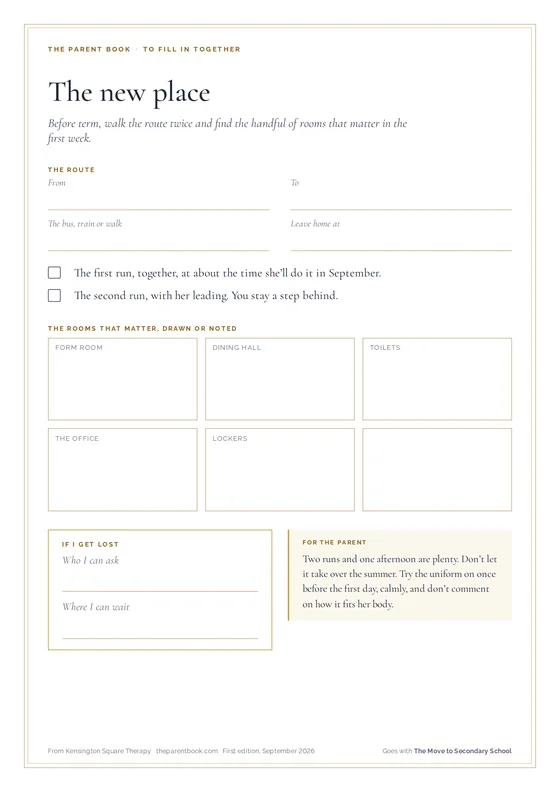 The new place
To fill in together · A4 · With a subscription
The new place
To fill in together · A4 · With a subscription
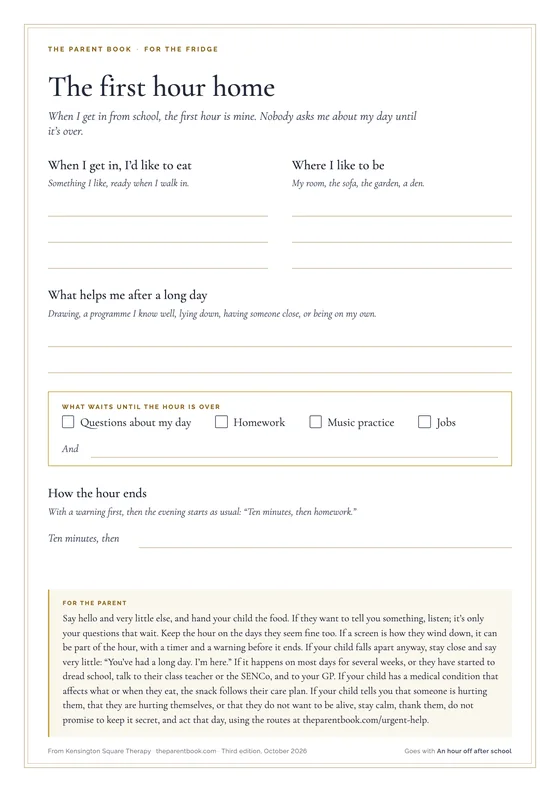 The first hour home
For the fridge · A4 · With a subscription
The first hour home
For the fridge · A4 · With a subscription
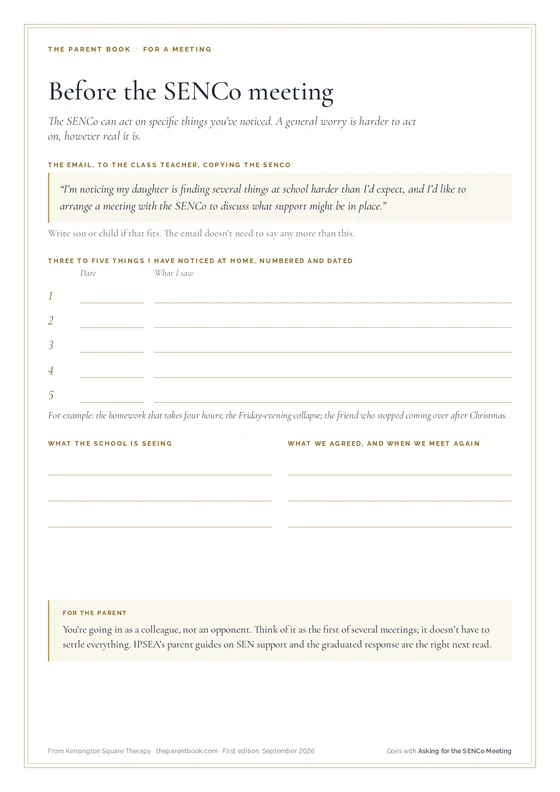 Before the SENCo meeting
For a meeting · A4 · Free
Before the SENCo meeting
For a meeting · A4 · Free
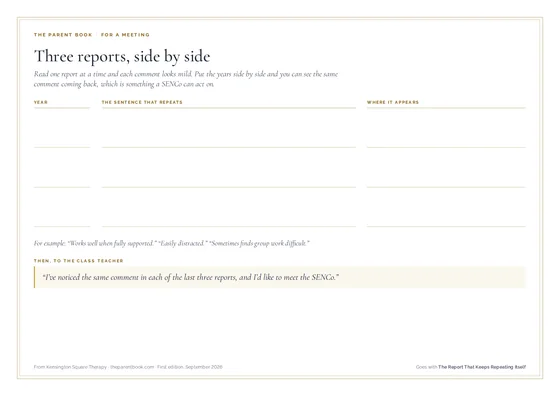 Three reports, side by side
For a meeting · A4 landscape · Free
Three reports, side by side
For a meeting · A4 landscape · Free
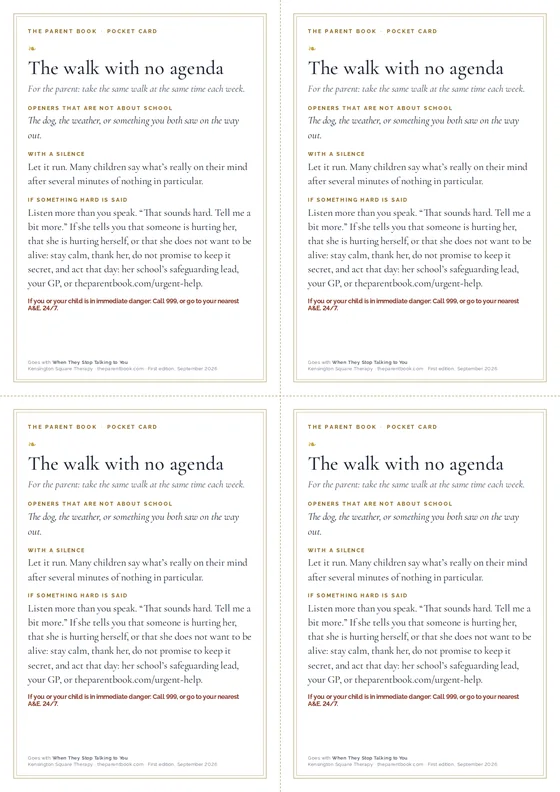 The walk with no agenda
Pocket card · A4, four cards to cut · With a subscription
The walk with no agenda
Pocket card · A4, four cards to cut · With a subscription
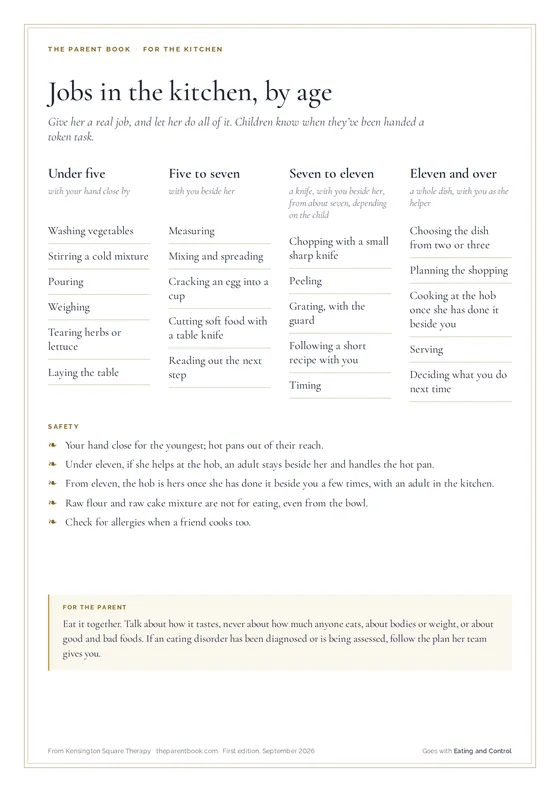 Jobs in the kitchen, by age
For the kitchen · A4 · With a subscription
Jobs in the kitchen, by age
For the kitchen · A4 · With a subscription
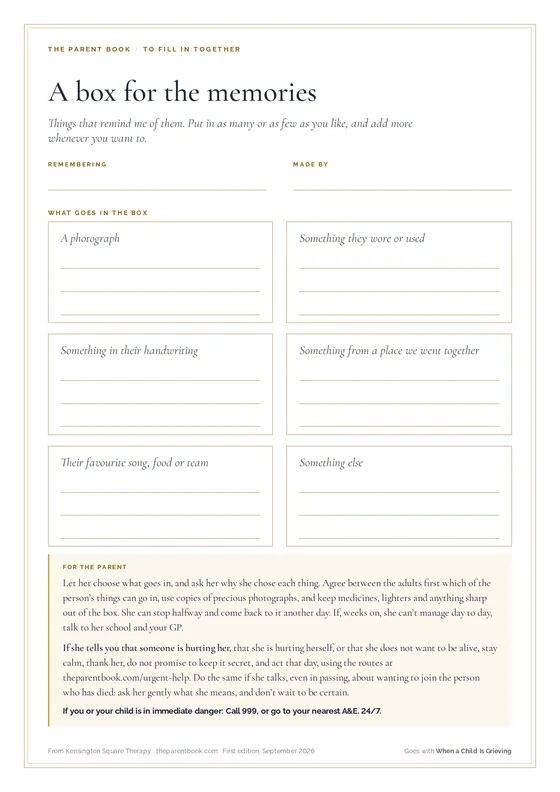 A box for the memories
To fill in together · A4, two pages · With a subscription
A box for the memories
To fill in together · A4, two pages · With a subscription
 Talking, side by side
Cards to cut out · A4, four cards to cut · With a subscription
Talking, side by side
Cards to cut out · A4, four cards to cut · With a subscription
32 on difficult conversations
Chosen by the therapists who write the library: books for you and to read with your child, and pages from organisations we trust.
Also on this shelf
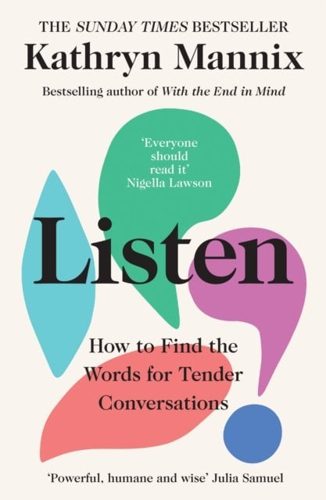
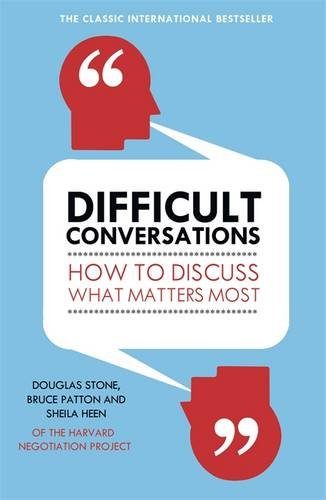

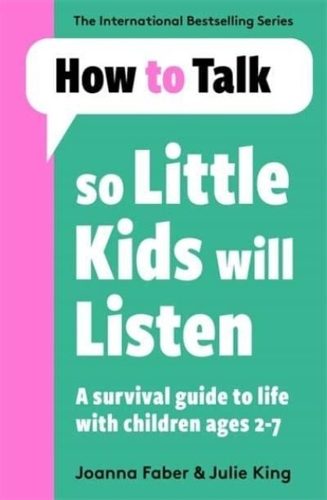
And 15 more. Every book on the shelf, with a therapist’s note on what it is good for, is in the library.
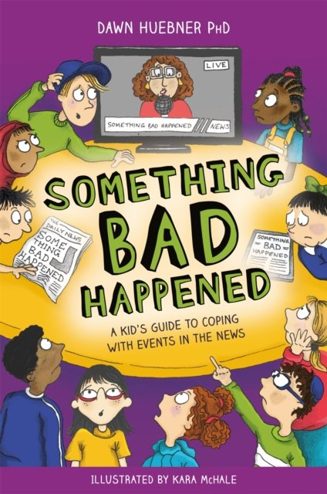
Also on this shelf


Every book on the shelf, with a therapist’s note on what it is good for, is in the library.
NSPCC
How to open conversations about divorce, illness, death, drugs, sex and online risks, using books, TV storylines and many small talks rather than one big one.
NHS
Ten plain rules for talking with a teenager: do not judge, do not assume you know what is wrong, pick your battles, and ask questions that invite more than a shrug.
Child Bereavement UK
Answers the questions parents dread: who should tell a child, when and where, what words to use, how much to say about how someone died, and whether to show your own grief.
NSPCC
The NSPCC’s simple framework for teaching young children that their body belongs to them, that some secrets should not be kept, and whom to tell if something feels wrong.
NHS
How to help a child put feelings into words, including reading clues in their play, and what to do when a child is too frightened to talk or is showing it through behaviour.
NSPCC
How to talk to children about relationships, sex and consent, what a healthy relationship looks like, and warning signs of an unhealthy or controlling one.
YoungMinds
For a parent living with their own mental illness: how it can shape family life, how to talk to your child about it at their level, and where support exists for both of you.
Place2Be
Why these conversations feel awkward, what research shows children already notice about race at a young age, and ways to talk about racial identity and unfairness.
Nothing on this shelf is written for that age yet.
16 on difficult conversations
Podcast episodes, talks and films, each chosen for a reason.
Get a Grip - Evidence-Based Conversations for Parents and Educators
Oxford researcher Louise Dalton explains why being open and honest with children about a parent’s or relative’s serious illness protects their mental health, and how to begin those conversations, with advice for schools.
Also on this shelf
Ask Lisa: Untangling Family Life
Ask Lisa: Untangling Family Life
Thriving Kids
Good Inside with Dr. Becky
And two more. Every episode on the shelf, with a therapist’s note on what it is good for, is in the library.
YouTube · 3 min
Brené Brown, YouTube
A three-minute animation on the difference between empathy and sympathy, why “at least” rarely helps, and what connection sounds like. Teenagers tend to enjoy it too.
Also on this shelf
YouTube · 2 min
Place2Be, YouTube
YouTube · 2 min
YoungMinds, YouTube
YouTube · 5 min
Anna Freud, YouTube
YouTube · 4 min
UK Trauma Council, YouTube
And four more. Every film on the shelf, with a therapist’s note on what it is good for, is in the library.
Nothing on this shelf is written for that age yet.
This usually starts at school rather than at the surgery. The adults who see your child every day are the first people to tell, and often the fastest route to a change. The GP is there if it persists or deepens.
Where to start
The pastoral lead, the head of year, or the form tutor. Free, already knows your child, and often the quickest way to get something changed at school.
Before or alongside anything else. A school cannot act on what it has not been told, and what you bring is often what it did not have.
The gateway to everything the NHS offers a child: paediatric assessment, a referral to CAMHS, and support for you as the parent.
Ask for a double appointment. Describe the pattern over weeks rather than the worst single day, and say plainly what you are worried about. Bring a written list; the ten minutes go quickly.
A registered counsellor or psychotherapist, found through the BACP or NCPS directories. Waiting lists are shorter than the NHS and you choose who your child sits with.
When waiting is the problem, or when you want a particular kind of help. What to look for, and what to expect, is set out in our guide to finding a therapist.
For difficult conversations
A free, confidential helpline for any parenting or family worry, by phone, live chat, WhatsApp or email, staffed by trained family support workers.
When you need to talk it through with someone, about your child or about how you are managing, and you do not need a specialist to do it.
Coram Family Lives helpline 0808 800 2222 · Mon-Fri 9am-9pm; weekends 10am-3pm; closed bank holidays · Live chat and WhatsApp 07441 444125 at the same hours; email askus@coramfamilylives.org.uk · Outside those hours the line is closed. Samaritans answer at any hour on 116 123, and Shout answer if you text the word SHOUT to 85258.
www.coramfamilylives.org.uk/how-we-can-help/confidential-helpline
A free one-to-one webchat with a trained parenting coach, and a library of articles by age on behaviour, sleep, neurodiversity and family life.
When you want to talk it through with someone in writing, this week, without a referral.
Free one-to-one webchat with a parenting coach, Mon-Fri, with evening slots on Mon and Thu; check the site for current times · Parent Talk+ by phone or video for parents of children with additional needs, up to eight free sessions
Every organisation for difficult conversations, and when each is the right call Finding a therapist