
The chapter to start with
What to Do When School Is the Problem
For parents whose child has started dreading school.
14 min read · Ages 4 to 18
Read the chapter Your first chapter is free to read in full.
↑ ↓ to moveEnter to openEsc to close
School and pressure
This covers homework, exams and the teacher who doesn’t seem to notice your child. Outside the home, school is the biggest part of most children’s lives, and these pages are for the parent trying to work out when to push, when to back off and when to pick up the phone.
What to do first, what helps and who else can help are free to read and to print. So is the first chapter you open.
What the library holds on school stress
From the therapists
A child who is struggling at school is very rarely a child who isn’t trying. Something has become harder than they can manage right now, and that’s information you can use.
From the chapters
The school, the class teacher and the in-school enrichment that the year is built around will cover the academic preparation. Your job is to make home feel different from that, so your child has somewhere to recover.
“You kept going when that question was hard.” “You were kind to your sister tonight.” Say exactly what you saw, without judging how good it was. Praise that depends on outcomes adds pressure.
Sit down, and don’t argue with the feeling: “That sounds really hard. Tell me what happened.” Let them finish before you offer a single suggestion.
Children with a stable home are very good, in time, at finding friends they fit with. Time you put into home life helps them socially too.
10 on school stress
The long reads, each on one situation, written by a therapist.
The chapter to start with
For parents whose child has started dreading school.
14 min read · Ages 4 to 18
Read the chapter Your first chapter is free to read in full.
Nothing on this shelf is written for that age yet.
43 on school stress
Short pieces for the moment in front of you, each with things to try.
School & pressure
When you ring the school, describe what you’ve seen, with dates, so staff know what to look for.
Try this
From the tip
For most things, start with your child’s form tutor, who sees them every day. If it’s about more than one lesson, or isn’t getting better, go to the head of year. If your child has, or may have, a special educational need, go to whoever leads learning support. If it is about your child’s safety, or about how a member of staff has treated them, do not start with the form tutor: ask for the designated safeguarding lead that day. And tell the school, briefly, about anything that’s changing at home, because a school can only allow for what it knows.
Family dynamics
The school may still treat you as the grandparent, even though you’re now the parent as well.
Try this
From the tip
Forms go to the absent parent, requests for permission go through the wrong channel, and the school nurse rings a mobile number that hasn’t been updated.
School & pressure
Take your child seriously without taking sides, and listen for specific incidents you can act on.
Try this
More quick tips on school stress
Family dynamics
If a school misreads your child’s culture, specific examples usually help it adjust.
2 min read · Ages 5 to 13
Family transitions
After a long absence, your child’s place at school is still there, but stepping back into it takes planning.
2 min read · Ages 7 to 13
School & pressure
When Sunday evenings start to hurt, there is usually more than one reason, so slow down before deciding which conversation to have.
2 min read · Ages 7 to 13
School & pressure
An apprenticeship deserves the same care you’d give to choosing a university.
2 min read · Ages 13 to 18
School & pressure
If every mark changes how your teenager sees themselves, talk about the work more than the grade.
2 min read · Ages 13 to 18
School & pressure
If your child keeps redoing their homework because it isn’t perfect, end the session for them.
2 min read · Ages 7 to 13
School & pressure
Pack the bag together for a few weeks, then hand the job to your child on a date you’ve set.
2 min read · Ages 9 to 13
School & pressure
In the first weeks at a new school, children are often too tired to answer questions at the gate.
2 min read · Ages 9 to 13
Neurodiversity
When the same comment turns up in three years of school reports, take it seriously.
1 min read · Ages 7 to 13
Family transitions
A year out is your teenager’s decision to make; your part is to ask them calmly what they are thinking.
2 min read · Ages 16 and over
Home And Belonging
Your school’s focus on safeguarding is required by law, and every school in the UK shares it.
2 min read
Big feelings
An anxious high achiever can look exactly like a teenager with healthy ambition.
2 min read · Ages 11 to 18
Family dynamics
Assignments like the family tree can be hard for adopted children, and most schools will adapt them if asked.
2 min read · Ages 5 to 11
School & pressure
Staying away from school can make a child’s anxiety about going in worse, so start working with the school early.
2 min read · Ages 11 to 16
Friendships & social life
What you do in the first ten minutes decides whether your child tells you the next thing.
2 min read · Ages 7 to 13
Neurodiversity
Ask for the meeting in a short email, and bring three to five specific examples in writing.
1 min read · Ages 5 to 11
Big feelings
Children often hide OCD at school, and a short conversation can help stop staff feeding it without meaning to.
2 min read · Ages 7 to 18
School & pressure
Whatever your teenager’s GCSE grades, respond warmly, and if the results are disappointing, leave decisions for another day.
2 min read · Ages 13 to 18
Health and difference
The school needs the medical specifics, and your child needs to be known for more than their condition.
2 min read · Ages 5 to 13
Health and difference
Most teachers don’t know which pupils are young carers, so tell the school.
1 min read · Ages 7 to 16
Home And Belonging
Most schools have a SENCo, though most newly arrived parents haven’t met theirs.
2 min read · Ages 5 to 16
School & pressure
Put the admissions file away three evenings a week, so your child isn’t doing the test for two people.
2 min read · Ages 9 to 11
Home And Belonging
When half of your child’s life goes unmentioned at school, keep it part of everyday life at home.
1 min read · Ages 5 to 13
Family dynamics
You and your child’s teacher are both seeing the real child, so the meeting goes best when you compare notes.
2 min read · Ages 5 to 16
School & pressure
If your teenager decides not to go to university, treat it as their decision and ask what they want instead.
2 min read · Ages 13 and over
Friendships & social life
Whether it’s a falling-out or bullying decides what you do next, so find out which before you act.
2 min read · Ages 5 to 11
Friendships & social life
A lonely child generally seems fine, which is why loneliness is so easy to miss.
1 min read · Ages 7 to 11
Big feelings
A teenager with good grades and teachers who say everything’s fine can still be anxious and exhausted.
2 min read · Ages 11 to 18
Friendships & social life
Many September friendships loosen by half-term, and usually neither child has done anything wrong.
2 min read · Ages 9 to 13
Friendships & social life
Being left out of a group chat hurts; take it seriously, and send no messages tonight.
2 min read · Ages 9 to 16
Friendships & social life
Your child’s stomach ache is real, and pushing them through party after party makes the next one harder.
2 min read · Ages 7 to 13
Friendships & social life
Tell your teenager now, before anything happens, that you will never take their phone away because they told you something.
2 min read · Ages 13 to 18
Neurodiversity
A spelling list that takes two hours, however hard your child works, can be a sign of dyslexia.
1 min read · Ages 5 to 11
School & pressure
Your child held it together all day; give them food and no questions for a while, and tell the school what you see.
2 min read · Ages 5 to 13
Neurodiversity
For a child with ADHD, homework goes better in short timed blocks, one instruction at a time, with you nearby.
2 min read · Ages 7 to 13
Neurodiversity
If an hour of maths ends with two questions done, an ADHD child has usually been working very hard.
2 min read · Ages 7 to 13
School & pressure
In the week before exams, protect your teenager’s sleep, meals and some peace at home.
2 min read · Ages 13 to 18
Bodies & growing up
When your daughter’s first period starts at school, take her home and treat the rest of the afternoon as normal.
1 min read · Ages 9 to 13
Online life
If your child has let an AI tool do their homework, go through what it wrote with them.
1 min read · Ages 7 to 13
Neurodiversity
Be specific when you first raise an EHCP with the school, and treat it as a partnership.
2 min read · Ages 5 to 11
The rest of each tip, with more to try and why it works, is in the library.
Nothing on this shelf is written for that age yet.
10 on school stress
Small, repeatable things to do with your child, with what to watch for and when to get help.
To do together · A day, and three evenings
One day a week, and a few evenings, with no papers, no practice and no talk of the test. Keep it most weeks, and let it go when a week slips.
What it is for. A child preparing for an entrance test needs regular evidence that there is more to them than the test. A day off from it each week helps keep the test in proportion, for them and for you.
Safety. If your child helps at the hob, an adult stays beside them and handles the hot pan.
When to get help. If your child is sick or sleeping badly before tests, the worry is getting worse, or it is affecting their eating or their wish to go to school, talk to their school and your GP. The routes under “If you need help right now”, at the foot of every page, are for when it cannot wait.
The other four steps, and your part in it, are in the library.
More to do together
To do together
Agree with the school and your child how they get into school each morning: who meets them, and where they go first.
About 30 min · Ages 7 to 16 · With a sheet to print
To do together
The same routine after every practice paper: collect your child, give them something to eat, walk home, and ask nothing about the paper that day.
About 30 min · Ages 9 to 18 · With a sheet to print
To do together
Your child draws their day from gate to gate and marks where it feels heavy. You take the one moment they mark, not a conclusion, to the school.
About 20 min · Ages 5 to 13 · With a sheet to print
To do together
For the child who holds it together at school and comes apart at home. The first hour back asks nothing of them: something to eat, somewhere to recover, and no questions yet.
The first hour home · Ages 5 to 13 · With a sheet to print
To do together
Before term, do the route once together and once with your child leading, and draw the few rooms that matter.
Two trips, and an afternoon · Ages 9 to 13 · With a sheet to print
To do together
Once a week, at one meal, everyone says one thing they got wrong, starting with you. Nobody comments on anyone else’s.
About 5 min · Ages 5 to 16 · With a sheet to print
To do together
Before a new class or a new school, your child tells their teacher, in their own words, what they enjoy, what they find hard and what helps. You write it down together and hand it in.
About 30 min · Ages 5 to 13 · With a sheet to print
To do together
On a calm day, you play the other child and your child tries out what they might say. Keep it short and light, and do it once or twice at most.
About 10 min · Ages 5 to 13 · With a sheet to print
To do together
With an autistic teenager, list what uses up their energy and what gives it back, and plan time to recover before they run out.
About 20 min · Ages 11 to 18 · With a sheet to print
Nothing on this shelf is written for that age yet.
37 on school stress
Made to be printed, kept, and handed on.
To print and keep
What to do first, what helps, a few things to try and who else can help, together in one guide. Free to print and keep, or to hand to the other parent, a grandparent or the school.
Who else can help with school stress, on a sheet of its own.
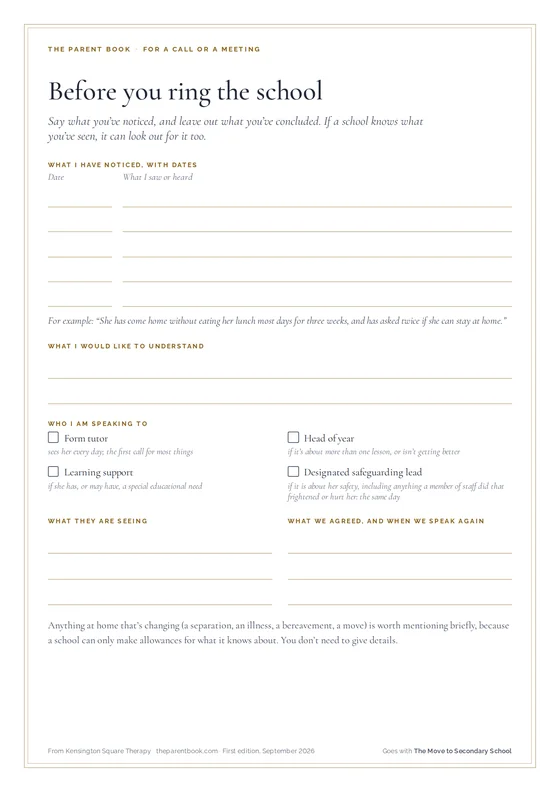 Before you ring the school
For a call or a meeting · A4 · Free
Before you ring the school
For a call or a meeting · A4 · Free
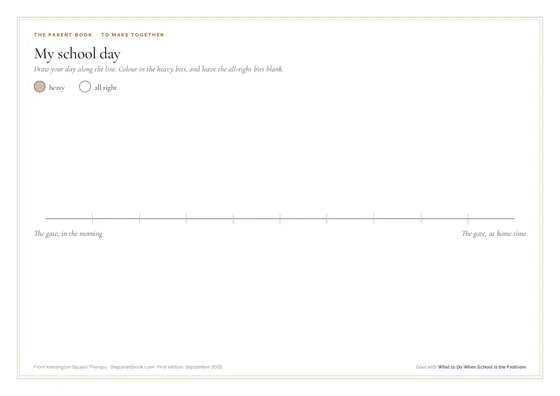 The school day, drawn as a line
To make together · A4 landscape, two pages · With a subscription
The school day, drawn as a line
To make together · A4 landscape, two pages · With a subscription
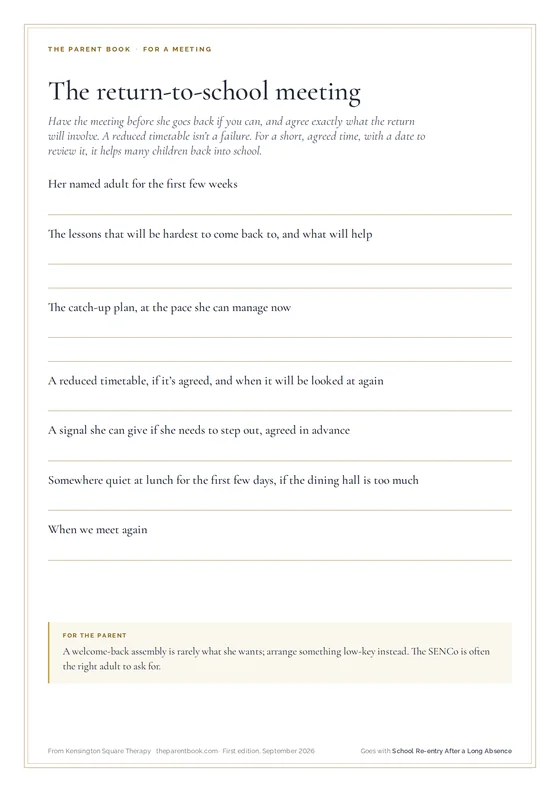 The return-to-school meeting
For a meeting · A4 · Free
The return-to-school meeting
For a meeting · A4 · Free
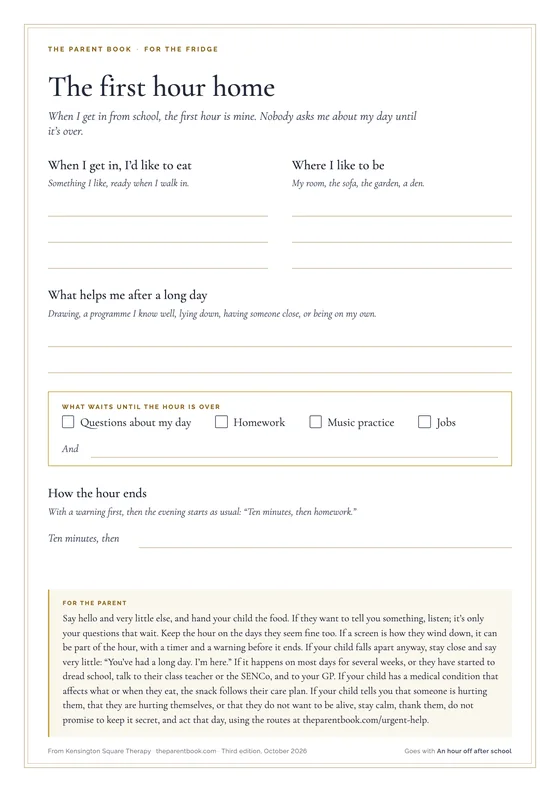 The first hour home
For the fridge · A4 · With a subscription
The first hour home
For the fridge · A4 · With a subscription
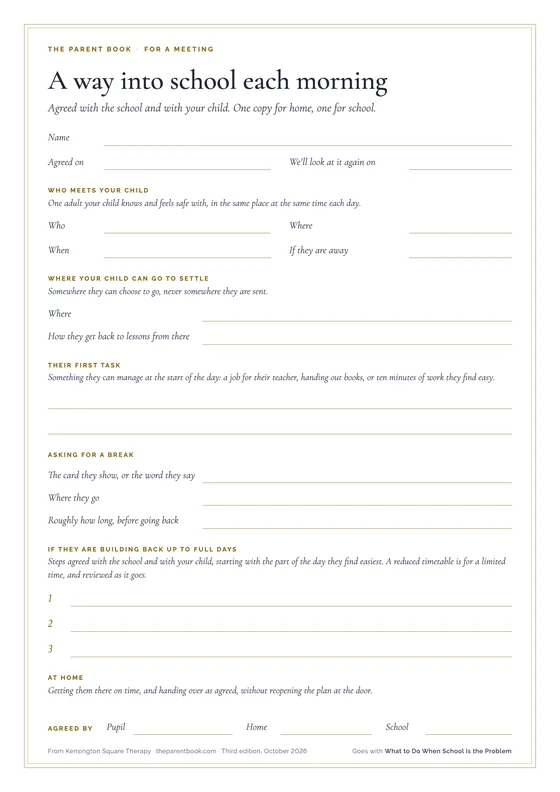 A way into school each morning
For a meeting · A4, two pages · With a subscription
A way into school each morning
For a meeting · A4, two pages · With a subscription
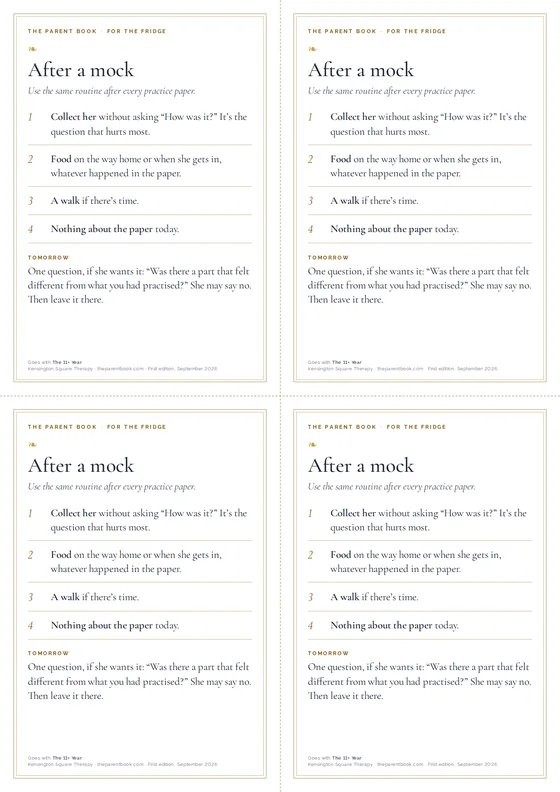 After a mock
For the fridge · A4, four cards to cut · With a subscription
After a mock
For the fridge · A4, four cards to cut · With a subscription
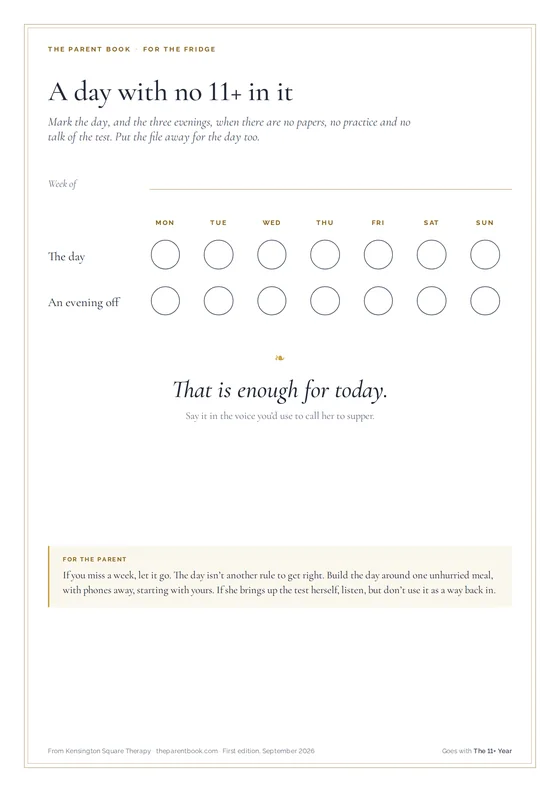 A day with no 11+ in it
For the fridge · A4 · With a subscription
A day with no 11+ in it
For the fridge · A4 · With a subscription
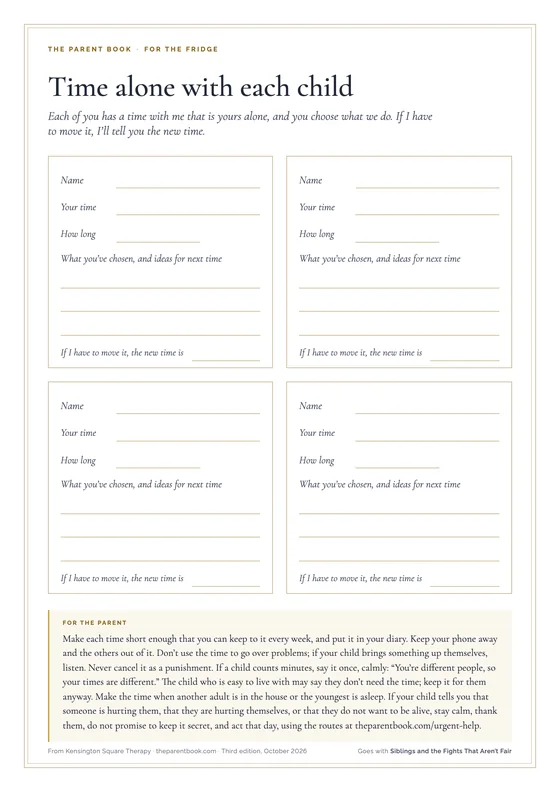 Time alone with each child
For the fridge · A4 · With a subscription
Time alone with each child
For the fridge · A4 · With a subscription
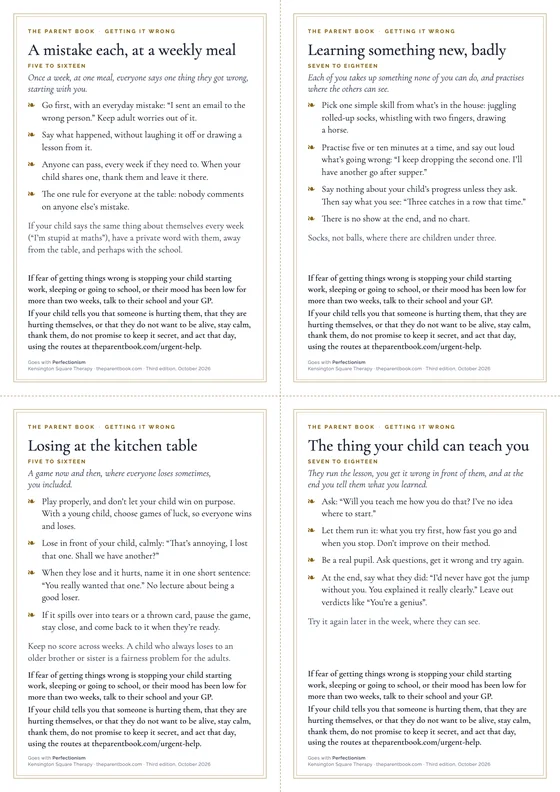 Getting it wrong
Cards to cut out · A4, four cards to cut · With a subscription
Getting it wrong
Cards to cut out · A4, four cards to cut · With a subscription
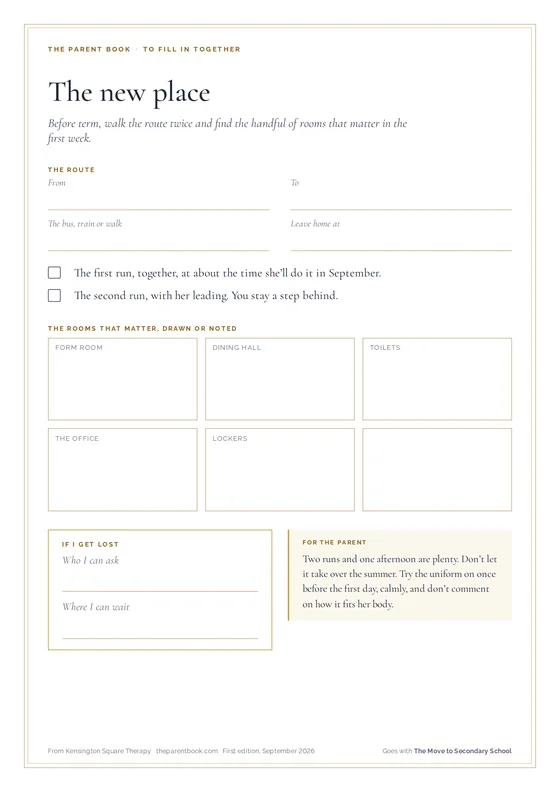 The new place
To fill in together · A4 · With a subscription
The new place
To fill in together · A4 · With a subscription
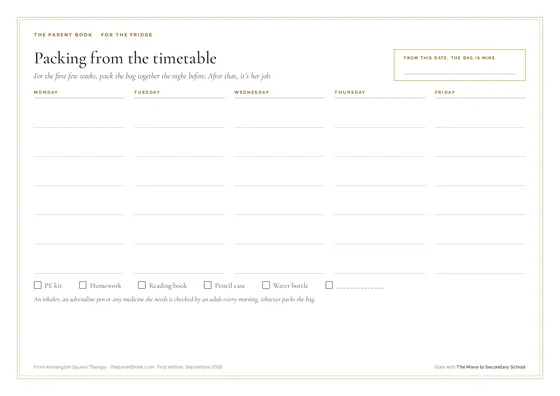 Packing from the timetable
For the fridge · A4 landscape · With a subscription
Packing from the timetable
For the fridge · A4 landscape · With a subscription
 What I will miss
To keep · A4, two pages · With a subscription
What I will miss
To keep · A4, two pages · With a subscription
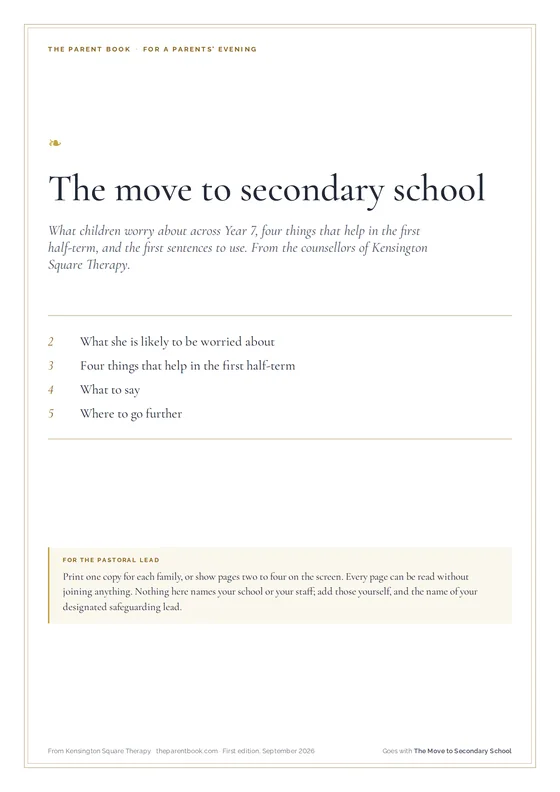 The move to secondary school, for a parents’ evening
For a parents’ evening · A4, five pages · Free
The move to secondary school, for a parents’ evening
For a parents’ evening · A4, five pages · Free
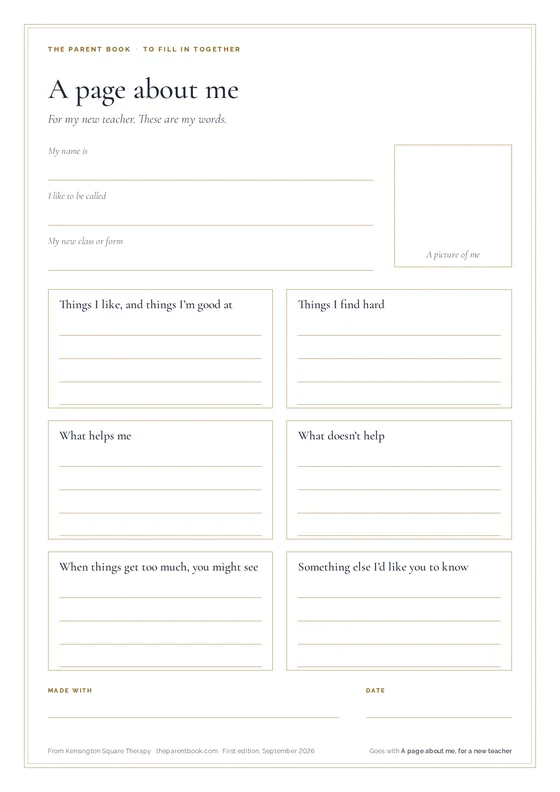 A page about me
To fill in together · A4, two pages · With a subscription
A page about me
To fill in together · A4, two pages · With a subscription
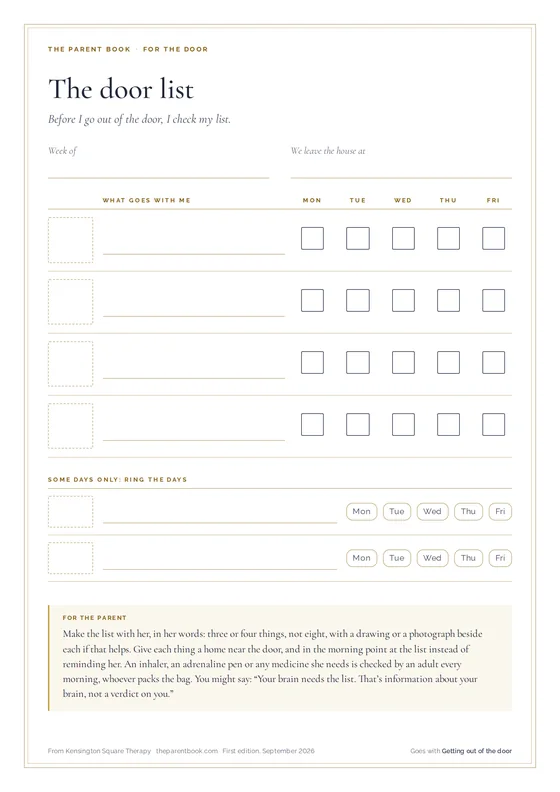 The door list
For the door · A4 · With a subscription
The door list
For the door · A4 · With a subscription
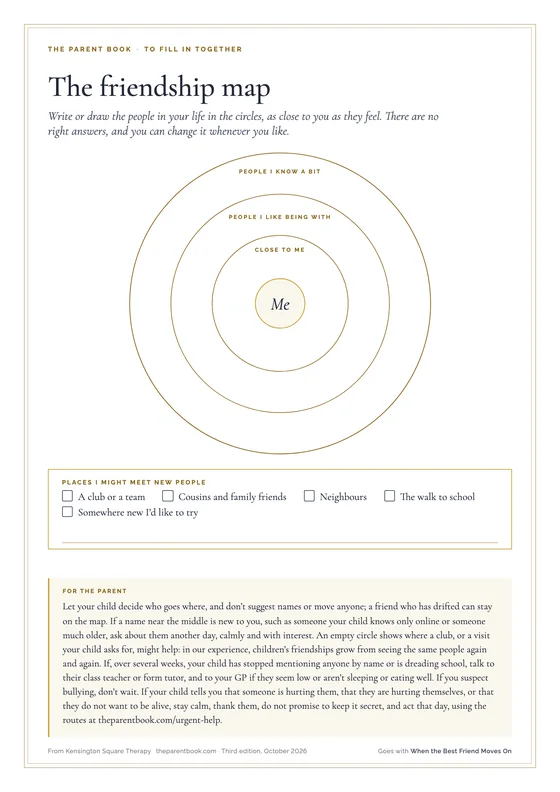 The friendship map
To fill in together · A4 · With a subscription
The friendship map
To fill in together · A4 · With a subscription
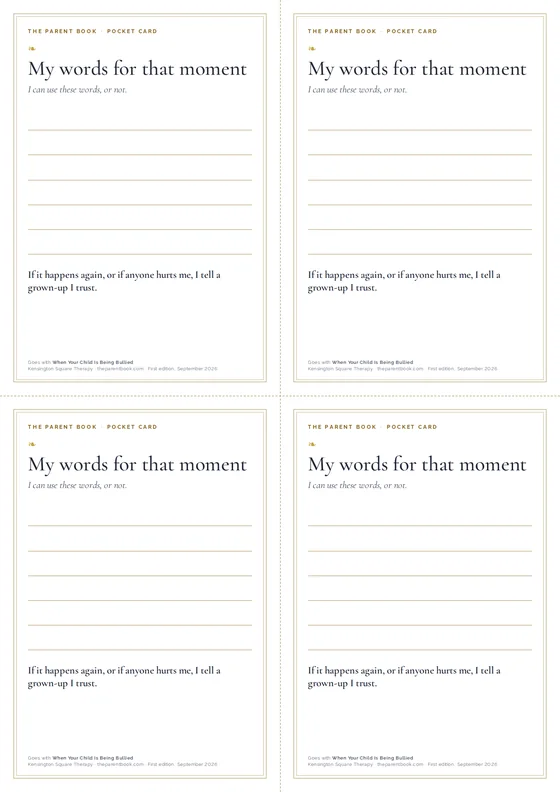 My words for that moment
Pocket card · A4, four cards to cut · With a subscription
My words for that moment
Pocket card · A4, four cards to cut · With a subscription
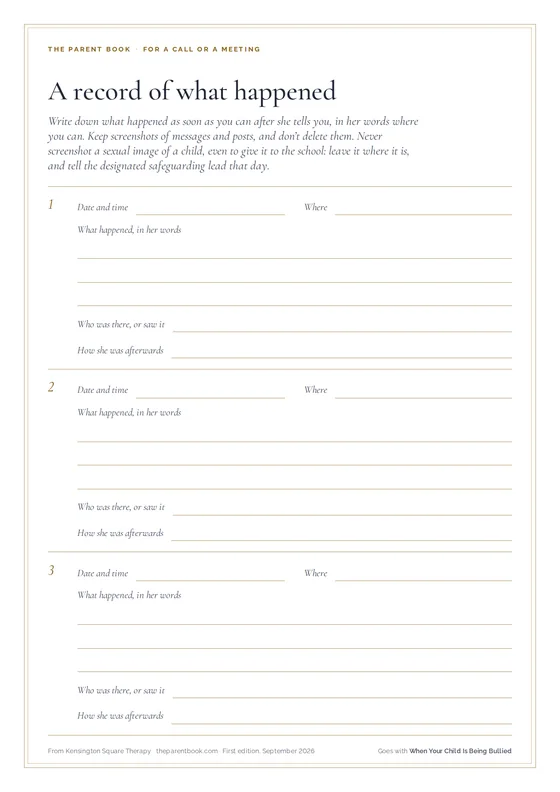 A record of what happened
For a call or a meeting · A4, two pages · Free
A record of what happened
For a call or a meeting · A4, two pages · Free
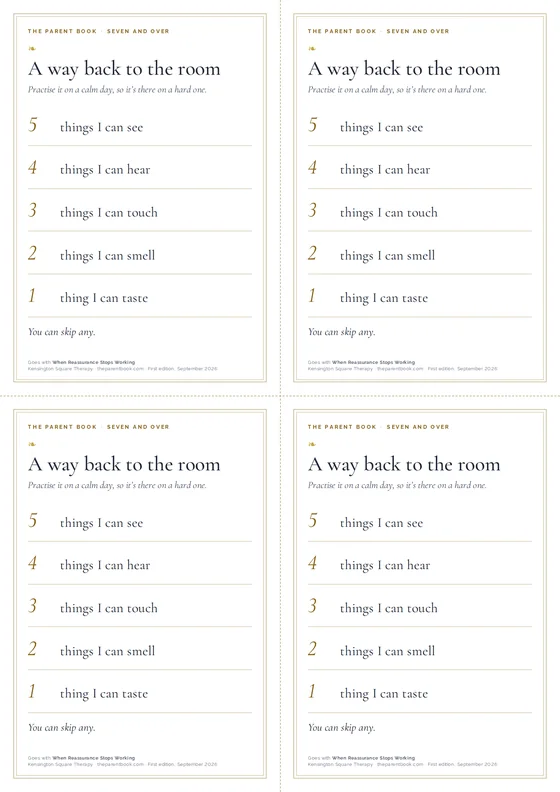 A way back to the room
Pocket card · A4, four cards to cut, two sides · With a subscription
A way back to the room
Pocket card · A4, four cards to cut, two sides · With a subscription
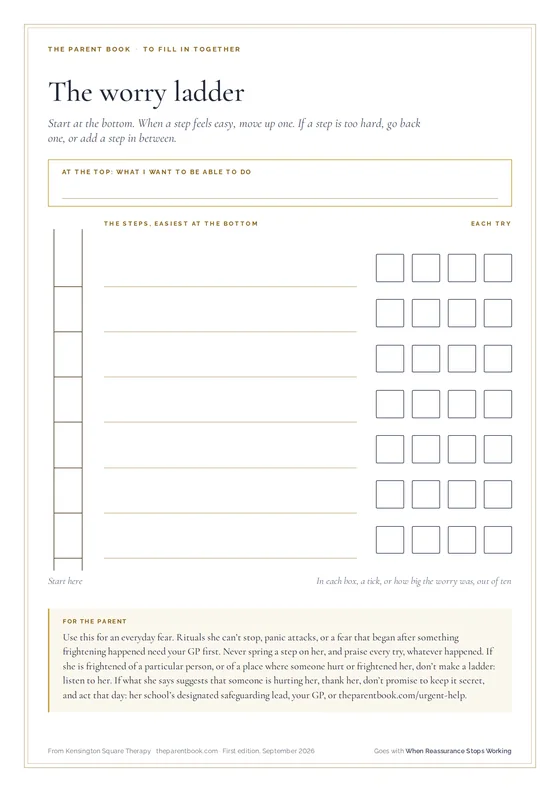 The worry ladder
To fill in together · A4 · Free
The worry ladder
To fill in together · A4 · Free
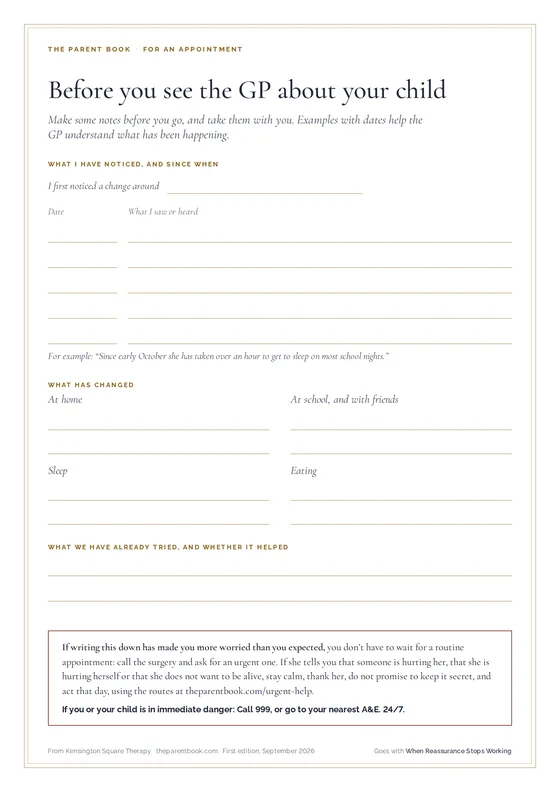 Before you see the GP about your child
For an appointment · A4, two sides · Free
Before you see the GP about your child
For an appointment · A4, two sides · Free
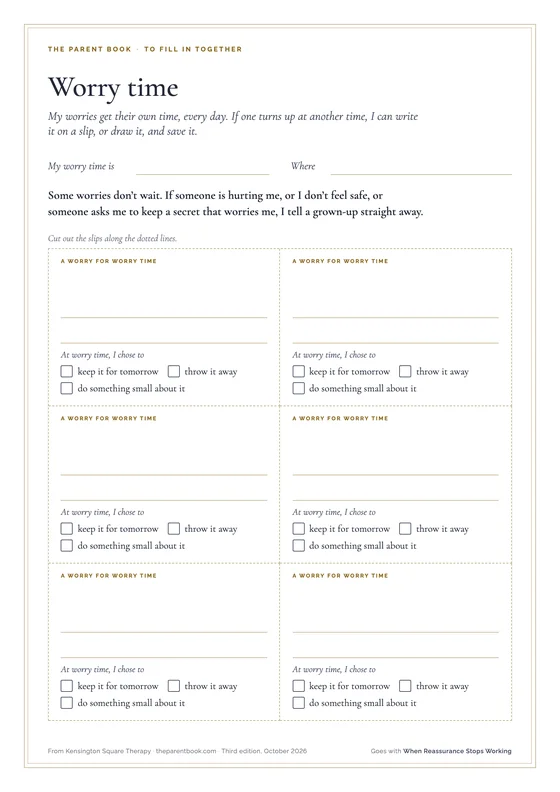 Worry time
To fill in together · A4, two pages · With a subscription
Worry time
To fill in together · A4, two pages · With a subscription
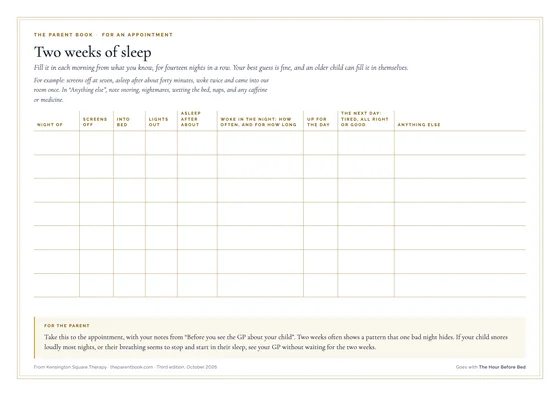 Two weeks of sleep
For an appointment · A4 landscape, two pages · With a subscription
Two weeks of sleep
For an appointment · A4 landscape, two pages · With a subscription
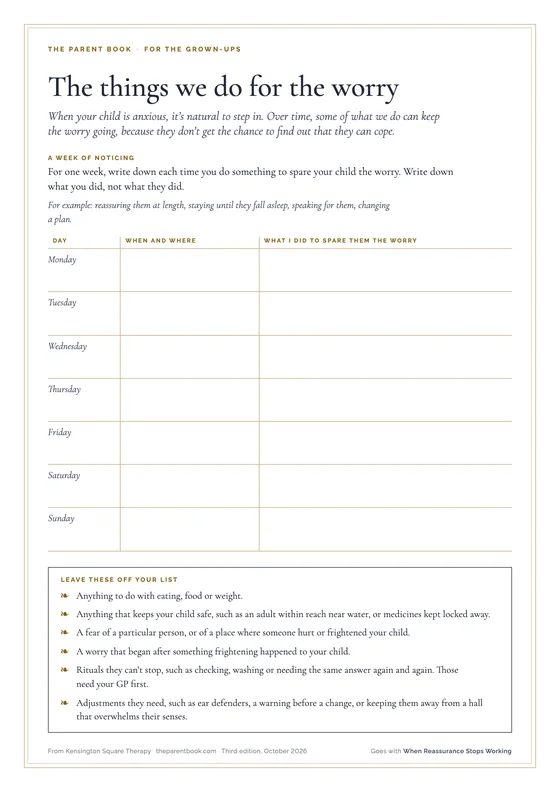 The things we do for the worry
For the grown-ups · A4, two sides · With a subscription
The things we do for the worry
For the grown-ups · A4, two sides · With a subscription
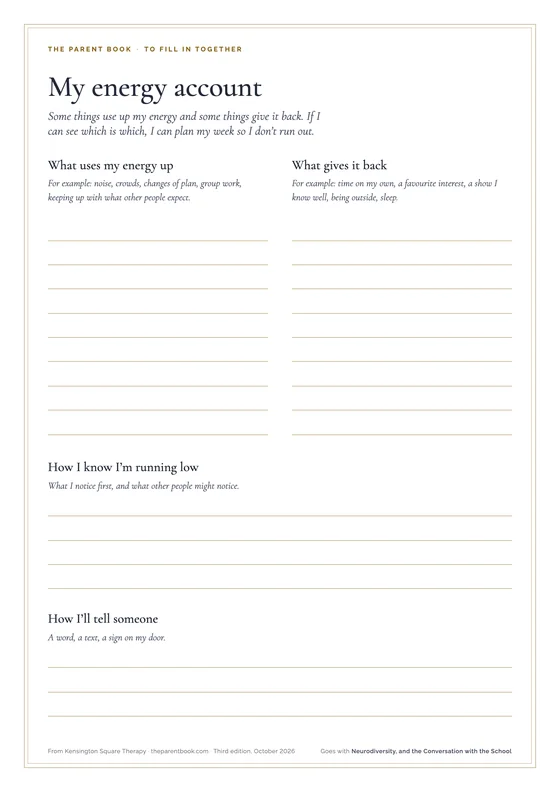 My energy account
To fill in together · A4, two sides · With a subscription
My energy account
To fill in together · A4, two sides · With a subscription
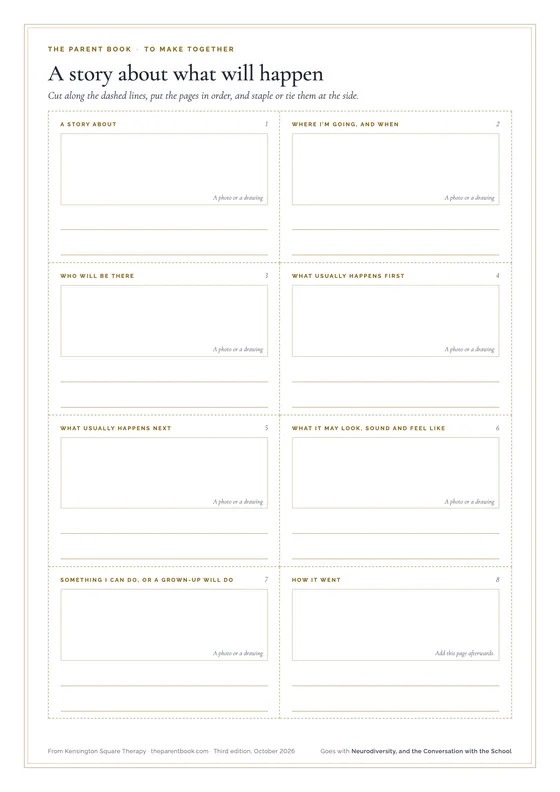 A story about what will happen
To make together · A4, two pages · With a subscription
A story about what will happen
To make together · A4, two pages · With a subscription
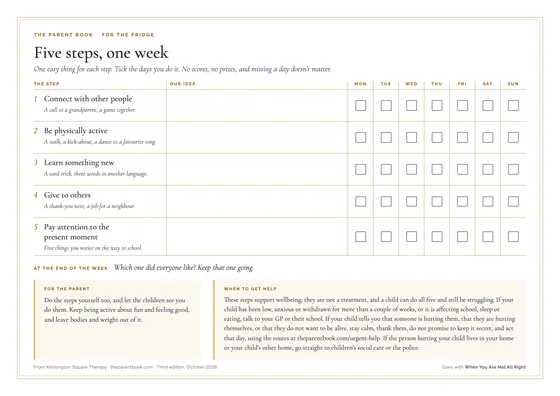 Five steps, one week
For the fridge · A4 landscape · With a subscription
Five steps, one week
For the fridge · A4 landscape · With a subscription
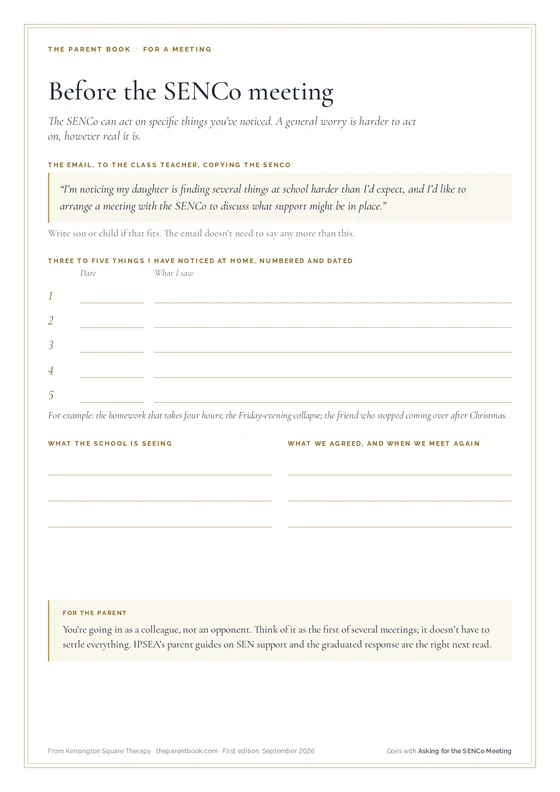 Before the SENCo meeting
For a meeting · A4 · Free
Before the SENCo meeting
For a meeting · A4 · Free
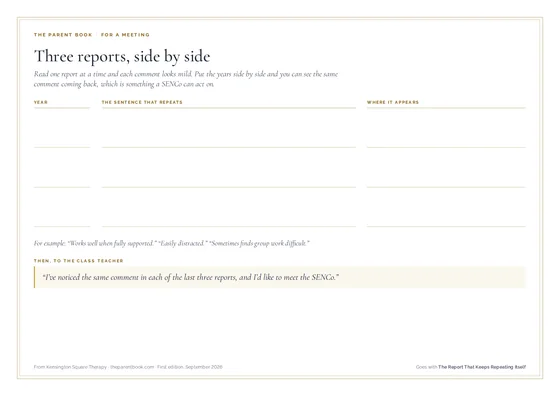 Three reports, side by side
For a meeting · A4 landscape · Free
Three reports, side by side
For a meeting · A4 landscape · Free
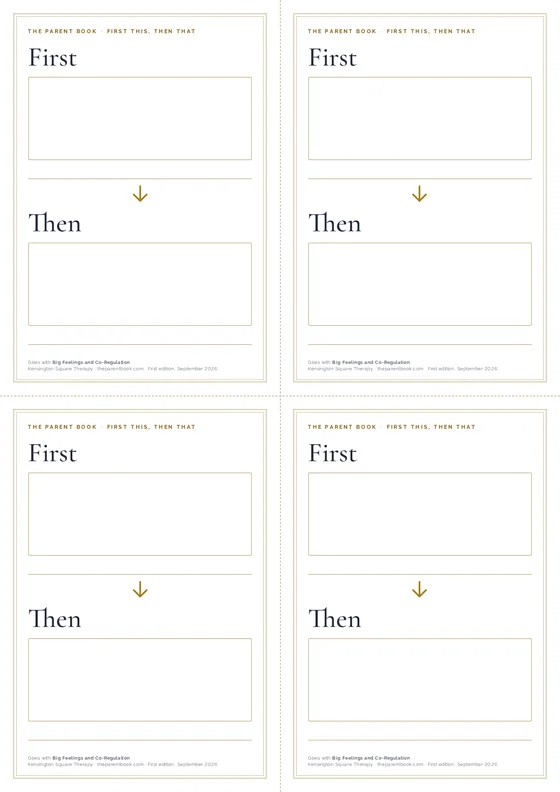 First this, then that
Cards to cut out · A4, four cards to cut, two sides · With a subscription
First this, then that
Cards to cut out · A4, four cards to cut, two sides · With a subscription
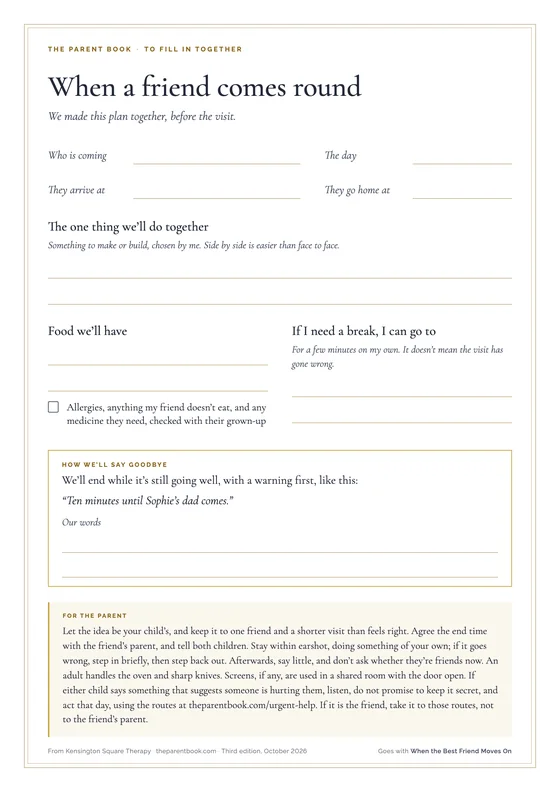 When a friend comes round
To fill in together · A4 · With a subscription
When a friend comes round
To fill in together · A4 · With a subscription
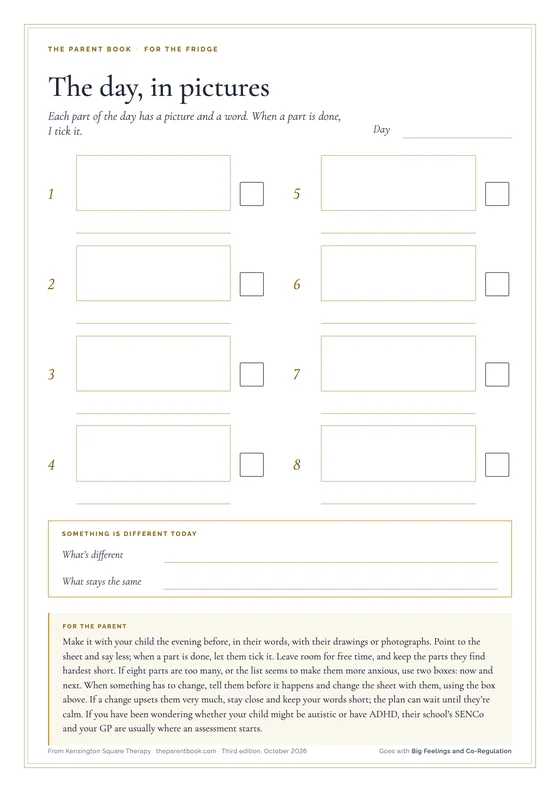 The day, in pictures
For the fridge · A4 · With a subscription
The day, in pictures
For the fridge · A4 · With a subscription
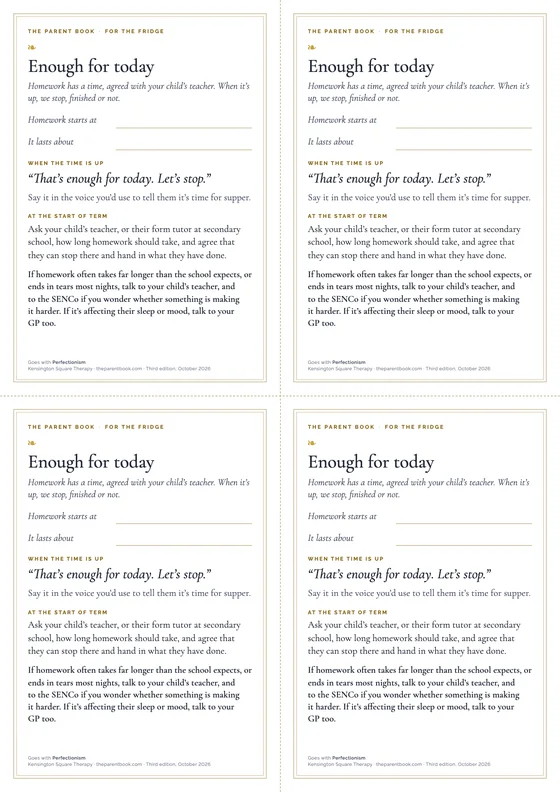 Enough for today
For the fridge · A4, four cards to cut · With a subscription
Enough for today
For the fridge · A4, four cards to cut · With a subscription
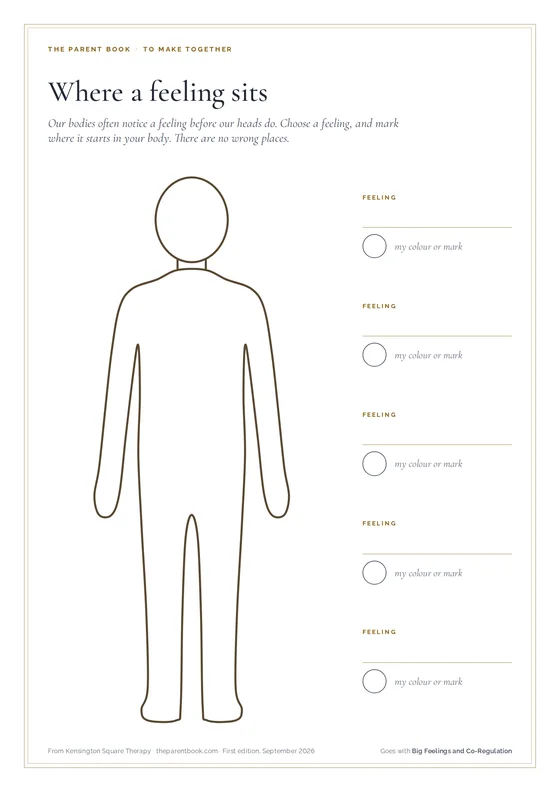 Where a feeling sits
To make together · A4, two sides · With a subscription
Where a feeling sits
To make together · A4, two sides · With a subscription
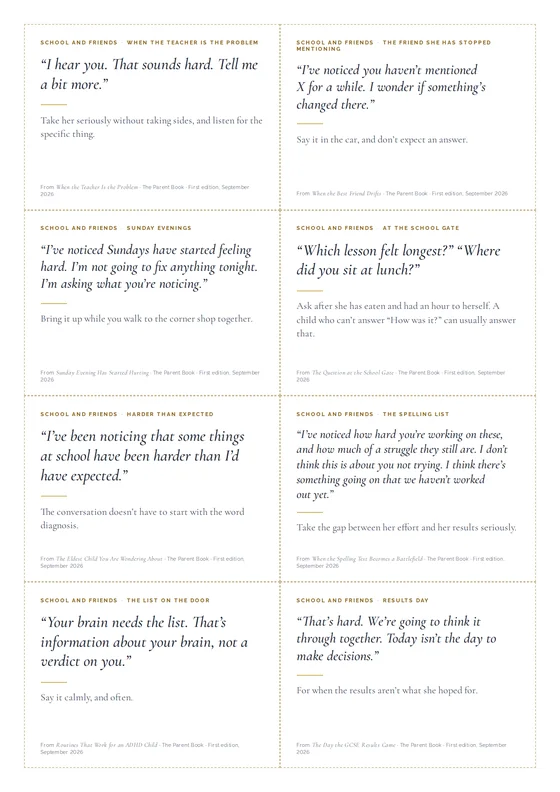 What to say: school and friends
Cards to cut out · A4, eight cards to cut · Free
What to say: school and friends
Cards to cut out · A4, eight cards to cut · Free
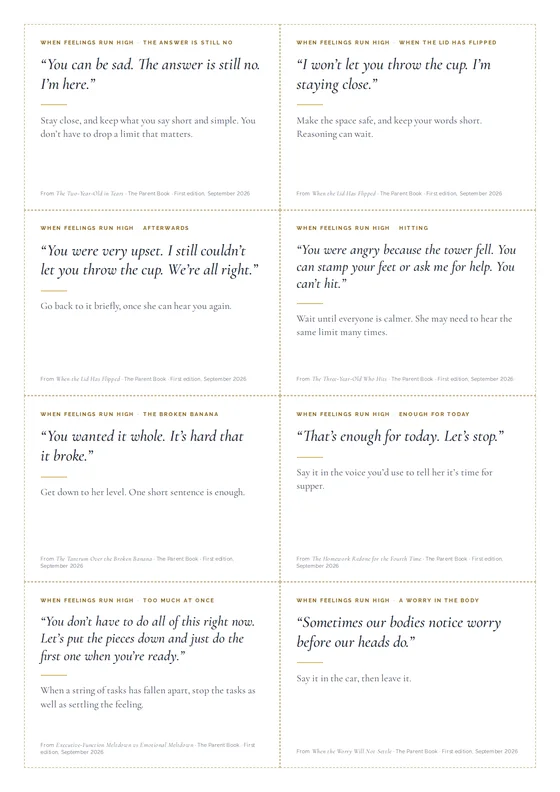 What to say: when feelings run high
Cards to cut out · A4, eight cards to cut · With a subscription
What to say: when feelings run high
Cards to cut out · A4, eight cards to cut · With a subscription
33 on school stress
Chosen by the therapists who write the library: books for you and to read with your child, and pages from organisations we trust.
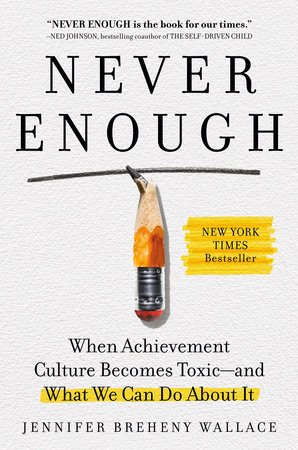
Also on this shelf



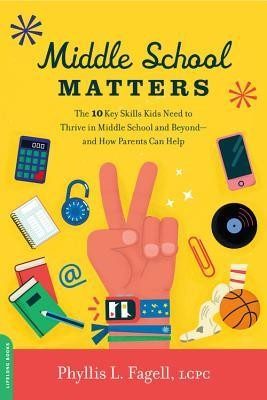
And twelve more. Every book on the shelf, with a therapist’s note on what it is good for, is in the library.
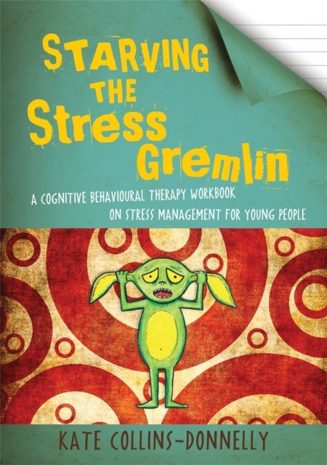
Also on this shelf
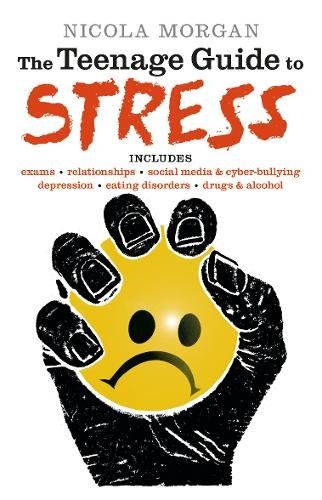

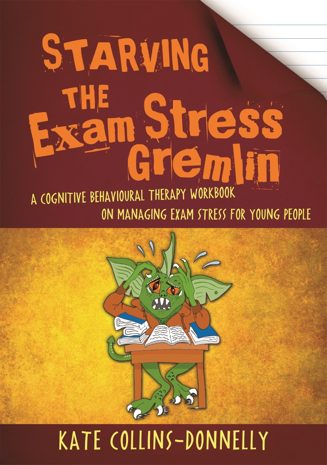
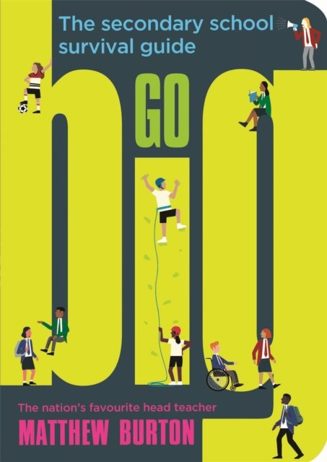
And four more. Every book on the shelf, with a therapist’s note on what it is good for, is in the library.
YoungMinds
Unusually honest about what exams do to a whole household, from tension and uneven attention to parents’ own stress, with ways to keep routines normal and talk to school.
NHS
A calm checklist for exam season: signs of stress, food and sleep, being flexible about chores, not adding pressure, and when to get help.
YoungMinds
The most thorough UK parent guide to a child who cannot get to school: finding the cause with an ‘anxiety iceberg’, what to ask the school for, and helping a return after absence.
Place2Be
Why the move to secondary school is hard for some children and for parents, planning-ahead activities for the summer before, and good moments to check in during the first term.
Contact
A clear map of the SEN system in England: what counts as special educational needs, what schools must provide, and where an EHC plan fits.
Coram Family Lives
The complaints route when bullying happens at an independent school, which differs from the state sector: governors, escalation, and how inspection works.
Place2Be
For the child who tears up work over one mistake: the problems perfectionism brings, and how parents can praise effort, model making mistakes, and ease the pressure.
Nothing on this shelf is written for that age yet.
23 on school stress
Podcast episodes, talks and films, each chosen for a reason.
Kooth Podcast
Maddie describes how anxiety gradually stopped her going to school despite loving learning, what school felt like, and what she would tell her younger self. A young person’s view parents rarely hear.
Also on this shelf
Ask Lisa: Untangling Family Life
Get a Grip - Evidence-Based Conversations for Parents and Educators
Ask Lisa: Untangling Family Life
Talking Sense with Dr Martha
And twelve more. Every episode on the shelf, with a therapist’s note on what it is good for, is in the library.
YouTube · 6 min
Child Mind Institute, YouTube
A specialist explains why children refuse school, usually anxiety rather than defiance, and why a gradual, planned return with the school works better than waiting it out.
Also on this shelf
YouTube · 9 min
Anna Freud, YouTube
YouTube · 2 min
Place2Be, YouTube
YouTube · 4 min
Anna Freud, YouTube
TED · 15 min
Dr Thomas Curran, TED
And one more. Every film on the shelf, with a therapist’s note on what it is good for, is in the library.
Nothing on this shelf is written for that age yet.
This usually starts at school rather than at the surgery. The adults who see your child every day are the first people to tell, and often the fastest route to a change. The GP is there if it persists or deepens.
Where to start
The pastoral lead, the head of year, or the form tutor. Free, already knows your child, and often the quickest way to get something changed at school.
Before or alongside anything else. A school cannot act on what it has not been told, and what you bring is often what it did not have.
The member of staff responsible for special educational needs. They hold the assessment routes, the in-school support, and the paperwork an EHCP needs.
Ask for a meeting in writing, and ask what is already being tried under the graduated approach. This conversation usually has to happen before anything statutory can.
The gateway to everything the NHS offers a child: paediatric assessment, a referral to CAMHS, and support for you as the parent.
Ask for a double appointment. Describe the pattern over weeks rather than the worst single day, and say plainly what you are worried about. Bring a written list; the ten minutes go quickly.
For school stress
Parenting Smart, written by the child mental health specialists who work in primary schools: short, practical articles and films on friendships, behaviour, worries and routines.
For a child of five to eleven, when you want something you can read in ten minutes and try tonight. Place2Be’s counselling itself is only through partner schools.
The UK’s young people’s mental health charity, with a free Parents Helpline, webchat and email, and a plain A to Z of the things parents worry about.
When you want to talk through a worry about your child with someone who has heard it before, or read a clear first explanation of a named concern. Not a crisis line.
Parents Helpline 0808 802 5544 · Mon, Thu, Fri 9.30am-4pm; Tue, Wed 9.30am-6pm · Webchat Mon-Fri 9.30am-4pm; email parents@youngminds.org.uk · Outside those hours the parents line is closed. The urgent routes on this page are open when it is not.
The NHS’s pages for parents, in one place: anxiety, low mood, anger, bereavement, arguments with teenagers, exam stress, and how to talk about feelings.
When you want the NHS’s own account before anyone else’s.
www.nhs.uk/mental-health/children-and-young-adults/advice-for-parents
A free one-to-one webchat with a trained parenting coach, and a library of articles by age on behaviour, sleep, neurodiversity and family life.
When you want to talk it through with someone in writing, this week, without a referral.
Free one-to-one webchat with a parenting coach, Mon-Fri, with evening slots on Mon and Thu; check the site for current times · Parent Talk+ by phone or video for parents of children with additional needs, up to eight free sessions
Every organisation for school stress, and when each is the right call Finding a therapist