
The chapter to start with
Perfectionism
For parents whose child can’t bear to get anything wrong.
15 min read · Ages 4 to 18
↑ ↓ to moveEnter to openEsc to close
School and pressure

These pages are about the child who has come to feel their worth depends on getting things right: often high-achieving, often praised generously for years, and often more anxious than anyone has noticed. They’re for the parent learning to value the effort over the result, and to undo that sense of conditional worth without naming it harshly.
What to do first and who else can help are free to read and to print.
What the library holds on perfectionism
From the therapists
A child who can’t bear to fail is usually frightened of what failing would say about them. That’s a fear, and fears can be worked with.
1 on perfectionism
The long reads, each on one situation, written by a therapist.
The chapter to start with
For parents whose child can’t bear to get anything wrong.
15 min read · Ages 4 to 18
Nothing on this shelf is written for that age yet.
4 on perfectionism
Short pieces for the moment in front of you, each with things to try.
School & pressure
If every mark changes how your teenager sees themselves, talk about the work more than the grade.
Try this
From the tip
If your teenager has hurt themselves, or talks about not wanting to be alive, act that day: ask the surgery for an urgent appointment, and if it is closed, use the crisis line. England, Scotland and Wales: call 111 and choose the mental-health option. Northern Ireland: call Lifeline on 0808 808 8000. Help is free, confidential and available at any hour. Whoever answers may share information to arrange care or keep someone safe.
If your child is badly hurt, or there is any chance they have taken too much of a medicine, don’t wait for an appointment: get medical help straight away, even if they seem well. Call 999. Or go to your nearest A&E. Help is free and available at any hour.
School & pressure
If your child keeps redoing their homework because it isn’t perfect, end the session for them.
Try this
Big feelings
When a perfectionist child tears up their maths, they’re upset about what getting it wrong says about them.
Try this
More quick tips on perfectionism
Family dynamics
Describe what your child did and how they did it, which tells them far more than a verdict on how clever they are.
2 min read · Ages 5 to 11
The rest of each tip, with more to try and why it works, is in the library.
Nothing on this shelf is written for that age yet.
6 on perfectionism
Small, repeatable things to do with your child, with what to watch for and when to get help.
To do together · About 5 min
Once a week, at one meal, everyone says one thing they got wrong, starting with you. Nobody comments on anyone else’s.
What it is for. In our experience, a child who fears mistakes is helped more by hearing adults make them, calmly and often, than by being told mistakes do not matter.
When to get help. If your child’s fear of getting things wrong is stopping them from starting work, sleeping, or going to school, or their mood has been low for more than two weeks, talk to their school and your GP. If your child tells you that someone is hurting them, that they are hurting themselves, or that they do not want to be alive, stay calm, thank them for telling you, do not promise to keep it secret, and act that day, using the routes under “If you need help right now”, at the foot of every page.
The other four steps, and your part in it, are in the library.
More to do together
To do together
Each of you takes up something none of you can do, and practises it where the others can see. There is no show at the end.
About 10 min · Ages 7 to 18 · With a sheet to print
To do together
A game now and then, where everyone loses sometimes, you included, and it is all right to be upset about losing.
About 30 min · Ages 5 to 16 · With a sheet to print
To do together
Ask your child one question at the end of the day, at supper or on the way home: what was interesting, and what was hard. Then answer it yourself.
About 5 min · Ages 5 to 13
To do together
The same routine after every practice paper: collect your child, give them something to eat, walk home, and ask nothing about the paper that day.
About 30 min · Ages 9 to 18 · With a sheet to print
To do together
Ask your child to teach you something they can do and you can’t. They run the lesson, you get it wrong in front of them, and at the end you tell them what you learned.
About 20 min · Ages 7 to 18 · With a sheet to print
Nothing on this shelf is written for that age yet.
5 on perfectionism
Made to be printed, kept, and handed on.
To print and keep
What to do first, a few things to try and who else can help, together in one guide. Free to print and keep, or to hand to the other parent, a grandparent or the school.
Who else can help with perfectionism, on a sheet of its own.
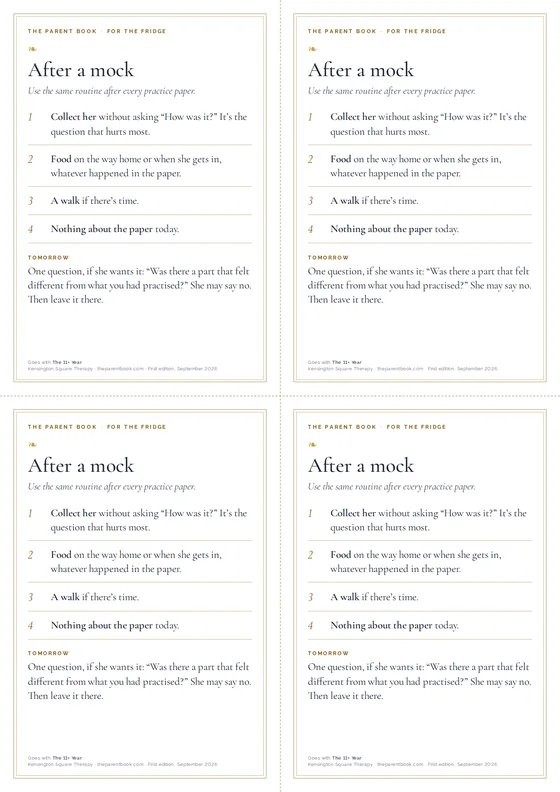 After a mock
For the fridge · A4, four cards to cut · With a subscription
After a mock
For the fridge · A4, four cards to cut · With a subscription
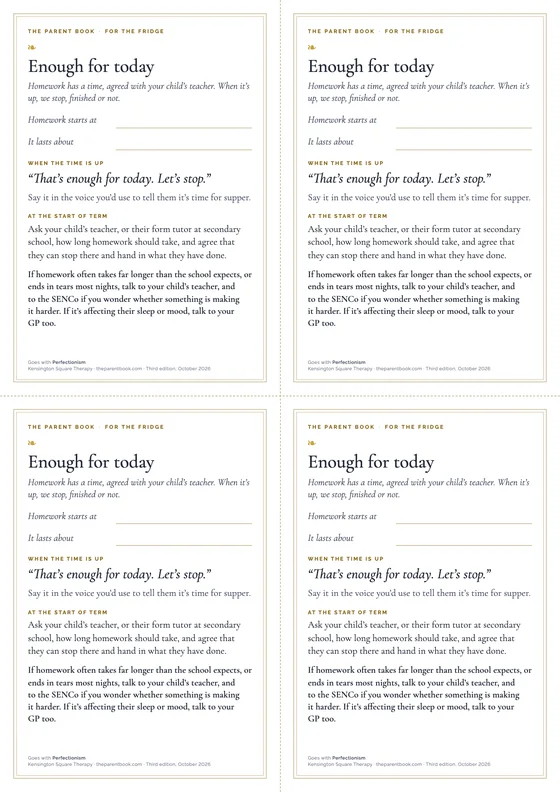 Enough for today
For the fridge · A4, four cards to cut · With a subscription
Enough for today
For the fridge · A4, four cards to cut · With a subscription
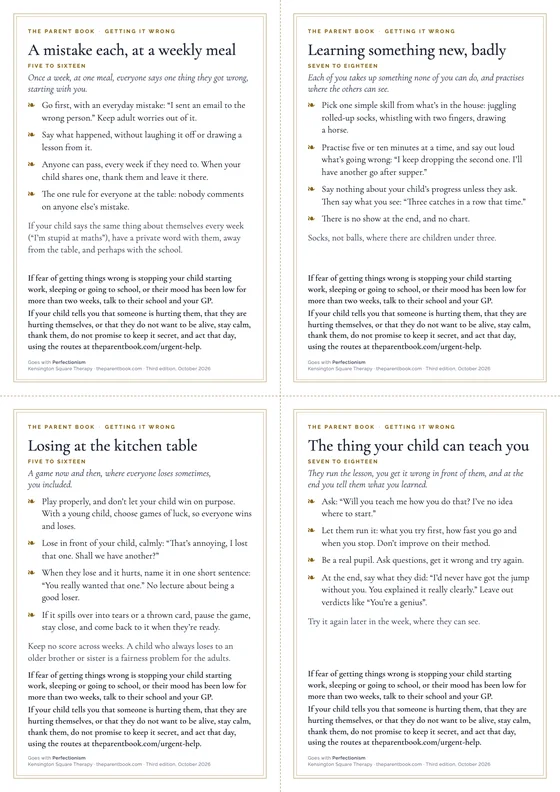 Getting it wrong
Cards to cut out · A4, four cards to cut · With a subscription
Getting it wrong
Cards to cut out · A4, four cards to cut · With a subscription
 What to say: when feelings run high
Cards to cut out · A4, eight cards to cut · With a subscription
What to say: when feelings run high
Cards to cut out · A4, eight cards to cut · With a subscription
26 on perfectionism
Chosen by the therapists who write the library: books for you and to read with your child, and pages from organisations we trust.
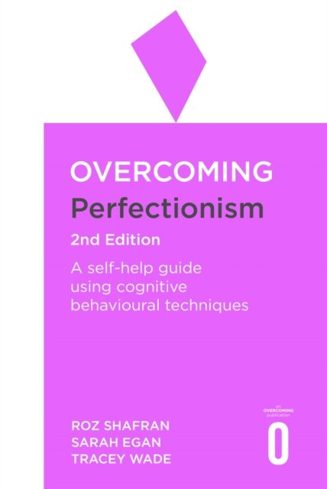
Also on this shelf
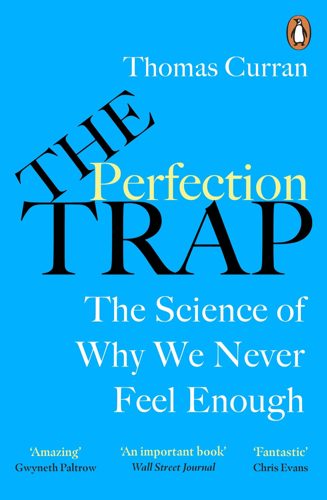

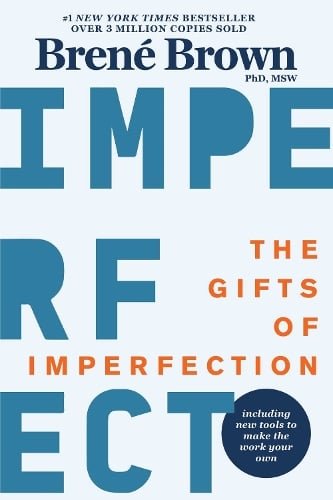

And five more. Every book on the shelf, with a therapist’s note on what it is good for, is in the library.
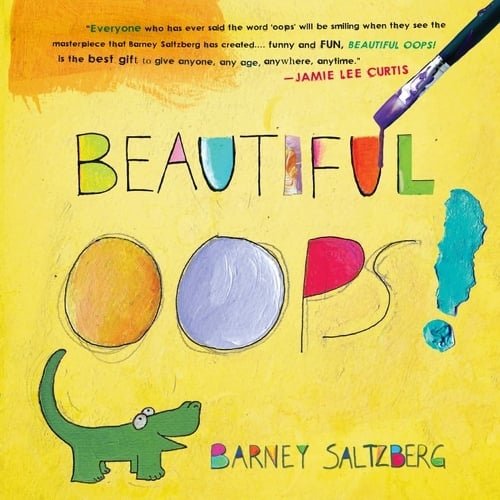
Also on this shelf
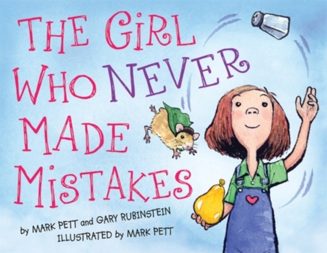


And nine more. Every book on the shelf, with a therapist’s note on what it is good for, is in the library.
Child Mind Institute
On harsh self-talk and impossibly high standards: why some children run themselves down, how to respond with validation and realistic thinking, and when to seek help.
Place2Be
For the child who tears up work over one mistake: the problems perfectionism brings, and how parents can praise effort, model making mistakes, and ease the pressure.
Nothing on this shelf is written for that age yet.
8 on perfectionism
Podcast episodes, talks and films, each chosen for a reason.
Ask Lisa: Untangling Family Life
Why some children hold themselves to impossible standards, how to counter the harsh self-talk that comes with it, and when perfectionism tips into depression. Damour offers sample language parents can use.
Also on this shelf
Raising Good Humans
Ask Lisa: Untangling Family Life
Every episode on the shelf, with a therapist’s note on what it is good for, is in the library.
YouTube · 2 min
Place2Be, YouTube
For the child who tears up work that isn’t perfect: how to notice effort, share your own mistakes and make it safe to get things wrong.
Also on this shelf
TED · 15 min
Dr Thomas Curran, TED
TED · 14 min
Julie Lythcott-Haims, TED
YouTube · 19 min
Dr Kristin Neff, YouTube
TED · 10 min
Prof Carol Dweck, TED
Every film on the shelf, with a therapist’s note on what it is good for, is in the library.
Nothing on this shelf is written for that age yet.
This usually starts at school rather than at the surgery. The adults who see your child every day are the first people to tell, and often the fastest route to a change. The GP is there if it persists or deepens.
Where to start
The pastoral lead, the head of year, or the form tutor. Free, already knows your child, and often the quickest way to get something changed at school.
Before or alongside anything else. A school cannot act on what it has not been told, and what you bring is often what it did not have.
The gateway to everything the NHS offers a child: paediatric assessment, a referral to CAMHS, and support for you as the parent.
Ask for a double appointment. Describe the pattern over weeks rather than the worst single day, and say plainly what you are worried about. Bring a written list; the ten minutes go quickly.
A registered counsellor or psychotherapist, found through the BACP or NCPS directories. Waiting lists are shorter than the NHS and you choose who your child sits with.
When waiting is the problem, or when you want a particular kind of help. What to look for, and what to expect, is set out in our guide to finding a therapist.
For perfectionism
The UK’s young people’s mental health charity, with a free Parents Helpline, webchat and email, and a plain A to Z of the things parents worry about.
When you want to talk through a worry about your child with someone who has heard it before, or read a clear first explanation of a named concern. Not a crisis line.
Parents Helpline 0808 802 5544 · Mon, Thu, Fri 9.30am-4pm; Tue, Wed 9.30am-6pm · Webchat Mon-Fri 9.30am-4pm; email parents@youngminds.org.uk · Outside those hours the parents line is closed. The urgent routes on this page are open when it is not.
Parenting Smart, written by the child mental health specialists who work in primary schools: short, practical articles and films on friendships, behaviour, worries and routines.
For a child of five to eleven, when you want something you can read in ten minutes and try tonight. Place2Be’s counselling itself is only through partner schools.
The Anna Freud Centre’s family wellbeing resources: careful, research-led reading on children’s emotional development, separation, self-care for parents, and supporting a child through treatment.
When you want depth from a clinical source rather than a quick explainer. Reading only; there is no helpline.
Every organisation for perfectionism, and when each is the right call Finding a therapist