The chapter to start with
The 11+ Year
For parents whose child is preparing for school entrance exams.
15 min read · Ages 8 to 11
↑ ↓ to moveEnter to openEsc to close
School and pressure
This covers the moves a child makes through childhood: from nursery to reception, from primary to secondary, and from sixth form to whatever comes next. Each change asks something of the whole family as well as the child. These pages are for parents in the weeks before and after, while the new routine settles.
What to do first, what helps and who else can help are free to read and to print.
What the library holds on transitions
From the therapists
Children handle change better when the adults around them are honest about it and aren’t relentlessly upbeat. A wobble at a transition is normal; it’s what a real change costs.
From the chapters
Don’t fill it with new things. A child accepts a change more easily when the days leading up to it are familiar, and routine is comforting in itself.
Walk past the new school, find the classroom on the website and lay out the uniform together. Children settle as the unknown becomes a little more familiar.
7 on transitions
The long reads, each on one situation, written by a therapist.
The chapter to start with
For parents whose child is preparing for school entrance exams.
15 min read · Ages 8 to 11
Nothing on this shelf is written for that age yet.
31 on transitions
Short pieces for the moment in front of you, each with things to try.
Family transitions
A short, slightly distracted first call from university is a good sign that your child is settling in.
Try this
Family transitions
The week before your child leaves for university is one of the hardest; do less than you think it needs.
Try this
Family transitions
Give your child time to say goodbye to the places they loved before the boxes go.
Try this
More quick tips on transitions
Family transitions
After a long absence, your child’s place at school is still there, but stepping back into it takes planning.
2 min read · Ages 7 to 13
School & pressure
An apprenticeship deserves the same care you’d give to choosing a university.
2 min read · Ages 13 to 18
School & pressure
Pack the bag together for a few weeks, then hand the job to your child on a date you’ve set.
2 min read · Ages 9 to 13
School & pressure
In the first weeks at a new school, children are often too tired to answer questions at the gate.
2 min read · Ages 9 to 13
Family transitions
A year out is your teenager’s decision to make; your part is to ask them calmly what they are thinking.
2 min read · Ages 16 and over
Family transitions
After a long time apart, everyone at home has changed a little, and nobody wants to say so.
2 min read
School & pressure
Put the admissions file away three evenings a week, so your child isn’t doing the test for two people.
2 min read · Ages 9 to 11
School & pressure
If your teenager decides not to go to university, treat it as their decision and ask what they want instead.
2 min read · Ages 13 and over
Family transitions
The doctors can always listen to what you’ve seen, even when they can’t tell you about your child’s care.
2 min read · Ages 18 and over
School & pressure
When you ring the school, describe what you’ve seen, with dates, so staff know what to look for.
2 min read · Ages 9 to 16
Friendships & social life
Many September friendships loosen by half-term, and usually neither child has done anything wrong.
2 min read · Ages 9 to 13
Big feelings
Children grieve more things, and more often, than adults give them credit for.
2 min read
School & pressure
Say goodbye the same short way every morning, and hand your child to an adult they know.
2 min read · Under 7
Family transitions
Seeing a doctor on their own is part of growing up; know what stays private, what doesn’t, and how you can still help.
2 min read · Ages 13 to 18
Family transitions
To a child, a new step-sibling is a stranger, so keep the first meeting short and low-key.
2 min read · Ages 5 to 13
Home And Belonging
A visit to the country you left can unsettle a second-generation child; don’t make it a test they can fail.
1 min read · Ages 7 to 16
Family transitions
Let your child choose the part they play in the wedding.
2 min read · Ages 7 to 16
Family dynamics
A placement ending is a real loss for carer and child, and it doesn’t always end the relationship.
2 min read
Home And Belonging
A child who has moved between countries may ask where home is; answer with more than one place.
2 min read · Ages 9 to 16
Neurodiversity
For an autistic child, a change they have heard about in advance is easier to manage, so build a plan B into every plan.
2 min read · Ages 5 to 11
Family transitions
A child living between two homes has a lot to keep track of, so give them a shared diary.
1 min read · Ages 5 to 11
Family transitions
A teenager who won’t engage with a new stepfamily is rarely being difficult on purpose.
2 min read · Ages 11 to 16
Friendships & social life
When a best friendship slowly fades, it’s usually part of growing up, and it helps to say you’ve noticed.
2 min read · Ages 7 to 11
Family transitions
Before your child meets a new partner, tell them plainly who this person is, and keep the first meeting short.
2 min read · Ages 5 to 13
School & pressure
Staying away from school can make a child’s anxiety about going in worse, so start working with the school early.
2 min read · Ages 11 to 16
Family transitions
The moments either side of a handover are easier when your child’s things are already in both homes, the goodbye is predictable, and no questions are asked the minute they walk in.
2 min read · Ages 5 to 13
School & pressure
Whatever your teenager’s GCSE grades, respond warmly, and if the results are disappointing, leave decisions for another day.
2 min read · Ages 13 to 18
Friendships & social life
A first heartbreak is real grief, so take it seriously.
2 min read · Ages 13 to 18
The rest of each tip, with more to try and why it works, is in the library.
Nothing on this shelf is written for that age yet.
7 on transitions
Small, repeatable things to do with your child, with what to watch for and when to get help.
To do together · About 30 min
Before a new class or a new school, your child tells their teacher, in their own words, what they enjoy, what they find hard and what helps. You write it down together and hand it in.
What it is for. A new teacher starts the year not knowing what helped your child last year. YoungMinds advises telling school staff early what a child finds difficult and what helps. A page in your child’s own words does that before term starts, and gives them a say in what their new teacher is told about them.
Safety. Medical needs, such as allergies, asthma or medicines, go to the school from you directly and not on your child’s page, so that the right people have them. The page has your child’s name and perhaps their photograph on it. Hand it in or send it by school email, and don’t post it anywhere public.
When to get help. If, several weeks into the year, your child is dreading school, has stomach aches on school mornings or says the teacher doesn’t understand them, talk to their class teacher and, if your child has or may have special educational needs, the SENCo. If the stomach aches keep coming back, or your child’s sleep, eating or mood have changed and not changed back, talk to your GP as well. If what your child writes or says suggests that someone is hurting them, that they are hurting themselves, or that they do not want to be alive, stay calm, thank them for telling you, do not promise to keep it secret, and act that day, using the routes under “If you need help right now”, at the foot of every page.
The other five steps, and your part in it, are in the library.
More to do together
To do together
In the last weeks at a school, offer your child a few pages for what they will miss, and perhaps a card for a teacher. It is up to your child, and they keep what they make.
About 30 min · Ages 5 to 13 · With a sheet to print
To do together
Before term, do the route once together and once with your child leading, and draw the few rooms that matter.
Two trips, and an afternoon · Ages 9 to 13 · With a sheet to print
To do together
Help your teenager get ready for a GP appointment and book it, then step back in stages until they can manage it alone.
About 30 min · Ages 13 to 18 · With a sheet to print
To do together
One day a week, and a few evenings, with no papers, no practice and no talk of the test. Keep it most weeks, and let it go when a week slips.
A day, and three evenings · Ages 9 to 16 · With a sheet to print
To do together
Agree with the school and your child how they get into school each morning: who meets them, and where they go first.
About 30 min · Ages 7 to 16 · With a sheet to print
To do together
Before something new, such as the dentist or a new classroom, write a short story with your child about what usually happens there, and read it together in the days before.
About 20 min · Under 11 · With a sheet to print
Nothing on this shelf is written for that age yet.
42 on transitions
Made to be printed, kept, and handed on.
To print and keep
What to do first, what helps, a few things to try and who else can help, together in one guide. Free to print and keep, or to hand to the other parent, a grandparent or the school.
Who else can help with transitions, on a sheet of its own.
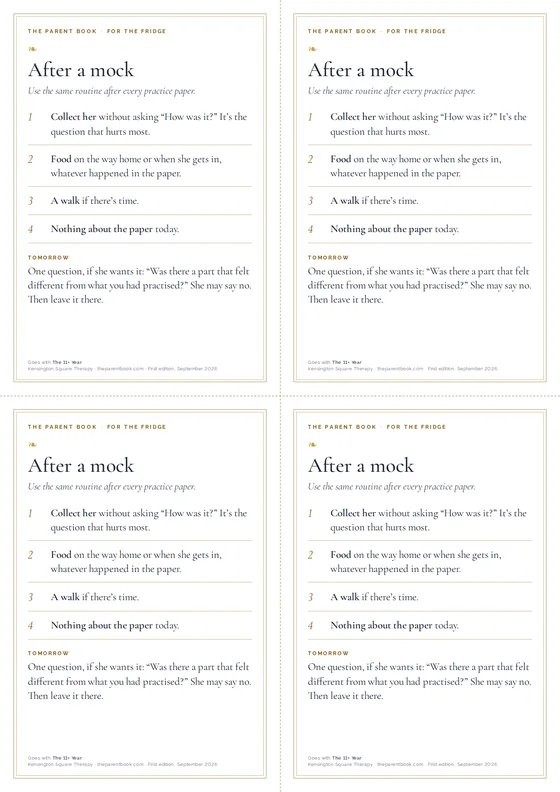 After a mock
For the fridge · A4, four cards to cut · With a subscription
After a mock
For the fridge · A4, four cards to cut · With a subscription
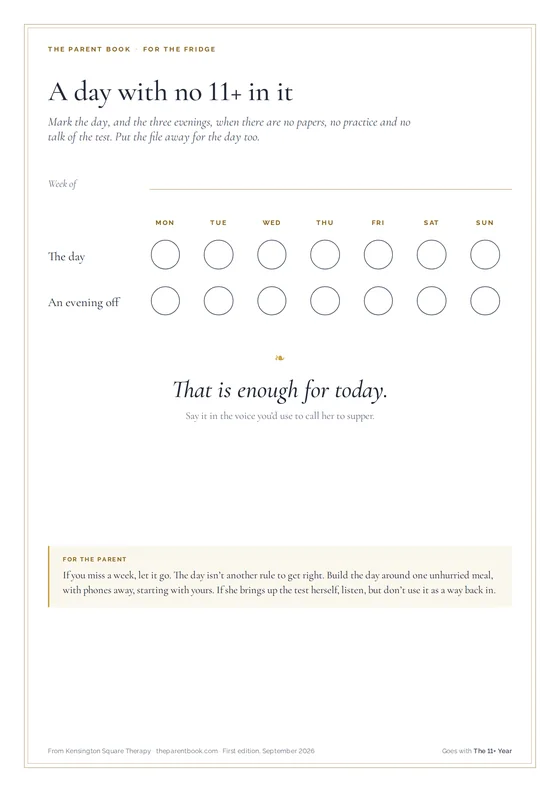 A day with no 11+ in it
For the fridge · A4 · With a subscription
A day with no 11+ in it
For the fridge · A4 · With a subscription
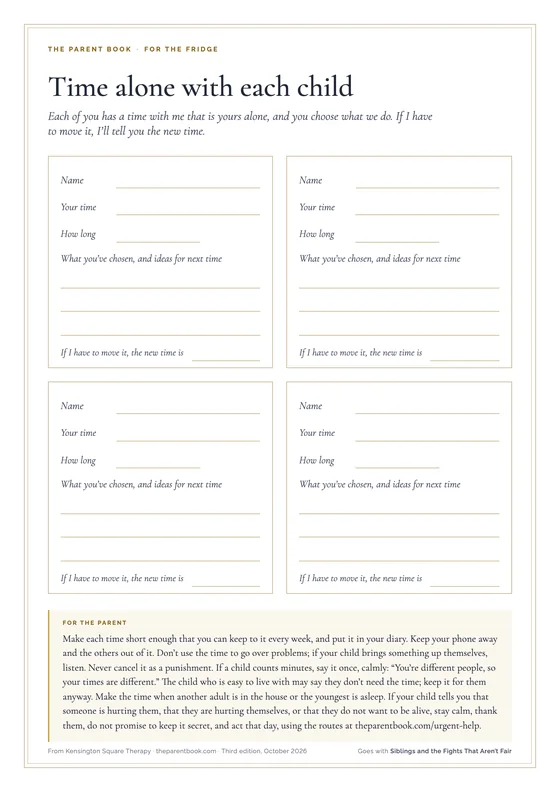 Time alone with each child
For the fridge · A4 · With a subscription
Time alone with each child
For the fridge · A4 · With a subscription
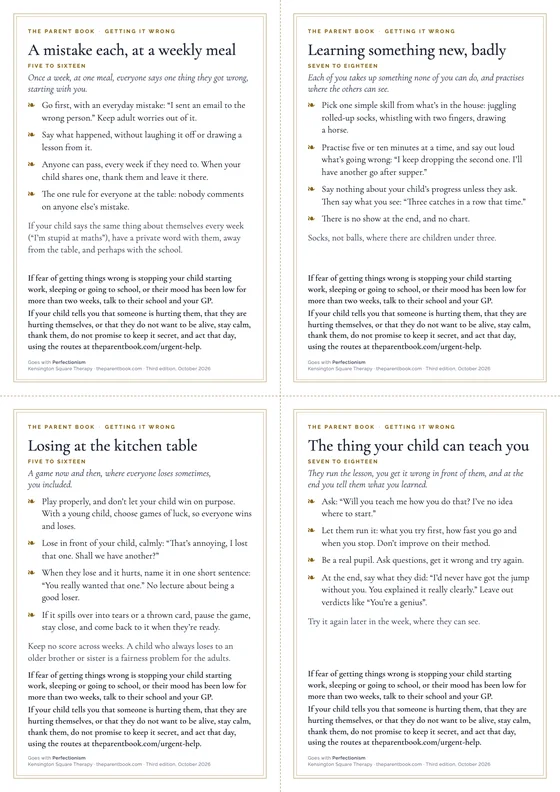 Getting it wrong
Cards to cut out · A4, four cards to cut · With a subscription
Getting it wrong
Cards to cut out · A4, four cards to cut · With a subscription
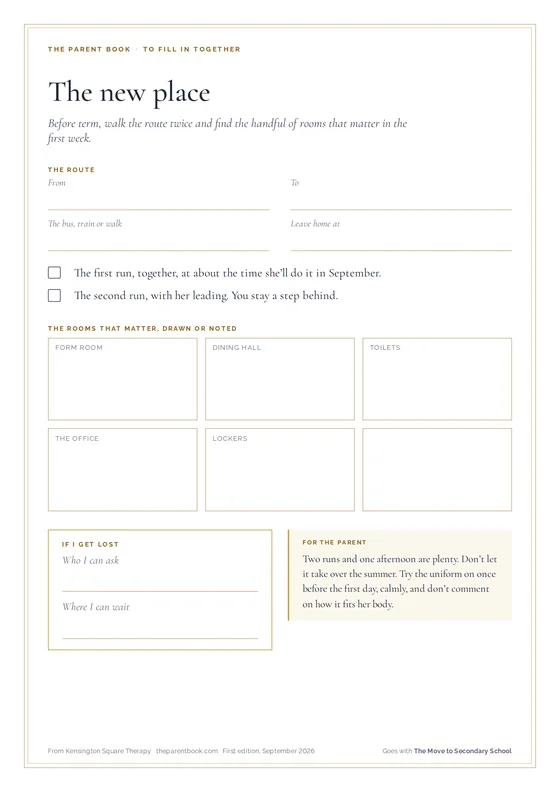 The new place
To fill in together · A4 · With a subscription
The new place
To fill in together · A4 · With a subscription
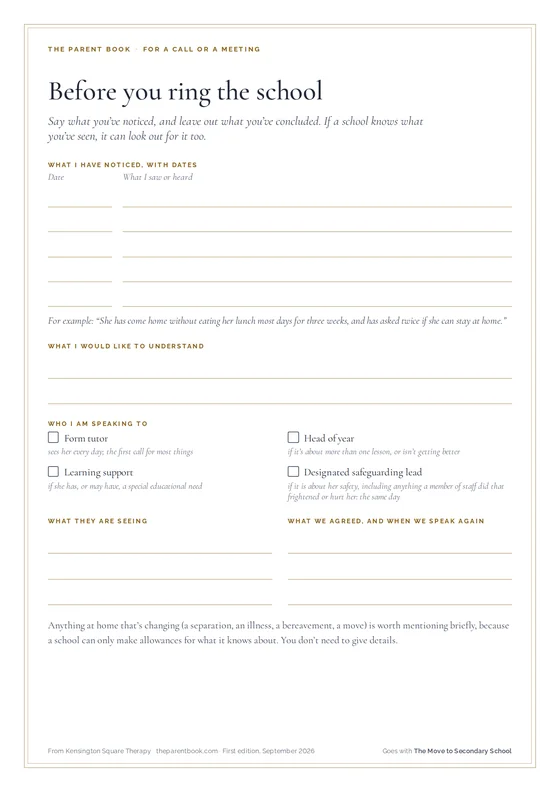 Before you ring the school
For a call or a meeting · A4 · Free
Before you ring the school
For a call or a meeting · A4 · Free
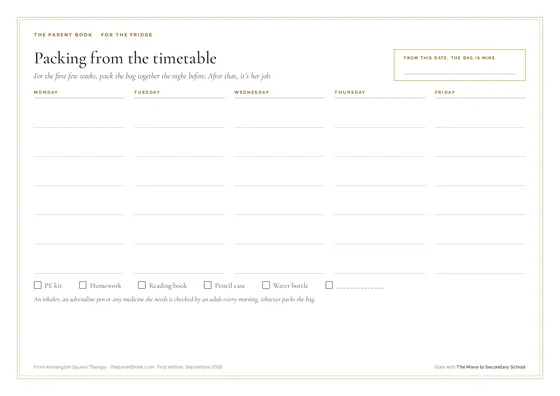 Packing from the timetable
For the fridge · A4 landscape · With a subscription
Packing from the timetable
For the fridge · A4 landscape · With a subscription
 What I will miss
To keep · A4, two pages · With a subscription
What I will miss
To keep · A4, two pages · With a subscription
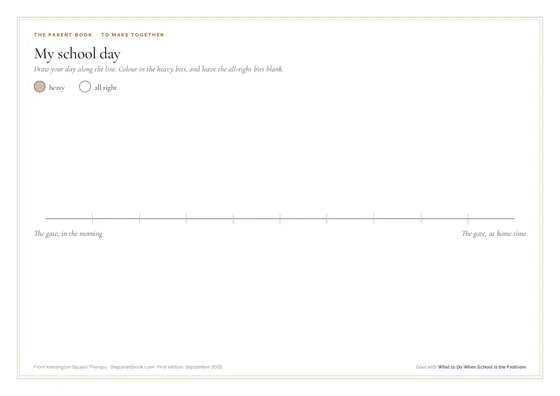 The school day, drawn as a line
To make together · A4 landscape, two pages · With a subscription
The school day, drawn as a line
To make together · A4 landscape, two pages · With a subscription
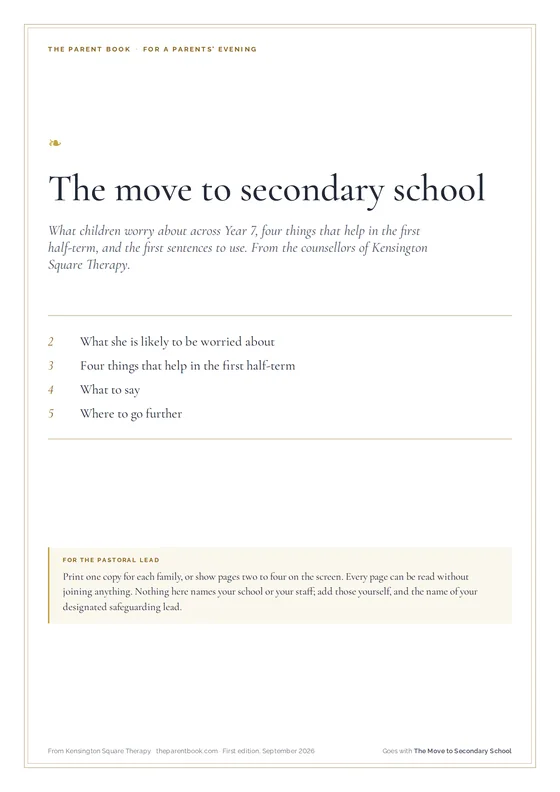 The move to secondary school, for a parents’ evening
For a parents’ evening · A4, five pages · Free
The move to secondary school, for a parents’ evening
For a parents’ evening · A4, five pages · Free
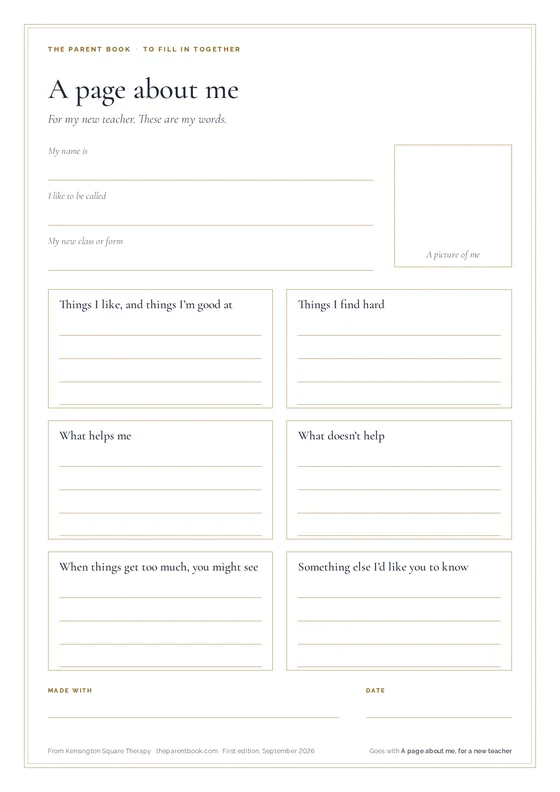 A page about me
To fill in together · A4, two pages · With a subscription
A page about me
To fill in together · A4, two pages · With a subscription
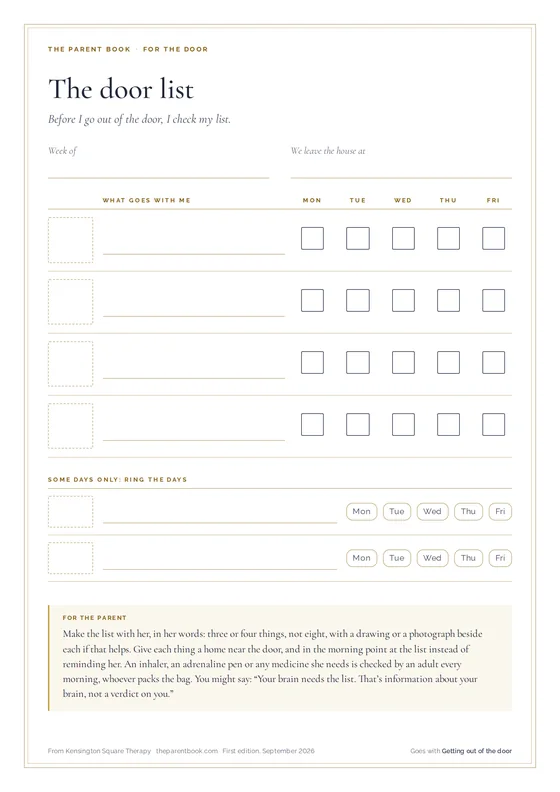 The door list
For the door · A4 · With a subscription
The door list
For the door · A4 · With a subscription
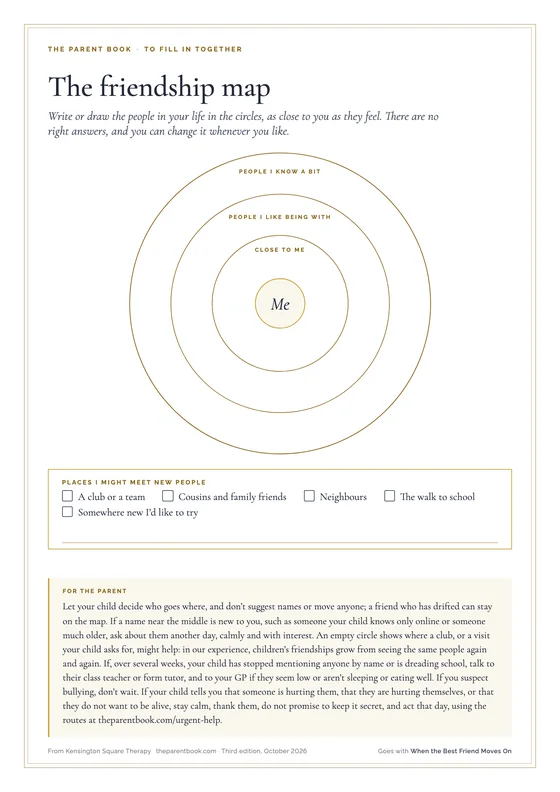 The friendship map
To fill in together · A4 · With a subscription
The friendship map
To fill in together · A4 · With a subscription
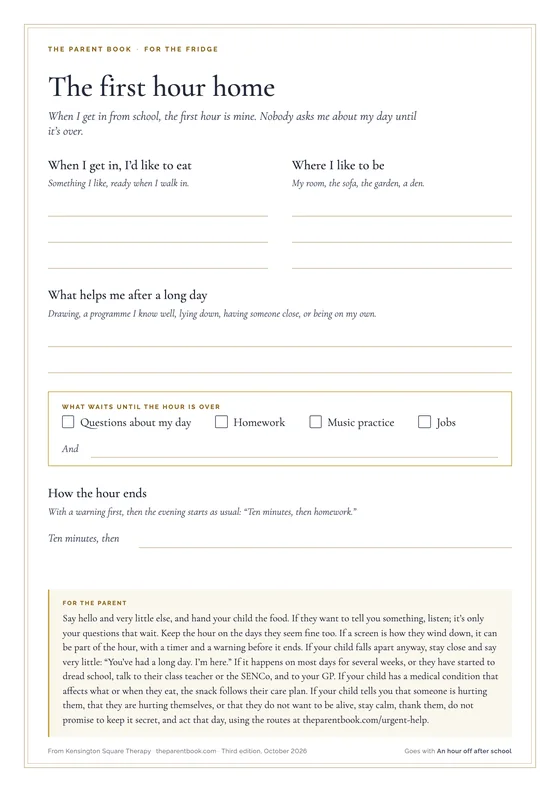 The first hour home
For the fridge · A4 · With a subscription
The first hour home
For the fridge · A4 · With a subscription
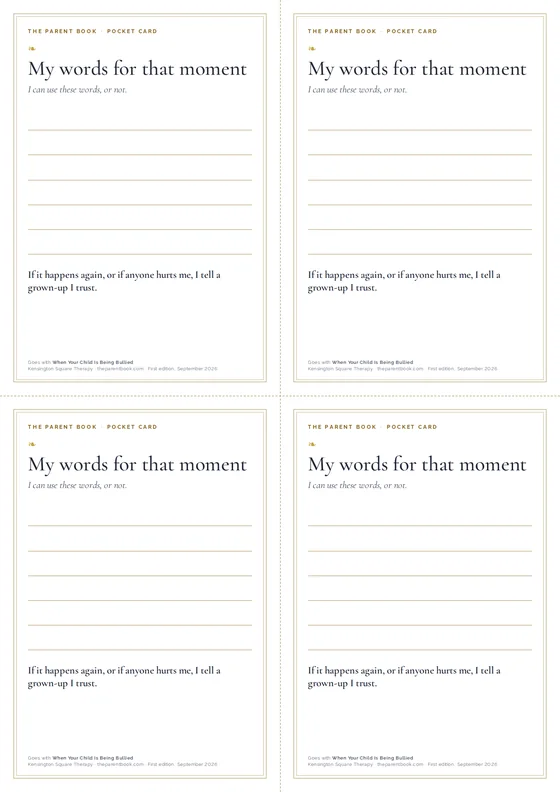 My words for that moment
Pocket card · A4, four cards to cut · With a subscription
My words for that moment
Pocket card · A4, four cards to cut · With a subscription
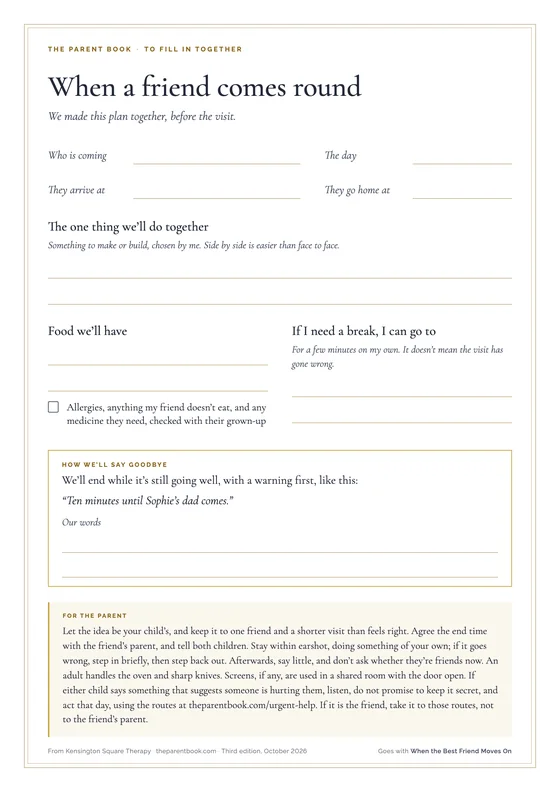 When a friend comes round
To fill in together · A4 · With a subscription
When a friend comes round
To fill in together · A4 · With a subscription
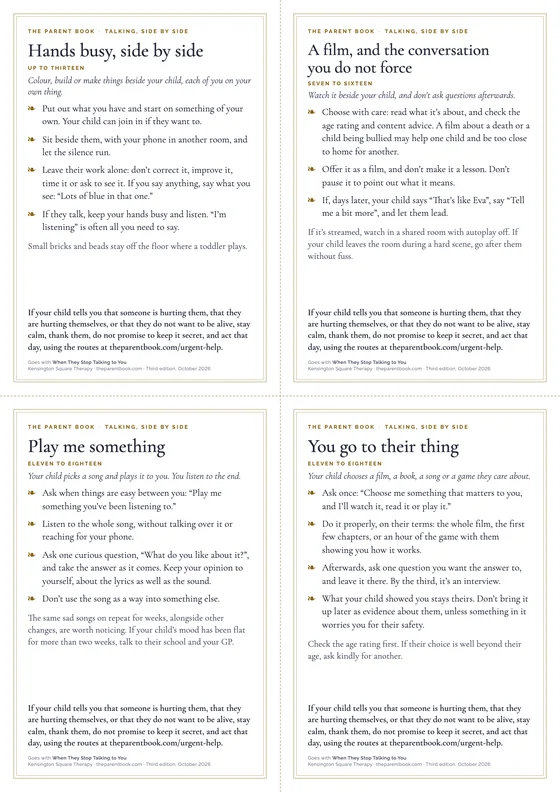 Talking, side by side
Cards to cut out · A4, four cards to cut · With a subscription
Talking, side by side
Cards to cut out · A4, four cards to cut · With a subscription
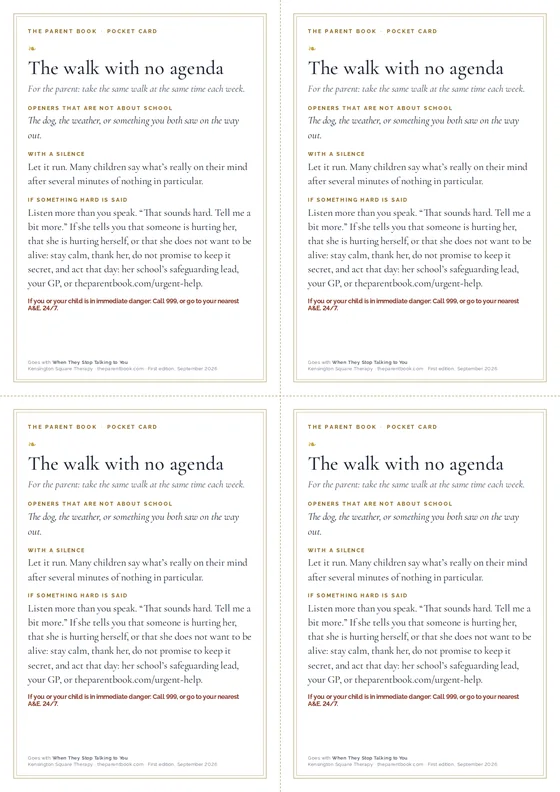 The walk with no agenda
Pocket card · A4, four cards to cut · With a subscription
The walk with no agenda
Pocket card · A4, four cards to cut · With a subscription
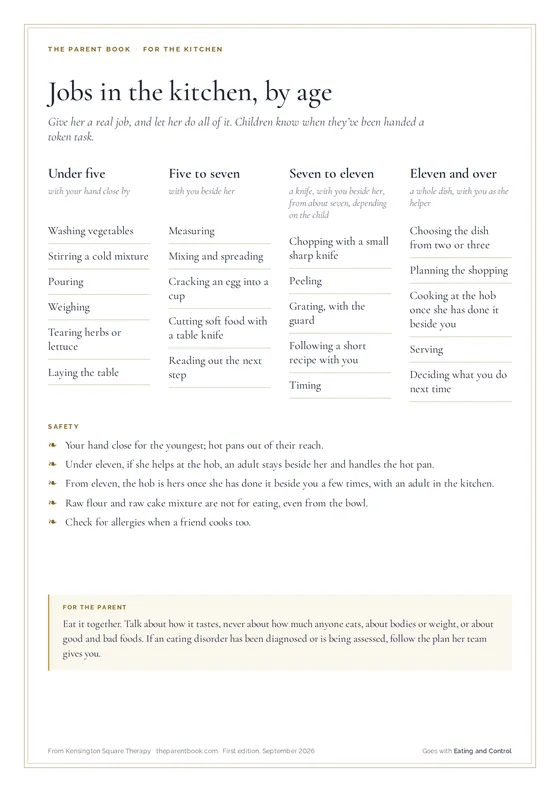 Jobs in the kitchen, by age
For the kitchen · A4 · With a subscription
Jobs in the kitchen, by age
For the kitchen · A4 · With a subscription
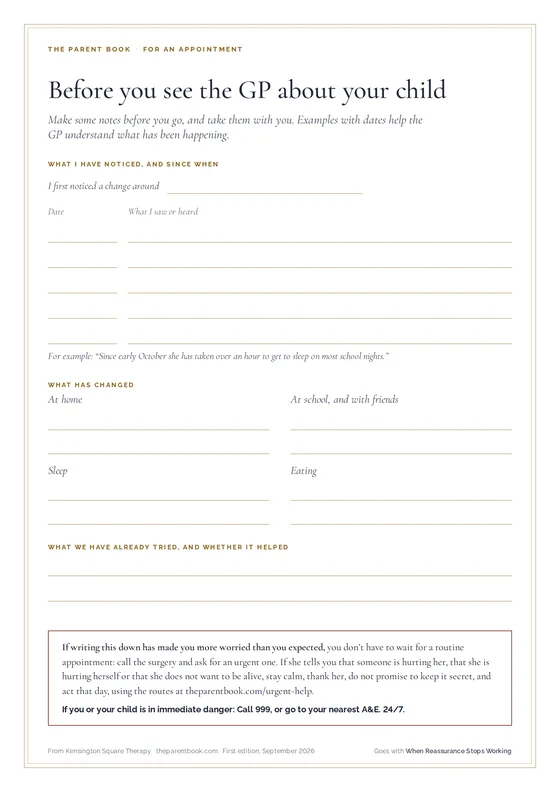 Before you see the GP about your child
For an appointment · A4, two sides · Free
Before you see the GP about your child
For an appointment · A4, two sides · Free
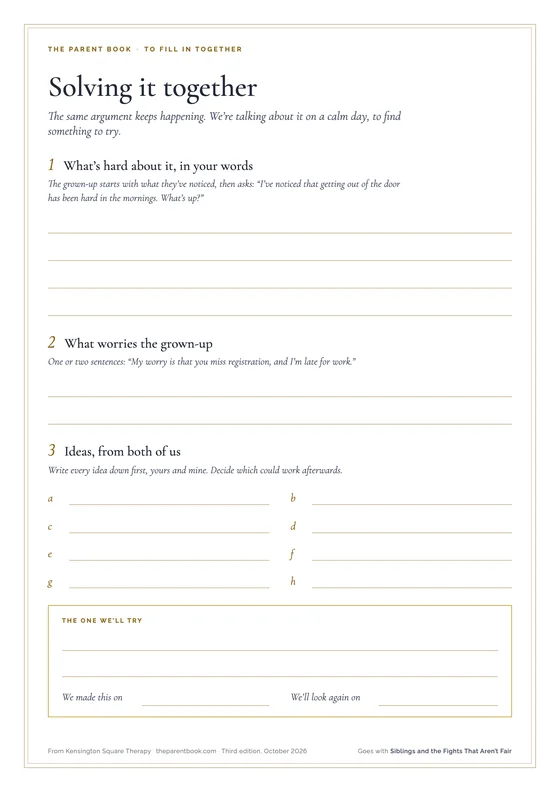 Solving it together
To fill in together · A4, two sides · With a subscription
Solving it together
To fill in together · A4, two sides · With a subscription
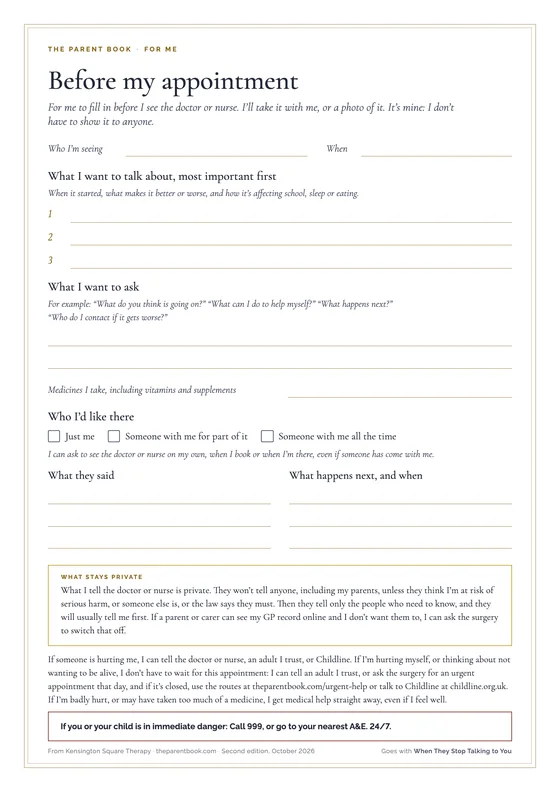 Before my appointment
For an appointment · A4, two pages · With a subscription
Before my appointment
For an appointment · A4, two pages · With a subscription
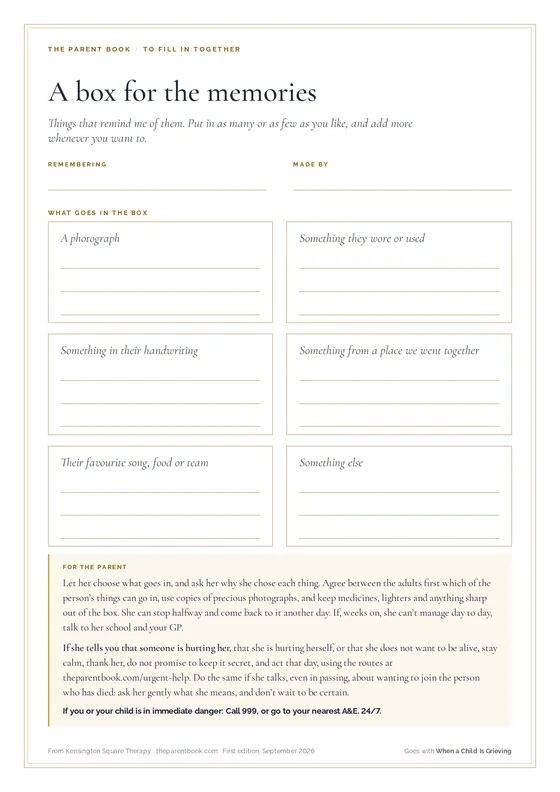 A box for the memories
To fill in together · A4, two pages · With a subscription
A box for the memories
To fill in together · A4, two pages · With a subscription
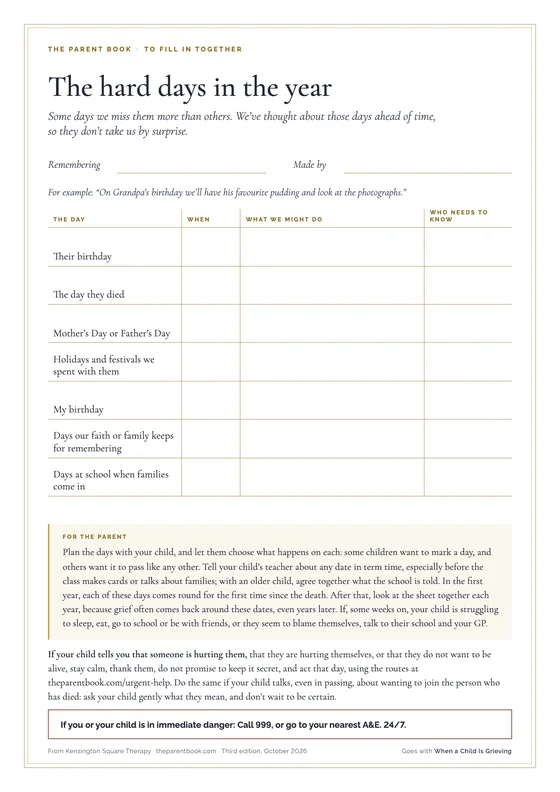 The hard days in the year
To fill in together · A4 · With a subscription
The hard days in the year
To fill in together · A4 · With a subscription
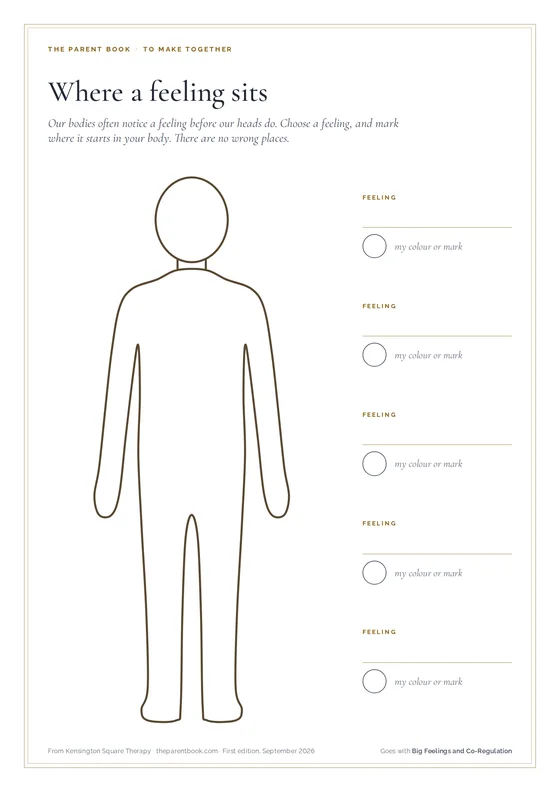 Where a feeling sits
To make together · A4, two sides · With a subscription
Where a feeling sits
To make together · A4, two sides · With a subscription
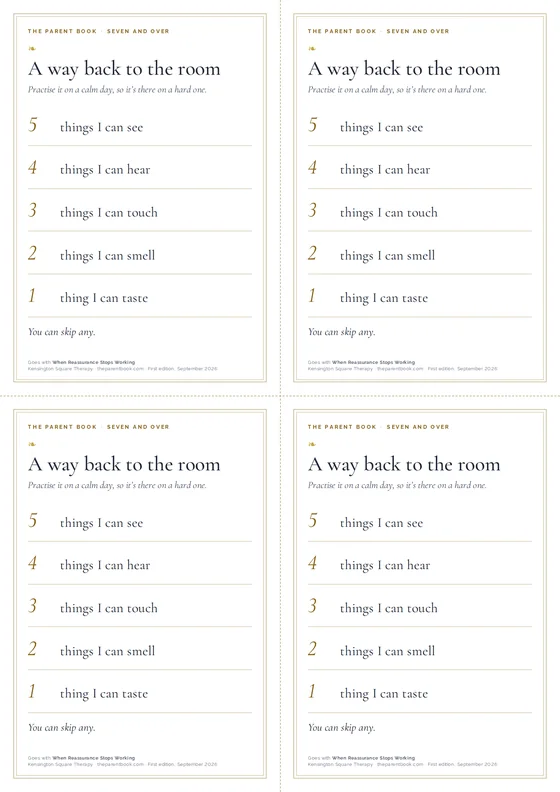 A way back to the room
Pocket card · A4, four cards to cut, two sides · With a subscription
A way back to the room
Pocket card · A4, four cards to cut, two sides · With a subscription
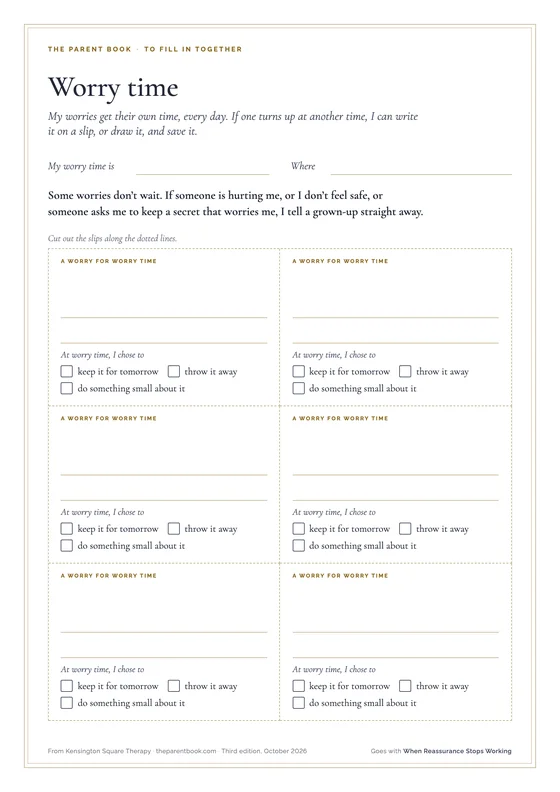 Worry time
To fill in together · A4, two pages · With a subscription
Worry time
To fill in together · A4, two pages · With a subscription
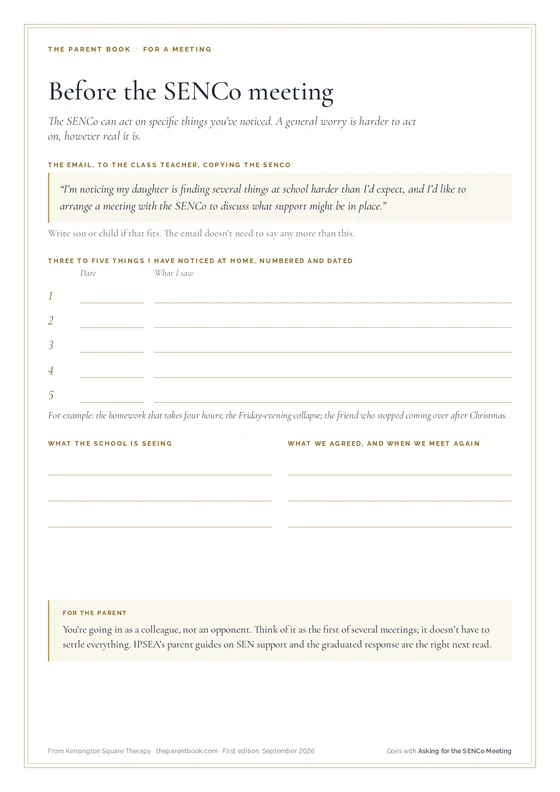 Before the SENCo meeting
For a meeting · A4 · Free
Before the SENCo meeting
For a meeting · A4 · Free
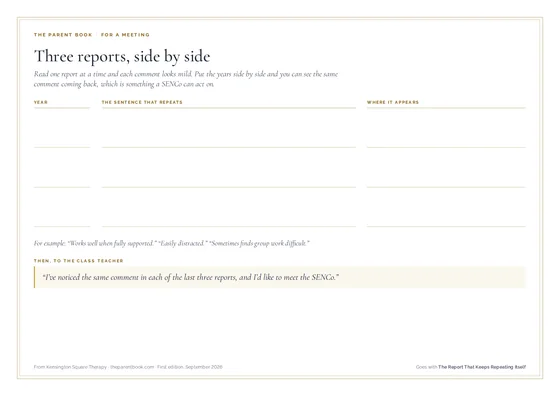 Three reports, side by side
For a meeting · A4 landscape · Free
Three reports, side by side
For a meeting · A4 landscape · Free
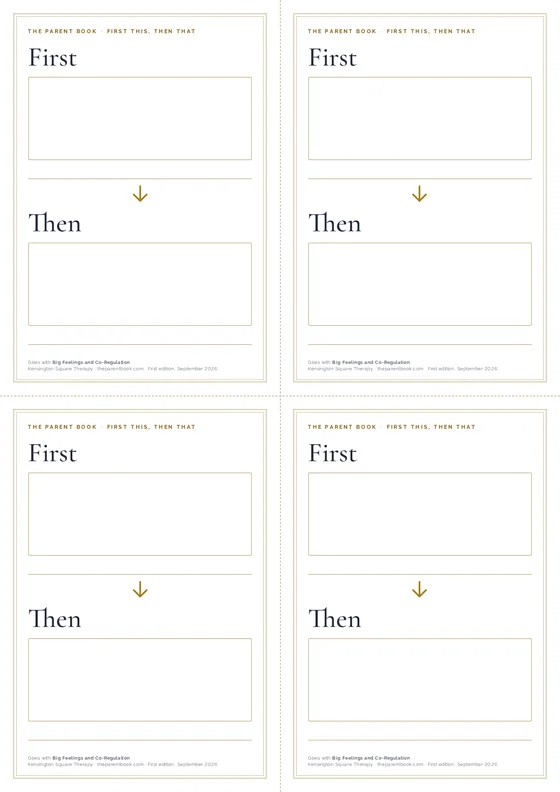 First this, then that
Cards to cut out · A4, four cards to cut, two sides · With a subscription
First this, then that
Cards to cut out · A4, four cards to cut, two sides · With a subscription
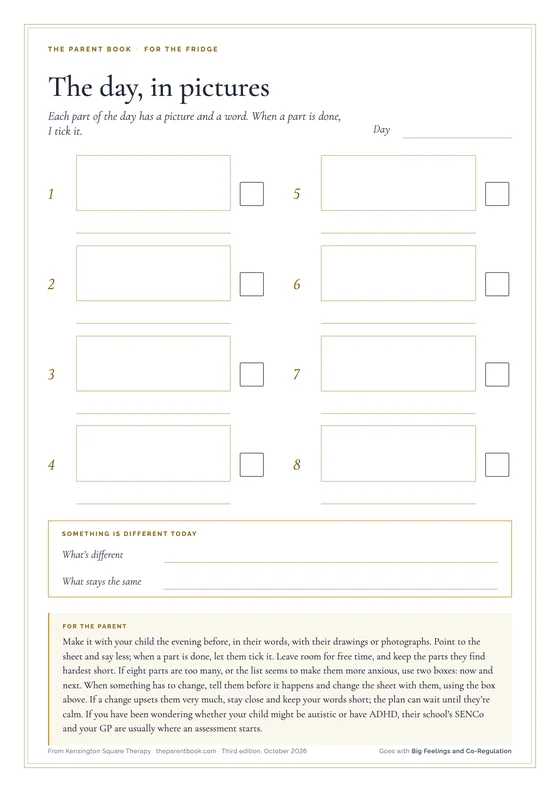 The day, in pictures
For the fridge · A4 · With a subscription
The day, in pictures
For the fridge · A4 · With a subscription
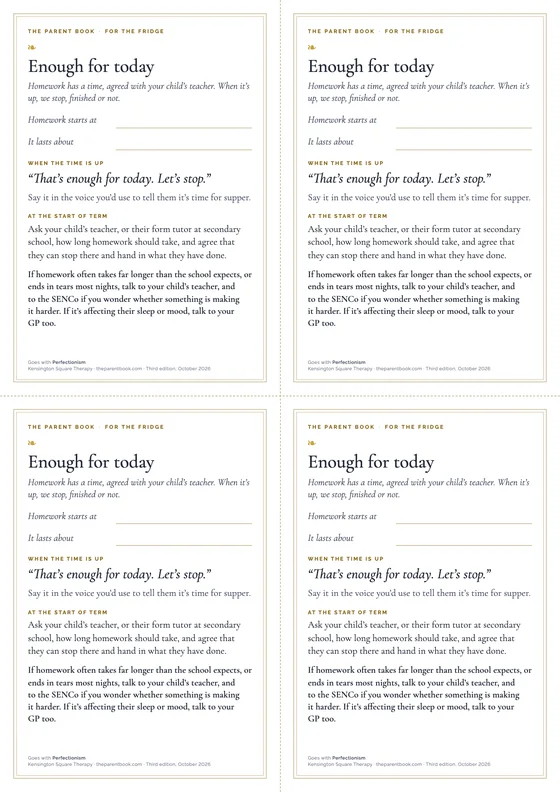 Enough for today
For the fridge · A4, four cards to cut · With a subscription
Enough for today
For the fridge · A4, four cards to cut · With a subscription
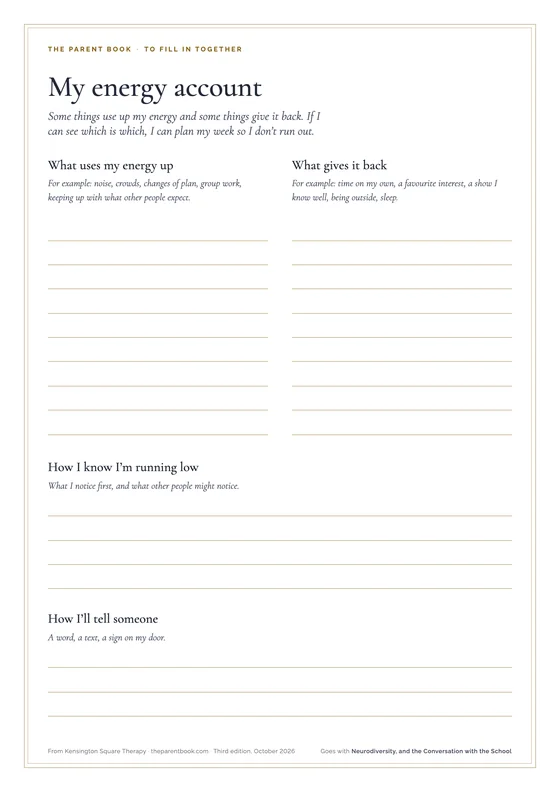 My energy account
To fill in together · A4, two sides · With a subscription
My energy account
To fill in together · A4, two sides · With a subscription
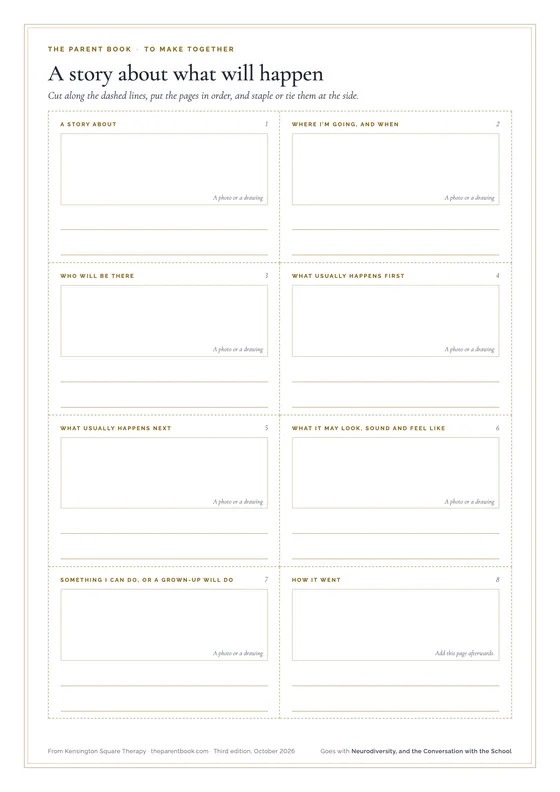 A story about what will happen
To make together · A4, two pages · With a subscription
A story about what will happen
To make together · A4, two pages · With a subscription
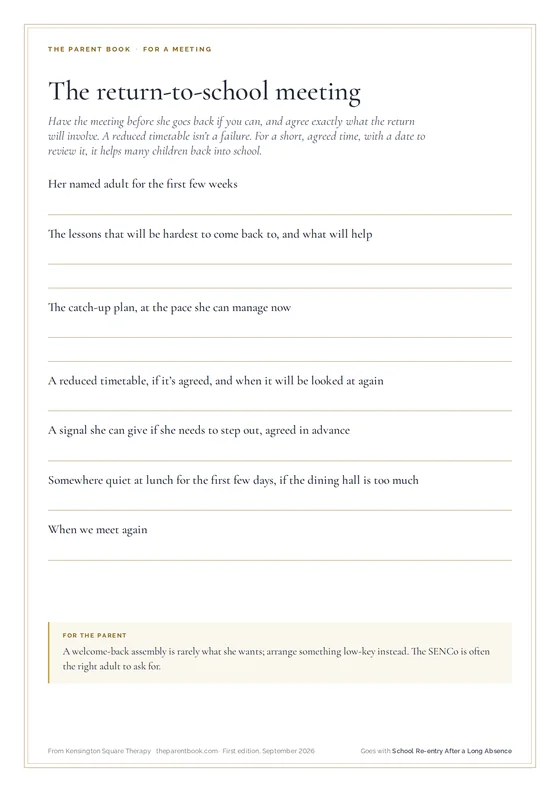 The return-to-school meeting
For a meeting · A4 · Free
The return-to-school meeting
For a meeting · A4 · Free
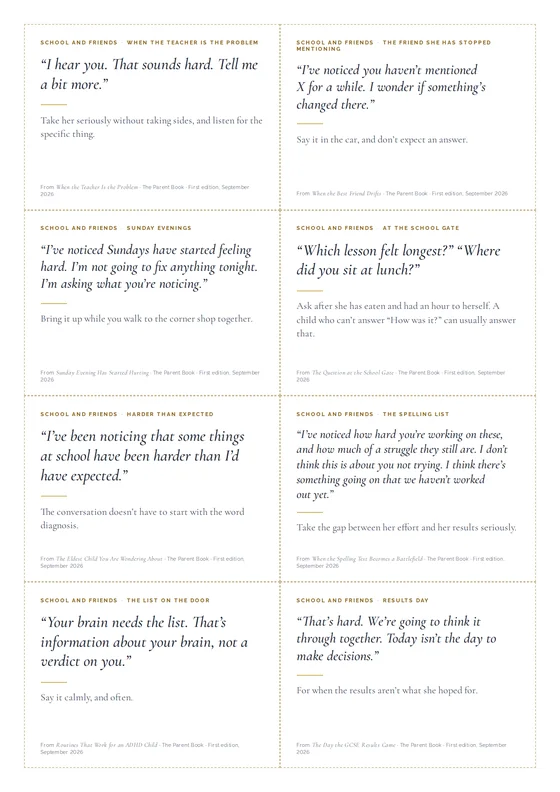 What to say: school and friends
Cards to cut out · A4, eight cards to cut · Free
What to say: school and friends
Cards to cut out · A4, eight cards to cut · Free
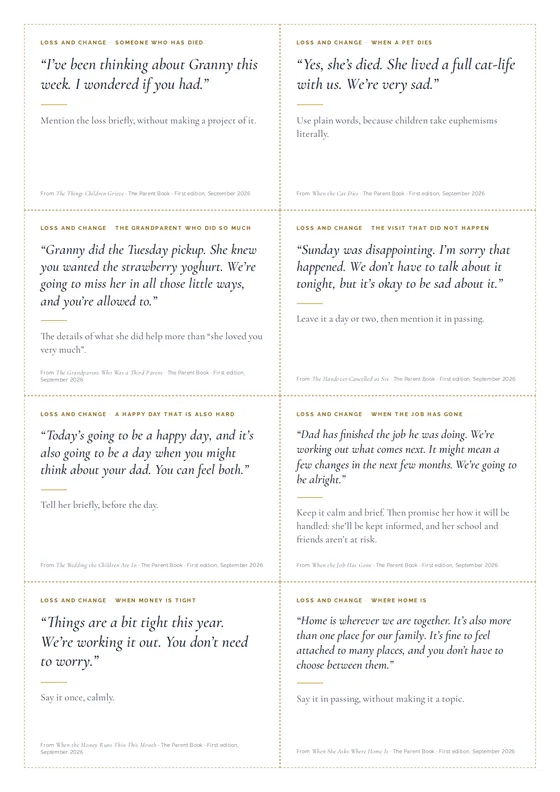 What to say: loss and change
Cards to cut out · A4, eight cards to cut · With a subscription
What to say: loss and change
Cards to cut out · A4, eight cards to cut · With a subscription
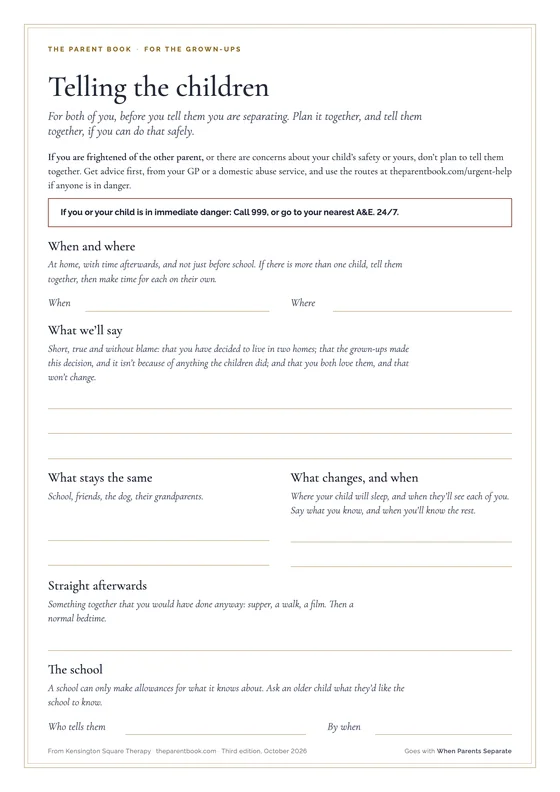 Telling the children
For the grown-ups · A4, two sides · With a subscription
Telling the children
For the grown-ups · A4, two sides · With a subscription
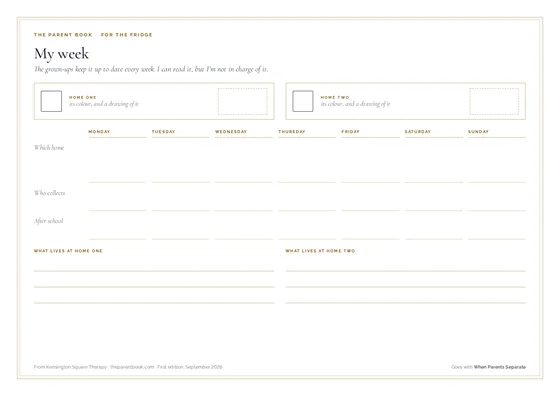 A week across two homes
For the fridge · A4 landscape, two pages · With a subscription
A week across two homes
For the fridge · A4 landscape, two pages · With a subscription
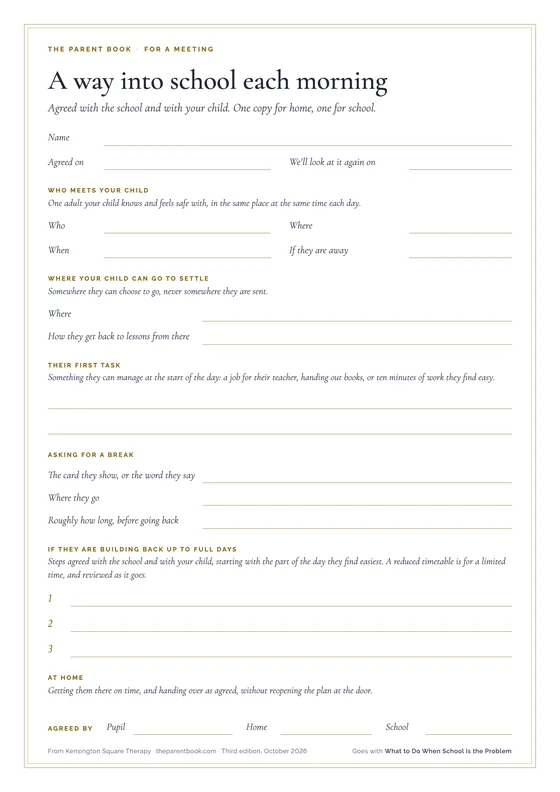 A way into school each morning
For a meeting · A4, two pages · With a subscription
A way into school each morning
For a meeting · A4, two pages · With a subscription
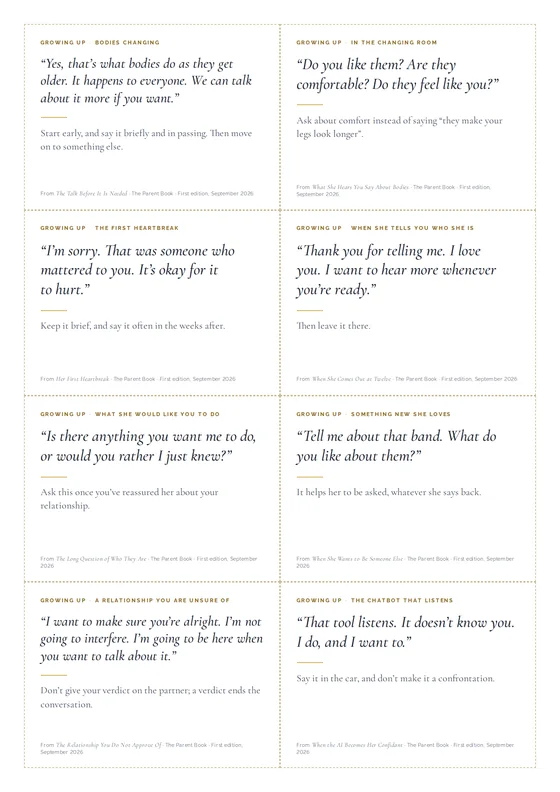 What to say: growing up
Cards to cut out · A4, eight cards to cut · With a subscription
What to say: growing up
Cards to cut out · A4, eight cards to cut · With a subscription
35 on transitions
Chosen by the therapists who write the library: books for you and to read with your child, and pages from organisations we trust.
Also on this shelf


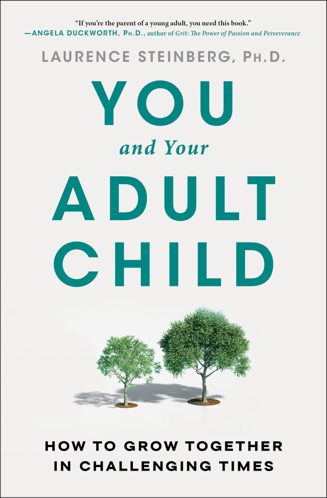
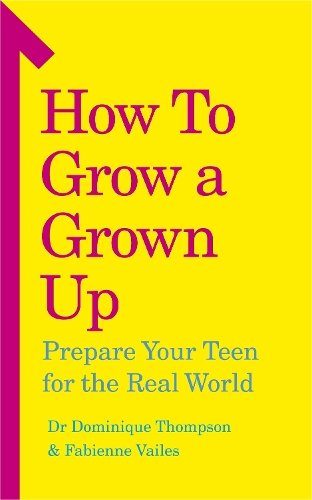
And three more. Every book on the shelf, with a therapist’s note on what it is good for, is in the library.
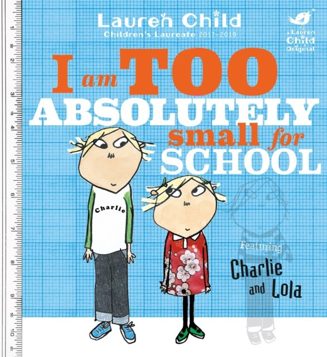
Also on this shelf

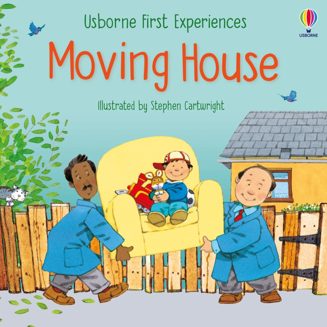
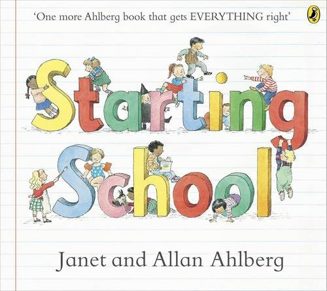
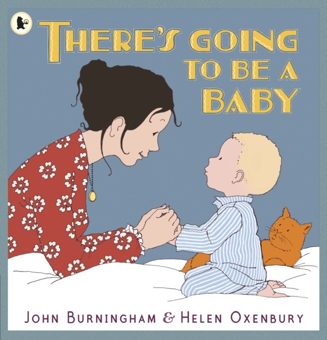
And 19 more. Every book on the shelf, with a therapist’s note on what it is good for, is in the library.
Place2Be
Why the move to secondary school is hard for some children and for parents, planning-ahead activities for the summer before, and good moments to check in during the first term.
Place2Be
Preparing a young child for starting school or moving schools: what they might feel, how to talk about it beforehand, and how to handle the first weeks of goodbyes.
YoungMinds
Covers every kind of change, from school moves and family changes to friendship loss and identity, why change can be so hard, and extra support for neurodivergent children.
Nothing on this shelf is written for that age yet.
6 on transitions
Podcast episodes, talks and films, each chosen for a reason.
Good Inside with Dr. Becky
Why a new school year unsettles children and parents alike, why younger behaviour can come back, and routines that keep things steady.
Also on this shelf
Parenting Teenagers Untangled
Kerry Godliman with Dr Charlotte Armitage (BBC Bitesize)
Every episode on the shelf, with a therapist’s note on what it is good for, is in the library.
YouTube · 4 min
Anna Freud, YouTube
An animation for Year 6 and 7 pupils about the move to secondary school, the worries that are normal and what helps. Good to watch together in the summer before.
Also on this shelf
YouTube · 2 min
Child Mind Institute, YouTube
YouTube · 2 min
Place2Be, YouTube
Every film on the shelf, with a therapist’s note on what it is good for, is in the library.
Nothing on this shelf is written for that age yet.
Most transitions are handled best by the two institutions on either side of them. Tell both schools what you are seeing; they will have seen it before.
Where to start
The pastoral lead, the head of year, or the form tutor. Free, already knows your child, and often the quickest way to get something changed at school.
Before or alongside anything else. A school cannot act on what it has not been told, and what you bring is often what it did not have.
The gateway to everything the NHS offers a child: paediatric assessment, a referral to CAMHS, and support for you as the parent.
Ask for a double appointment. Describe the pattern over weeks rather than the worst single day, and say plainly what you are worried about. Bring a written list; the ten minutes go quickly.
A registered counsellor or psychotherapist, found through the BACP or NCPS directories. Waiting lists are shorter than the NHS and you choose who your child sits with.
When waiting is the problem, or when you want a particular kind of help. What to look for, and what to expect, is set out in our guide to finding a therapist.
For transitions
Parenting Smart, written by the child mental health specialists who work in primary schools: short, practical articles and films on friendships, behaviour, worries and routines.
For a child of five to eleven, when you want something you can read in ten minutes and try tonight. Place2Be’s counselling itself is only through partner schools.
The UK’s young people’s mental health charity, with a free Parents Helpline, webchat and email, and a plain A to Z of the things parents worry about.
When you want to talk through a worry about your child with someone who has heard it before, or read a clear first explanation of a named concern. Not a crisis line.
Parents Helpline 0808 802 5544 · Mon, Thu, Fri 9.30am-4pm; Tue, Wed 9.30am-6pm · Webchat Mon-Fri 9.30am-4pm; email parents@youngminds.org.uk · Outside those hours the parents line is closed. The urgent routes on this page are open when it is not.
Every organisation for transitions, and when each is the right call Finding a therapist