The chapter to start with
When the Best Friend Moves On
For parents whose child’s best friend has drifted away, with no falling-out to explain it.
13 min read · Ages 8 to 11
Read the chapter Your first chapter is free to read in full.
↑ ↓ to moveEnter to openEsc to close
Friendships and bullying
A child’s friendships run alongside their family life and shape them as much as anything you do at home. These pages cover losing a best friend, a group that has changed, the child with no one to sit next to, and the social media side of all of it. They’re for the parent watching from the sidelines.
What to do first, what helps and who else can help are free to read and to print. So is the first chapter you open.
What the library holds on friendships
From the therapists
Friendship trouble is a big deal to a child, and it doesn’t mean anything has gone wrong with them. Groups reshuffle, and it hurts when they do.
From the chapters
Sit down, and don’t argue with the feeling: “That sounds really hard. Tell me what happened.” Let them finish before you offer a single suggestion.
Children with a stable home are very good, in time, at finding friends they fit with. Time you put into home life helps them socially too.
4 on friendships
The long reads, each on one situation, written by a therapist.
The chapter to start with
For parents whose child’s best friend has drifted away, with no falling-out to explain it.
13 min read · Ages 8 to 11
Read the chapter Your first chapter is free to read in full.
Nothing on this shelf is written for that age yet.
17 on friendships
Short pieces for the moment in front of you, each with things to try.
Friendships & social life
A lonely child generally seems fine, which is why loneliness is so easy to miss.
Try this
Friendships & social life
A party for four and a whole class minus one mean different things, so find out which it was, and let your child be sad before you try to fix it.
Try this
Friendships & social life
Many September friendships loosen by half-term, and usually neither child has done anything wrong.
Try this
More quick tips on friendships
Friendships & social life
Being left out of a group chat hurts; take it seriously, and send no messages tonight.
2 min read · Ages 9 to 16
Friendships & social life
Your teenager has chosen someone you wouldn’t have chosen for them.
2 min read · Ages 13 to 18
Friendships & social life
When a best friendship slowly fades, it’s usually part of growing up, and it helps to say you’ve noticed.
2 min read · Ages 7 to 11
Friendships & social life
Don’t argue with “nobody”; ask what happened today, then keep an eye on the next few weeks.
2 min read · Ages 5 to 11
Friendships & social life
A first heartbreak is real grief, so take it seriously.
2 min read · Ages 13 to 18
Friendships & social life
Whether it’s a falling-out or bullying decides what you do next, so find out which before you act.
2 min read · Ages 5 to 11
Friendships & social life
Your child’s stomach ache is real, and pushing them through party after party makes the next one harder.
2 min read · Ages 7 to 13
Family dynamics
Some children run out of social energy long before the party ends, and going home is how they recover.
2 min read · Ages 5 to 13
Friendships & social life
Trying out new tastes and opinions is how a child starts to work out who they are.
2 min read · Ages 11 to 18
Online life
Before your child joins the class group chat, tell them they will never be in trouble for showing you something that upset them.
2 min read · Ages 9 to 13
Friendships & social life
Talk about drink before the first party, so your teenager knows your rules and that they can always ring you.
2 min read · Ages 13 to 18
Friendships & social life
Many young children take a while to warm up; stay close, let your child answer in their own way, and don’t call them shy.
2 min read · Under 7
Online life
Time on a headset is often time with friends, so start by asking about it.
2 min read · Ages 9 to 13
Friendships & social life
What you do in the first ten minutes decides whether your child tells you the next thing.
2 min read · Ages 7 to 13
The rest of each tip, with more to try and why it works, is in the library.
Nothing on this shelf is written for that age yet.
5 on friendships
Small, repeatable things to do with your child, with what to watch for and when to get help.
To do together · The length of a film
Choose a film with some care, watch it side by side, and do not ask questions afterwards. If your child wants to talk, they will.
What it is for. Someone else’s friendship can be easier to think about than your child’s own. Watching a film side by side gives you a story in common, and they do not have to explain themselves.
Safety. If it is streamed, watch in a shared room with autoplay off, so that nothing follows it.
When to get help. If the film opens something serious, and your child tells you that someone is hurting them, that they are hurting themselves, or that they do not want to be alive, stay with them, thank them for telling you, do not promise to keep it secret, and act that day, using the routes under “If you need help right now”, at the foot of every page. If your child is still very sad about a friendship after several weeks, or it is affecting their sleep, eating or school, talk to their school and your GP.
The other four steps, and your part in it, are in the library.
More to do together
To do together
On a calm day, you play the other child and your child tries out what they might say. Keep it short and light, and do it once or twice at most.
About 10 min · Ages 5 to 13 · With a sheet to print
To do together
For a visit your child has asked for: one friend, one thing to do together, you within earshot, and a warm, clear ending.
An afternoon · Ages 5 to 13 · With a sheet to print
To do together
Agree a plan with your teenager before each party, including how they get home and what they do if things go wrong.
About 15 min · Ages 13 to 18
To do together
In the last weeks at a school, offer your child a few pages for what they will miss, and perhaps a card for a teacher. It is up to your child, and they keep what they make.
About 30 min · Ages 5 to 13 · With a sheet to print
Nothing on this shelf is written for that age yet.
23 on friendships
Made to be printed, kept, and handed on.
To print and keep
What to do first, what helps, a few things to try and who else can help, together in one guide. Free to print and keep, or to hand to the other parent, a grandparent or the school.
Who else can help with friendships, on a sheet of its own.
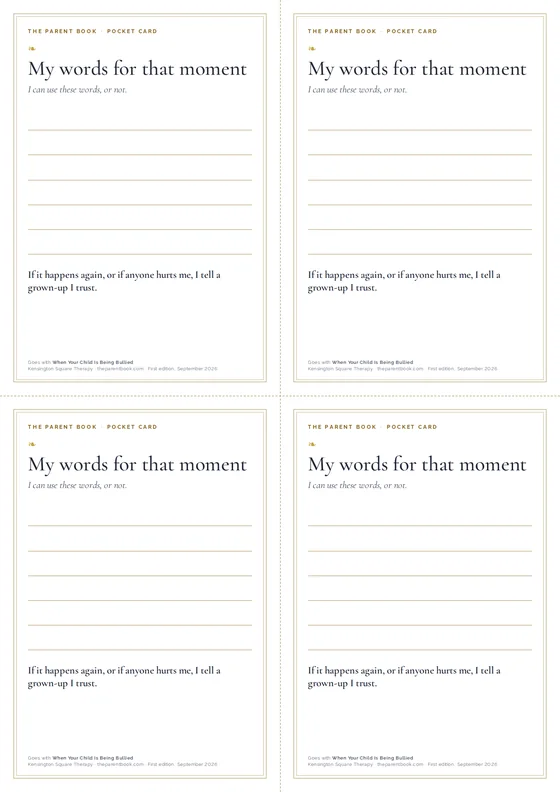 My words for that moment
Pocket card · A4, four cards to cut · With a subscription
My words for that moment
Pocket card · A4, four cards to cut · With a subscription
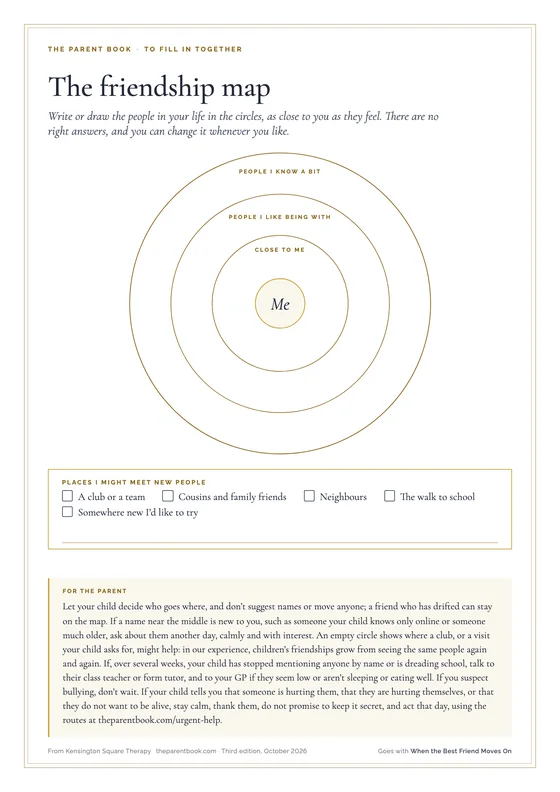 The friendship map
To fill in together · A4 · With a subscription
The friendship map
To fill in together · A4 · With a subscription
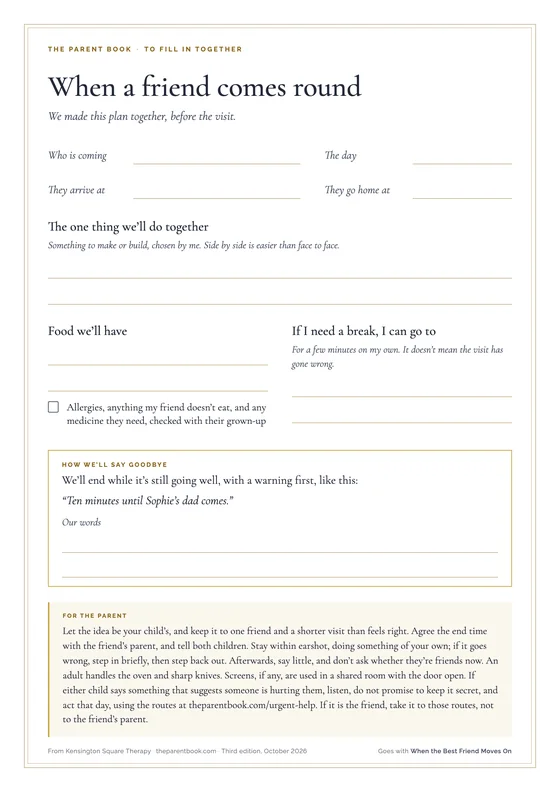 When a friend comes round
To fill in together · A4 · With a subscription
When a friend comes round
To fill in together · A4 · With a subscription
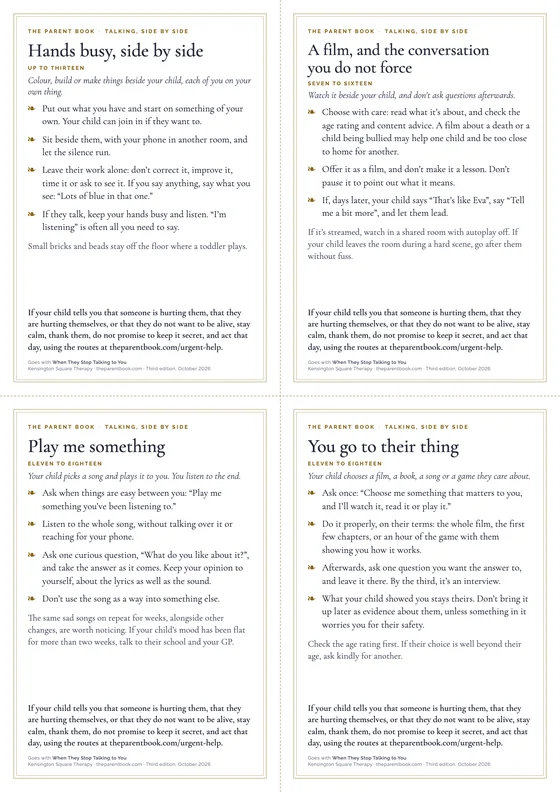 Talking, side by side
Cards to cut out · A4, four cards to cut · With a subscription
Talking, side by side
Cards to cut out · A4, four cards to cut · With a subscription
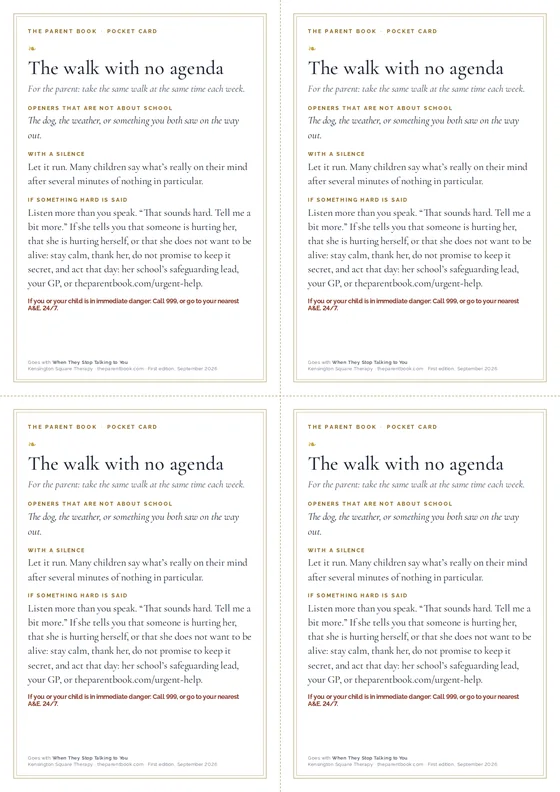 The walk with no agenda
Pocket card · A4, four cards to cut · With a subscription
The walk with no agenda
Pocket card · A4, four cards to cut · With a subscription
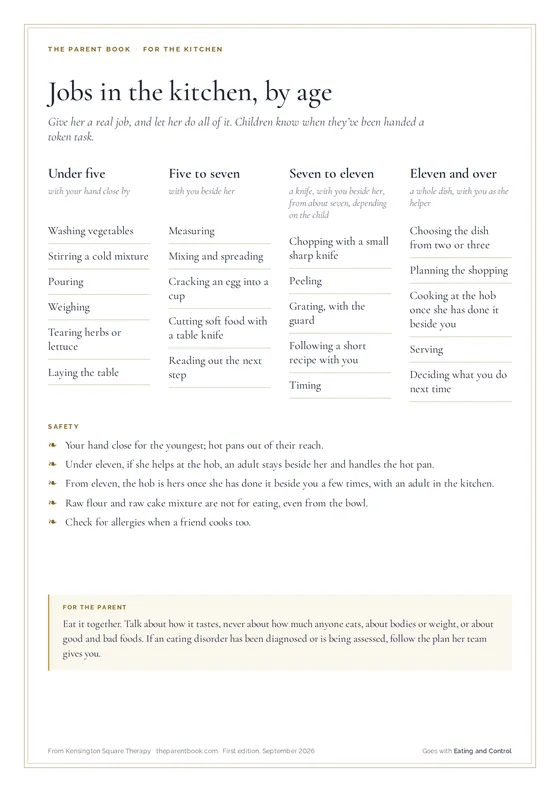 Jobs in the kitchen, by age
For the kitchen · A4 · With a subscription
Jobs in the kitchen, by age
For the kitchen · A4 · With a subscription
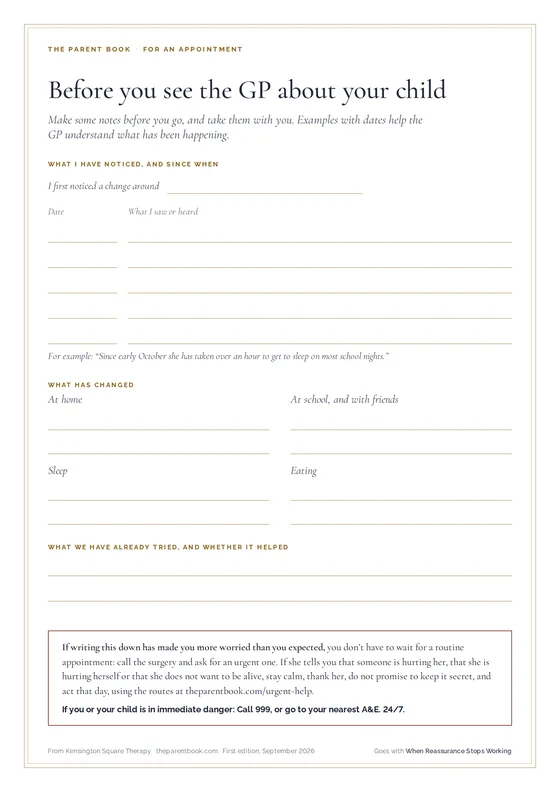 Before you see the GP about your child
For an appointment · A4, two sides · Free
Before you see the GP about your child
For an appointment · A4, two sides · Free
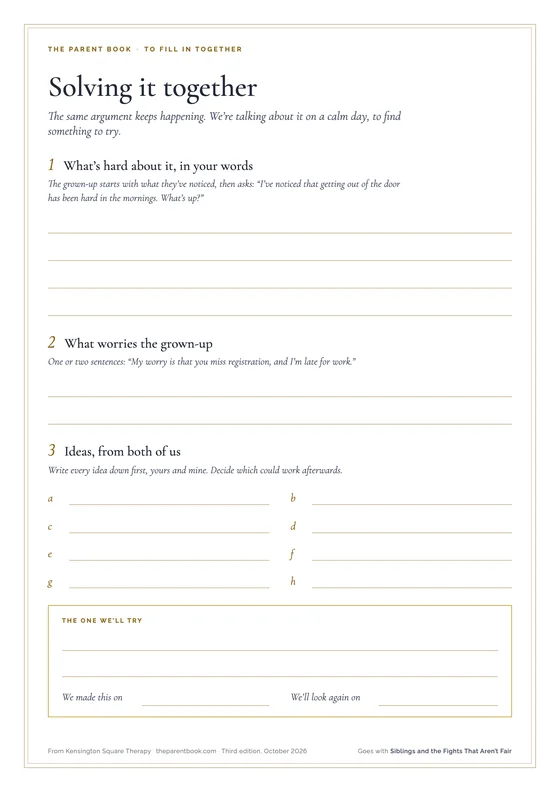 Solving it together
To fill in together · A4, two sides · With a subscription
Solving it together
To fill in together · A4, two sides · With a subscription
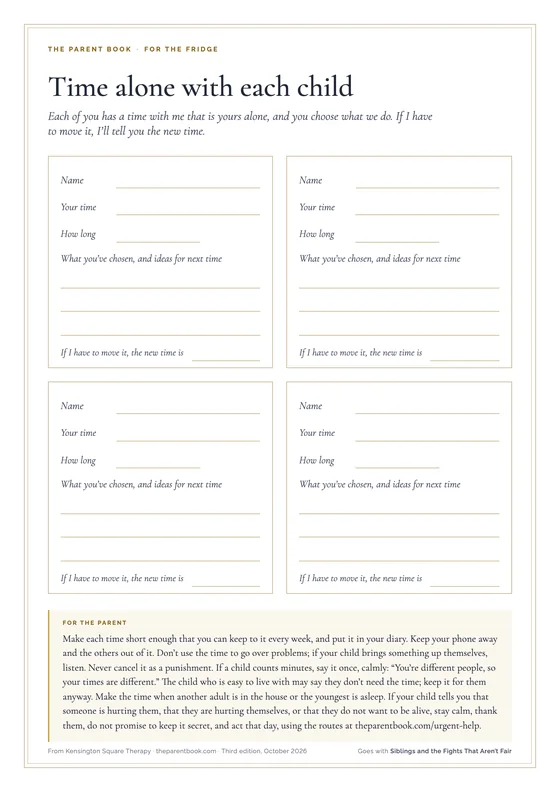 Time alone with each child
For the fridge · A4 · With a subscription
Time alone with each child
For the fridge · A4 · With a subscription
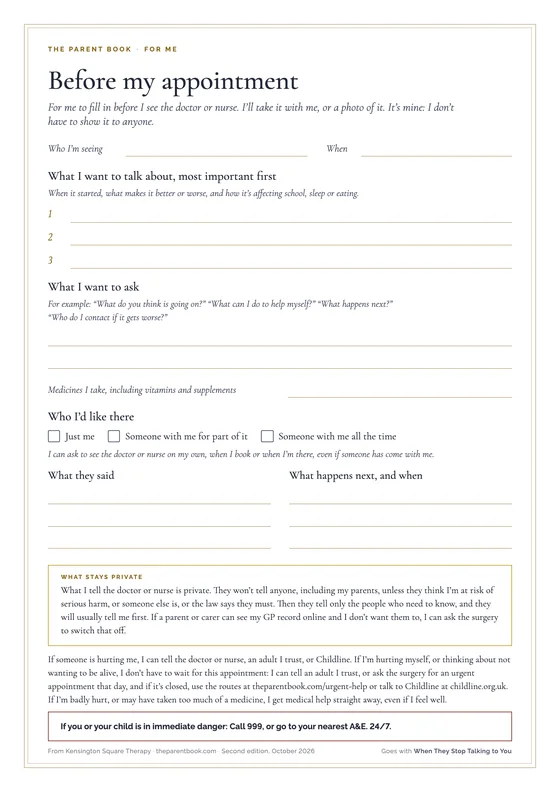 Before my appointment
For an appointment · A4, two pages · With a subscription
Before my appointment
For an appointment · A4, two pages · With a subscription
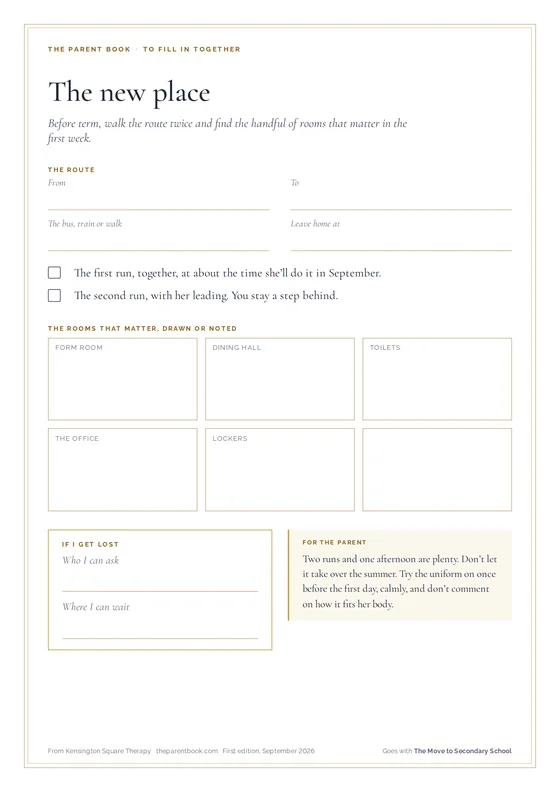 The new place
To fill in together · A4 · With a subscription
The new place
To fill in together · A4 · With a subscription
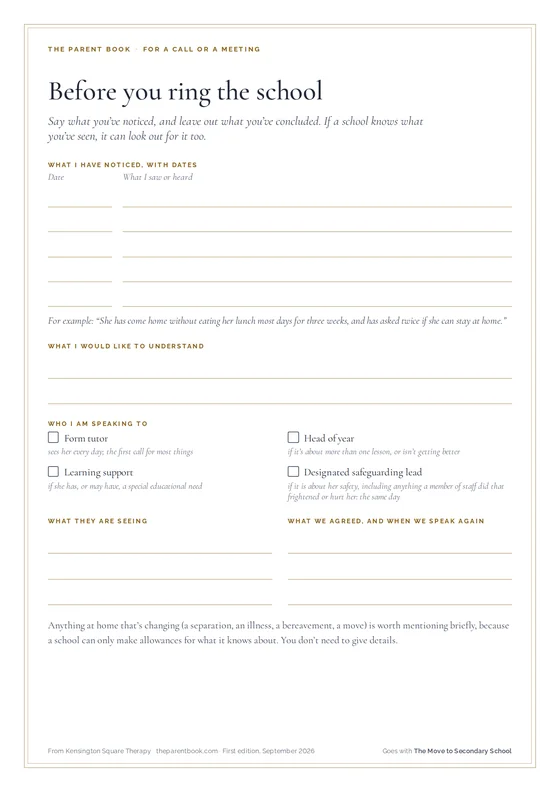 Before you ring the school
For a call or a meeting · A4 · Free
Before you ring the school
For a call or a meeting · A4 · Free
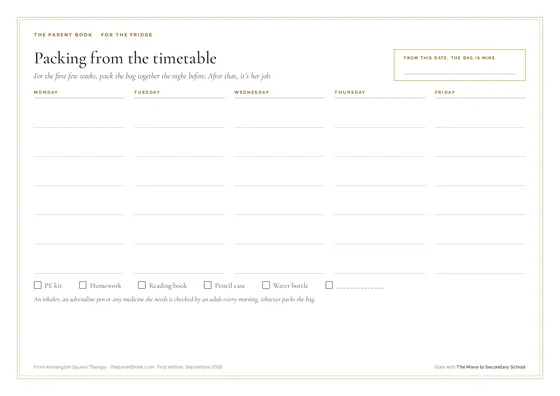 Packing from the timetable
For the fridge · A4 landscape · With a subscription
Packing from the timetable
For the fridge · A4 landscape · With a subscription
 What I will miss
To keep · A4, two pages · With a subscription
What I will miss
To keep · A4, two pages · With a subscription
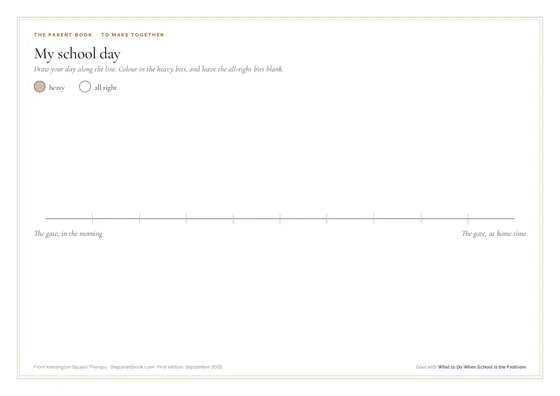 The school day, drawn as a line
To make together · A4 landscape, two pages · With a subscription
The school day, drawn as a line
To make together · A4 landscape, two pages · With a subscription
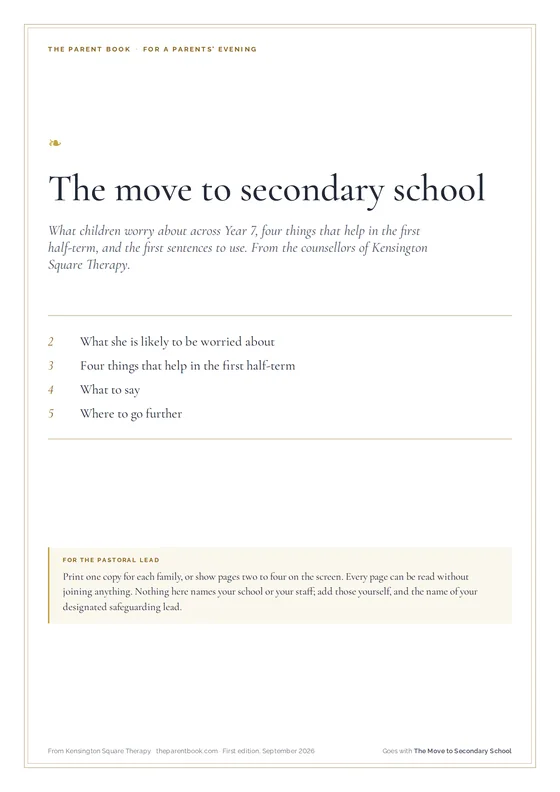 The move to secondary school, for a parents’ evening
For a parents’ evening · A4, five pages · Free
The move to secondary school, for a parents’ evening
For a parents’ evening · A4, five pages · Free
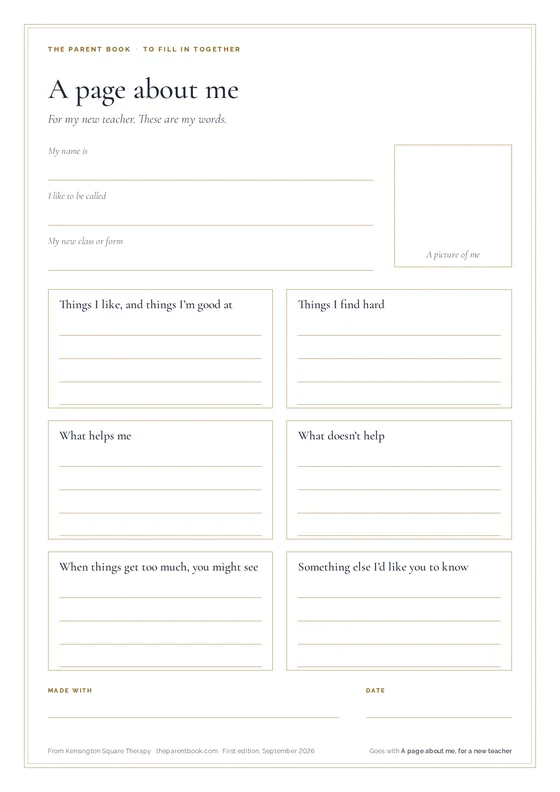 A page about me
To fill in together · A4, two pages · With a subscription
A page about me
To fill in together · A4, two pages · With a subscription
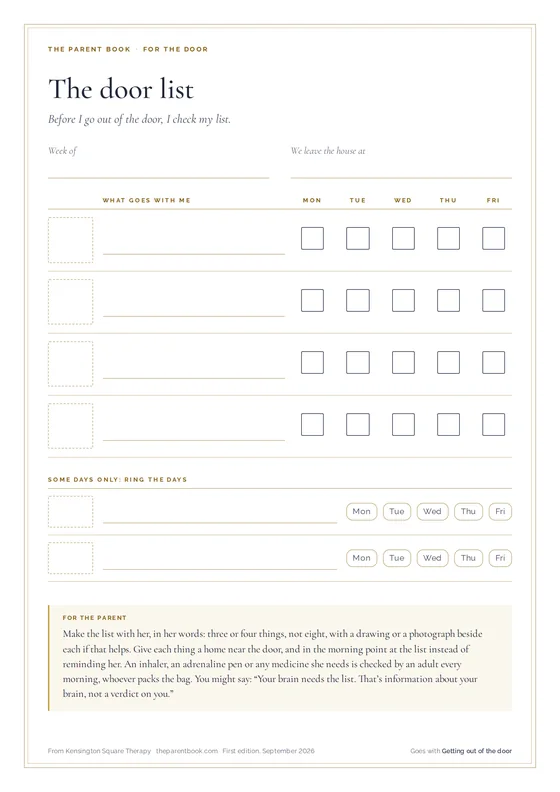 The door list
For the door · A4 · With a subscription
The door list
For the door · A4 · With a subscription
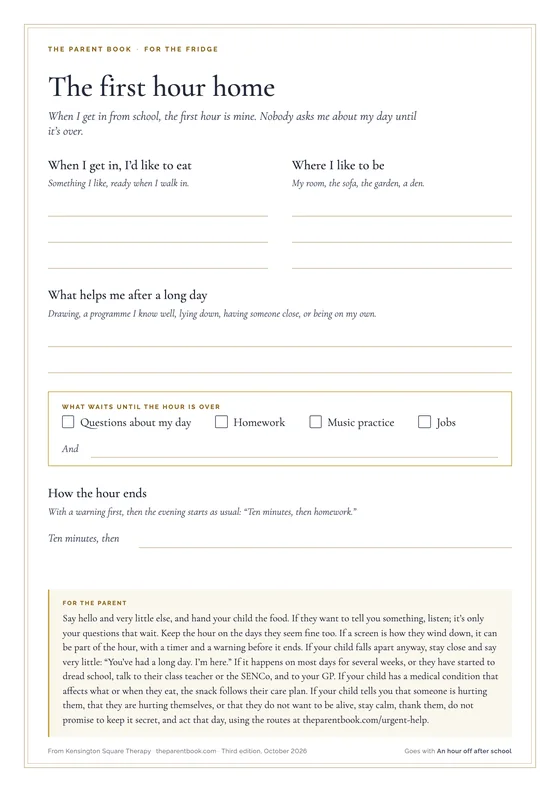 The first hour home
For the fridge · A4 · With a subscription
The first hour home
For the fridge · A4 · With a subscription
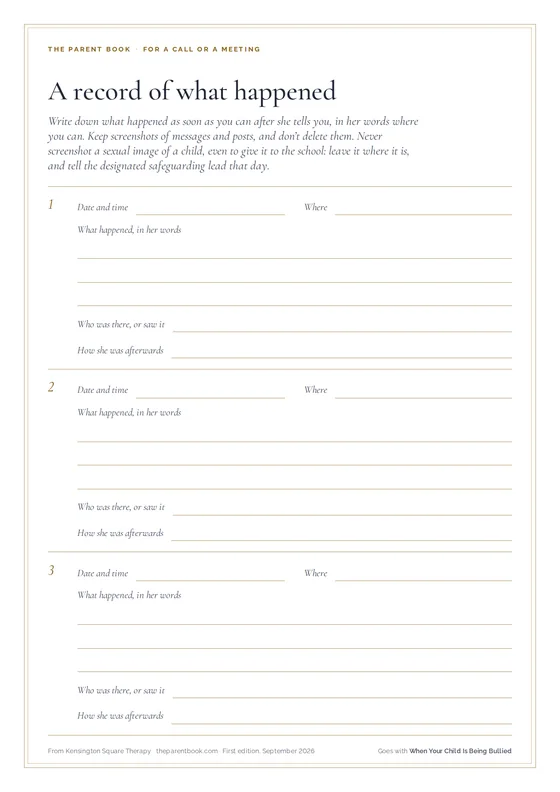 A record of what happened
For a call or a meeting · A4, two pages · Free
A record of what happened
For a call or a meeting · A4, two pages · Free
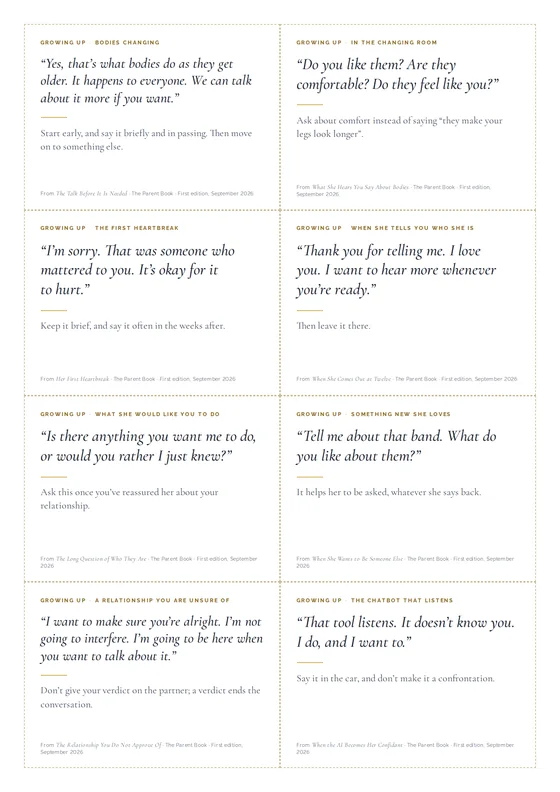 What to say: growing up
Cards to cut out · A4, eight cards to cut · With a subscription
What to say: growing up
Cards to cut out · A4, eight cards to cut · With a subscription
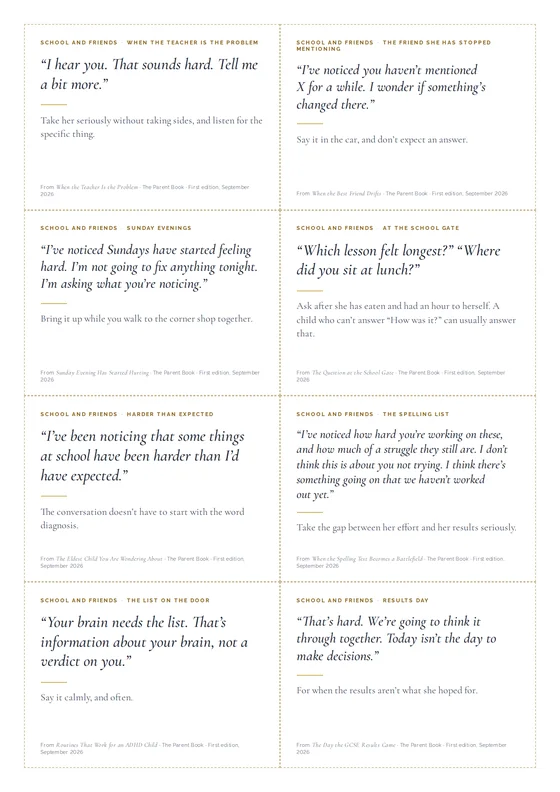 What to say: school and friends
Cards to cut out · A4, eight cards to cut · Free
What to say: school and friends
Cards to cut out · A4, eight cards to cut · Free
53 on friendships
Chosen by the therapists who write the library: books for you and to read with your child, and pages from organisations we trust.
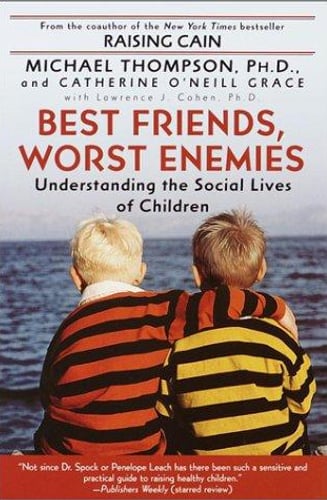
Also on this shelf
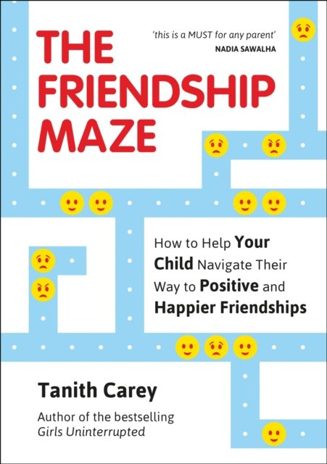
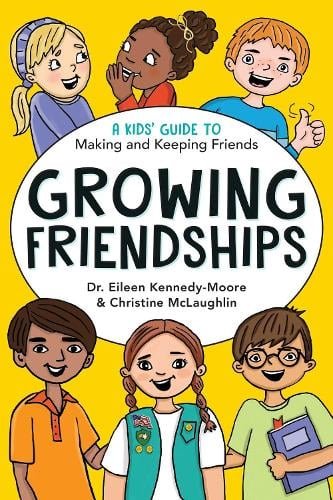
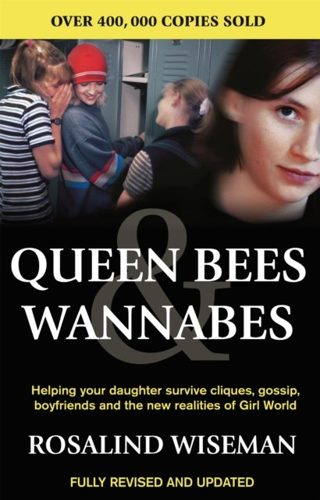
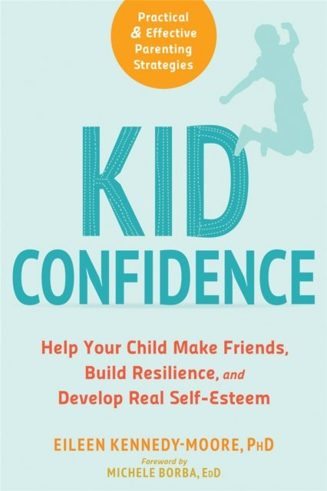
And six more. Every book on the shelf, with a therapist’s note on what it is good for, is in the library.
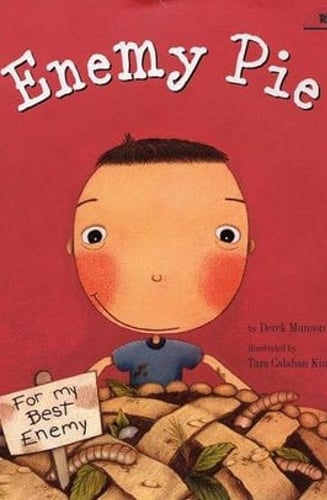
Also on this shelf
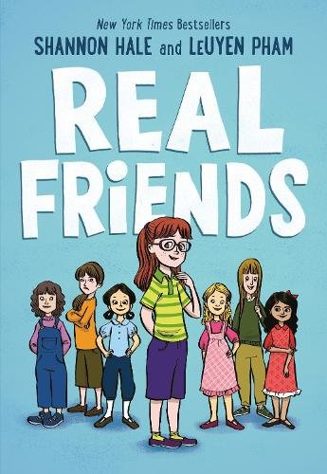
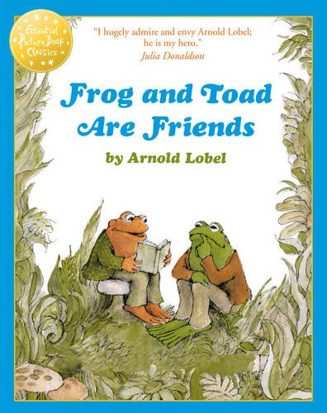
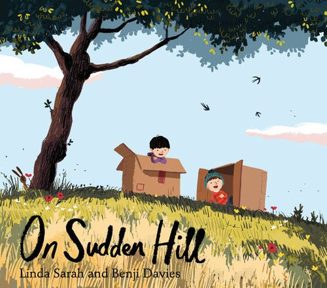
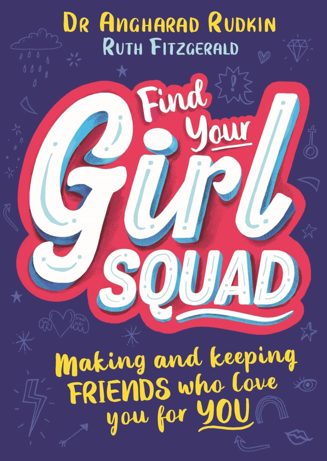
And 34 more. Every book on the shelf, with a therapist’s note on what it is good for, is in the library.
Place2Be
Why falling out is a normal part of learning to be a friend, and how to coach a child through conflict without stepping in to fix it for them.
Place2Be
Types of peer pressure, why it peaks in Years 5, 6 and early secondary, and how listening without judgement helps when a child has given in.
Place2Be
Why belonging matters so much to children, why some find it harder at school or after a move, and small things parents can do to help a child feel they fit.
Nothing on this shelf is written for that age yet.
10 on friendships
Podcast episodes, talks and films, each chosen for a reason.
Ask Lisa: Untangling Family Life
When a child is dropped by a friend group or left out: why it happens at this age, how conflict differs from bullying, and how to help.
Also on this shelf
Talking Sense with Dr Martha
Speaking of Psychology
Dr Eileen Kennedy-Moore
MQ Open Mind
And one more. Every episode on the shelf, with a therapist’s note on what it is good for, is in the library.
YouTube · 6 min
Child Mind Institute, YouTube
A psychologist explains how parents can support children’s friendships, coaching social skills, making room for playdates and helping children through fallings out.
Also on this shelf
YouTube · 2 min
Childnet International, YouTube
YouTube · 2 min
Janet Lansbury, YouTube
YouTube · 2 min
Place2Be, YouTube
Every film on the shelf, with a therapist’s note on what it is good for, is in the library.
Nothing on this shelf is written for that age yet.
This usually starts at school rather than at the surgery. The adults who see your child every day are the first people to tell, and often the fastest route to a change. The GP is there if it persists or deepens.
Where to start
The pastoral lead, the head of year, or the form tutor. Free, already knows your child, and often the quickest way to get something changed at school.
Before or alongside anything else. A school cannot act on what it has not been told, and what you bring is often what it did not have.
The gateway to everything the NHS offers a child: paediatric assessment, a referral to CAMHS, and support for you as the parent.
Ask for a double appointment. Describe the pattern over weeks rather than the worst single day, and say plainly what you are worried about. Bring a written list; the ten minutes go quickly.
For friendships
Parenting Smart, written by the child mental health specialists who work in primary schools: short, practical articles and films on friendships, behaviour, worries and routines.
For a child of five to eleven, when you want something you can read in ten minutes and try tonight. Place2Be’s counselling itself is only through partner schools.
The UK’s young people’s mental health charity, with a free Parents Helpline, webchat and email, and a plain A to Z of the things parents worry about.
When you want to talk through a worry about your child with someone who has heard it before, or read a clear first explanation of a named concern. Not a crisis line.
Parents Helpline 0808 802 5544 · Mon, Thu, Fri 9.30am-4pm; Tue, Wed 9.30am-6pm · Webchat Mon-Fri 9.30am-4pm; email parents@youngminds.org.uk · Outside those hours the parents line is closed. The urgent routes on this page are open when it is not.
The UK’s anti-bullying charity. A free Parent Advice Line by phone, WhatsApp or email, staffed by people who know how schools work.
When you have raised bullying with the school and it has not stopped, or you want help preparing for that conversation.
Kidscape Parent Advice Line 0300 102 4481 · Mon-Tue 9.30am-2.30pm; reduced over the summer holidays. Voicemail, email and WhatsApp accepted outside hours · If a child is at risk of harm now, do not wait for a reply: call the police on 101, or 999 if anyone is in immediate danger.
Every organisation for friendships, and when each is the right call Finding a therapist