The Parent Book.
Therapist-written support for parents
What helps
Adoption, fostering and kinship care
Adoption, fostering and kinship care
For families raising a child who can’t live with their birth parents, through adoption, special guardianship, kinship care or fostering. These pages cover what a hard start can mean, telling a child their story, staying in touch with birth family, school, and the support you can ask for.
What the library says about this, in one place. It is also online at theparentbook.com/help/adoption-and-kinship
What to do first
Most adopted children, and most children who leave care to live with a special guardian, do not come back into care, and a lot of the hardest behaviour makes sense once you know what came before. Asking for support is a normal part of raising a child who has had a hard start, and in England an adoptive family has a right to an assessment of what it needs.
- Tonight, put the life story book, or copies of the family photographs, where your child can reach them, and tell your child once that they can look at the book or the photographs with you whenever they like. If you foster, agree this with your child’s social worker first.
- This week, write to your council or regional adoption agency and ask for an assessment of your family’s support needs; if you are a relative raising a child, ask what is in the council’s kinship local offer; if you foster, ask your fostering service for the support it has set out for you.
- Tell your child’s school, in writing, what it needs to know to help, and ask who leads for adopted and looked-after pupils; it rarely needs the details of your child’s history.
Some tips to try
Short pieces from the library, and a first thing to try from each.
-
Asking for an Assessment of Your Support Needs.
In England and Wales an adoptive family can ask the council to assess its support needs, and the council must do it.
- Write to your council or regional adoption agency asking for an assessment of support needs.
- For relatives and friends raising a child, with or without a court order, there is a specialist advice service. Kinship, 0300 123 7015. Mon-Fri 10.30am-1pm, excluding public holidays. Outside those hours the line is closed. Samaritans answer at any hour on 116 123, and Shout answer if you text the word SHOUT to 85258. Councils in England must publish a kinship local offer setting out what support they give.
theparentbook.com/quick-tips/asking-for-an-assessment-of-your-support-needs
-
Telling a New School What It Needs to Know.
Tell a new school what it needs to know to help your child; it rarely needs the details of their past.
- Write to the school before the first day; leave out the details of your child’s past.
- In England, state schools must have a designated teacher for children who are in care or who left care through adoption, special guardianship or a child arrangements order. Independent schools don’t have that duty, but the government’s safeguarding guidance says a suitably trained teacher should take the lead in schools without one, so ask who that is. Ask, too, for one named person to deal with, an adult your child can go to, and somewhere to go when it gets too much.
theparentbook.com/quick-tips/telling-a-new-school-what-it-needs-to-know
-
When Contact With the Birth Family Unsettles Your Child.
A child may be anxious before contact with birth family and unsettled after it; telling them what will happen, and keeping the next day predictable, helps with both.
- Beforehand, tell your child what will happen and that you think it is good to go.
- If you think someone is hurting your child, or your child tells you so, stay calm, thank them if they have told you, don’t promise to keep it secret, and act that day. If the person hurting your child lives in your home or your child’s other home, go straight to children’s social care or the police. A national child protection helpline will talk it through with you. NSPCC, 0808 800 5000. Email help@nspcc.org.uk. Mon-Fri 10am-4pm by phone; email 11am-4pm, seven days a week. An email sent when the service is closed is not received. If the NSPCC service is closed and the concern cannot wait, call the police on 101. You can also contact the child’s local out-of-hours children’s social care, social work or social services team. If a child is in immediate danger, call 999. Help is free.
theparentbook.com/quick-tips/when-contact-with-the-birth-family-unsettles-your-child
The rest of each tip, with more to try and why it works, is in the library.
Something to do together
A regular time to ask about their story. Every few weeks, offer to get out the life story book or the photographs, and let your child lead, so they know questions about their past are always welcome.
What it is for. Openness about a child’s birth family and early life is good for adopted children, and children in care or in special guardianship should have information about their history that they can come back to at their own pace. A regular, unhurried time when the book comes out, and your child decides what to look at and what to ask, tells them the subject is welcome without making them talk about it. It does not replace life story work, which is a job for a trained social worker or therapist.
- The first step. Tell your child, once, that the life story book and the photographs are theirs to look at with you whenever they like, and suggest a regular time every few weeks.
Safety. Keep the originals of precious photographs and documents somewhere safe, and let your child handle copies. If your child is in care, agree with their social worker what you can show and say before you start.
When to get help. If your child tells you that someone is hurting them, stay calm, thank them for telling you, don’t promise to keep it secret, and act that day, using the routes under “If you need help right now”, at the foot of every page; if the person hurting your child lives in your home or your child’s other home, go straight to children’s social care or the police. A child protection helpline, listed under “If you need help right now”, at the foot of every page, will talk it through with you. If your child tells you about harm from before your child came to you, write down what your child said and tell your child’s social worker, your support team or children’s social care that day. If your child has hurt themselves, or talks about not wanting to be alive, stay calm, thank them if they have told you, don’t promise to keep it secret, and act that day: help them ask the surgery for an urgent appointment, and if it is closed, use the routes under “If you need help right now”, at the foot of every page. If your child is badly hurt, or may have taken too much of a medicine, get medical help straight away, even if they seem well. If questions about the past bring distress that lasts for weeks, or your child’s behaviour changes, talk to the GP as well as your support team, and ask what further support you can have.
The other four steps, and your part in it, are in the library.
If you want to read further
Worth your time
-
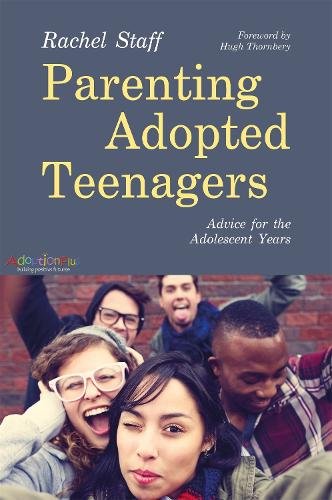
A book for you: Parenting Adopted Teenagers, Rachel Staff.
A guide for adoptive parents of teenagers: how adolescence meets any early trauma, identity and relationships, and contact with birth family. The first-hand accounts from adopted teenagers, as well as from parents and professionals, are what make it worth reading.
-
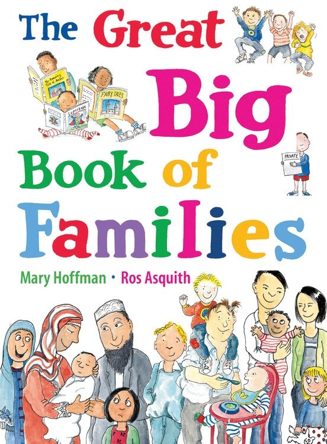
A book to read together: The Great Big Book of Families, Mary Hoffman.
Shows families of every shape: with one parent or two, adopted, fostered, step, rich, poor, with two mums or two dads. Packed with detail to pore over, it helps every child find a family like theirs.
uk.bookshop.org/p/books/the-great-big-book-of-families-mary-hoffman/88a065dd987fd23f
Who else can help
Start with the council or regional adoption agency, or, if you foster, your child’s social worker, because they open the way to most other support; then the school, which sees your child every day; then the GP, if your child’s mental health is suffering; and last, private therapy, for families who can pay and can’t wait.
-
Your council’s adoption support or kinship team, or your regional adoption agency.
In England and Wales the council must assess an adoptive family’s need for adoption support if asked. In England, special guardians whose child was in care just before the order are entitled to an assessment too, the assessment is the way into the Adoption and Special Guardianship Support Fund, and councils must publish a kinship local offer.
Before a crisis if you can. Ask in writing, say what is hard and for how long, and ask to see the written report. If you foster, your child’s social worker, or your supervising social worker, is the first call instead.
www.gov.uk/find-local-council
-
Your child’s school.
The pastoral lead, the head of year, or the form tutor. Free, already knows your child, and often the quickest way to get something changed at school.
Before or alongside anything else. A school cannot act on what it has not been told, and what you bring is often what it did not have.
-
Kinship.
Free advice from Kinship’s specialist team, by phone or in an appointment you book, and peer groups across England and Wales, if you are a grandparent, relative or family friend raising a child.
For the legal, financial, school and emotional layers of raising a child who is not your own by birth.
Charged at your standard call rate, not free.
Kinship Advice Line 0300 123 7015 · Mon-Fri 10.30am-1pm, excluding public holidays · Outside those hours the line is closed. Samaritans answer at any hour on 116 123, and Shout answer if you text the word SHOUT to 85258.
kinship.org.uk/support-and-advice/talk-to-someone/contact-the-kinship-advice-team
-
Adoption UK.
The peer-led charity for adoptive and kinship families. A weekday advice line, peer support and resources on school and on adopted teenagers.
For the everyday texture of adoptive family life, and the school assignments and questions that catch families out.
Charged at your standard call rate, not free.
Adoption UK Information and Support Line 0300 666 0006 · Mon-Fri 10am-2.30pm; Northern Ireland Mon-Fri 9am-5pm; excluding public holidays · Outside those hours the line is closed. Samaritans answer at any hour on 116 123, and Shout answer if you text the word SHOUT to 85258.
www.adoptionuk.org/information-and-support-service
-
The Fostering Network.
The UK’s fostering charity, with a Fosterline in each nation, open to anyone, free to call in England and Wales and charged at your standard call rate in Scotland and Northern Ireland, and a library on settling a placement, handling a child’s history and endings.
At any point in a placement, from the first seventy-two hours onward.
Foster carers who are members can also use a 24-hour legal helpline.
Fosterline (England) and The Fostering Network advice lines 0800 040 7675 · England Mon-Fri 9am-5pm; Scotland Mon-Fri 10am-4pm; Wales Mon-Fri 9.30am-12.30pm; Northern Ireland Mon-Fri 9.30am-1.30pm; closed bank holidays · Outside those hours the line is closed. If a child is in immediate danger, call 999. If it is about a child in your care and cannot wait, call your fostering service’s out-of-hours number or, if you have none, the child’s local out-of-hours children’s social care, social work or social services team. Samaritans answer at any hour on 116 123, and Shout answer if you text the word SHOUT to 85258.
www.thefosteringnetwork.org.uk/for-carers/get-advice/the-fostering-network-advice-lines
The full list for adoption, fostering and kinship care, with what each organisation does and when it is the right call, is at theparentbook.com/help/adoption-and-kinship/services