The Parent Book·From the library
A Child With Two Families
For parents and carers whose child came to them through adoption, special guardianship, kinship care or fostering.
A 28-minute read · Published 28 October 2026 · Reviewed by the practice
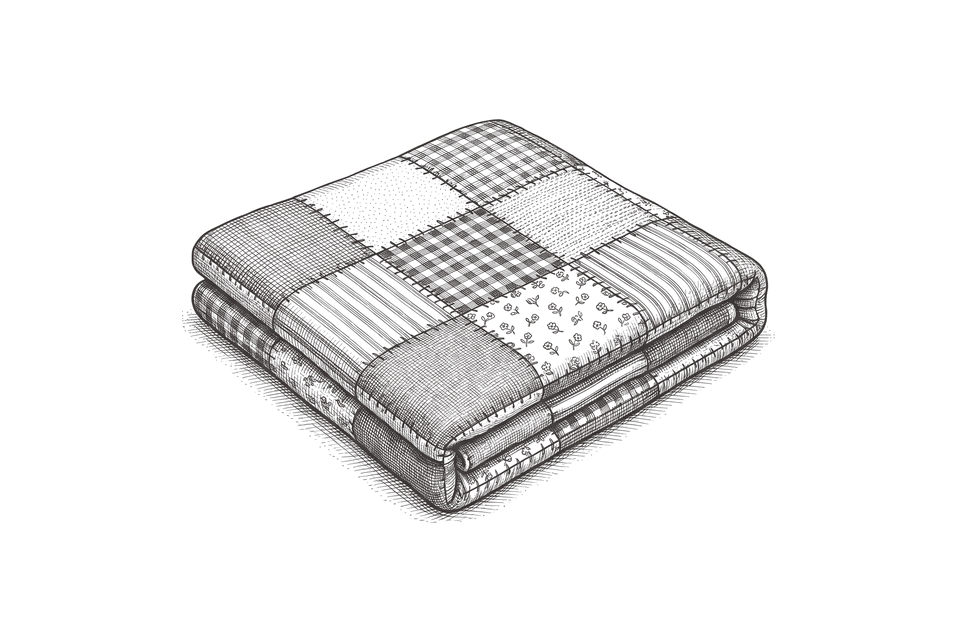
This chapter is for anyone bringing up a child who can’t live with the parents they were born to: adoptive parents, special guardians, foster carers, and the grandparents, other relatives and family friends raising a child, with or without a court order. You may have adopted a child you first met at two, be raising your own son’s or daughter’s child, or be fostering a child whose future may not have been decided yet. The chapter covers what a hard start can leave behind, telling your child their story, staying in touch with birth family, school, the teenage years, and the help you can ask for.
The law treats these families differently. An adoption order makes the adoptive parents the child’s legal parents and ends everyone else’s parental responsibility, birth parents included. A special guardian shares parental responsibility with the birth parents but can make almost all decisions without them; a relative caring informally has none unless a court grants it; and foster carers never hold it, because it stays with the local authority, the birth parents or both. Most of what follows applies to all of them.
Most adopted children, and most children who leave care to live with a special guardian, do not come back into care: in a 2025 study for the Department for Education, about 95 in every 100 children adopted from care in England, and 89 in every 100 who left care to live with a special guardian, had not come back. In research from many countries, adopted children catch up a long way in growth, attachment and learning, though not completely, and most fully when adopted before their first birthday. That isn’t the same as easy, and much of this chapter is about the hard parts.
Families choose their own words. In adoption, the people a child was born to are usually their birth parents or birth family, and some families say first family. Kinship, the charity for relatives and friends raising children, calls them the child’s parents, which in law they still are. Adoption England supports moving from “contact” to words such as “staying in touch”, and this chapter uses both; many children in care prefer “in care” to “looked after”. Whatever words you choose, use them early and without fuss, and as your child gets older, let them choose.
What a hard start can leave behind
Many of these children lived through neglect, abuse, a parent’s drinking, drug use or mental illness, or a run of different carers before they came to you. Others came as babies and still lost the people they were born to, and some were affected before birth, for example by alcohol.
Children adapt to the care they get. A child whose adults were frightening or unpredictable learns to watch them closely and react fast. That alertness can last long after the child is safe, so a raised voice, or a teacher leaning over the desk, can set off a reaction built for a threat. Some children withdraw instead, and stay anxious in places that are safe. A child whose needs often went unmet may come to expect little from good things. These were sensible responses to an unsafe home. In a safe one they get in the way, using up attention a child needs for learning and making it harder to trust the people trying to help.
A child’s pattern of attachment can be an adaptation to the care they have had, and repeated changes of carer, and care that was neglectful or abusive, contribute most to attachment difficulties. An adaptation can change with the care that follows it, so be wary of any book or quiz that sorts your child into an attachment “style” for life. An attachment disorder is a specific diagnosis, which should be made only when a child meets the formal criteria, so if someone uses the term about your child, it is reasonable to ask who made the diagnosis, and how.
None of this is a forecast. The risk these early changes bring does not decide a child’s future, and the brain goes on adapting to good experiences too. Trauma in Childhood covers trauma more generally.
Behaviour that makes sense once you know the history
Food. Some children eat very fast, eat far more than they need, or hide food: a seven-year-old boy may keep bread in his school bag for months after he arrives. In one Australian study of children in foster and kinship care, a quarter had significant problems with eating, which seemed to be set off by stress. Little research has tested what helps with food, so go by what helps these children generally, which is predictability: meals and snacks at times your child can count on, a snack they know is always there for them, and no telling-off for food found under the bed. If you are worried about your child’s eating, weight or growth, talk to the GP; for an older child, Eating and Control sets out what to watch for.
Control. A child who couldn’t rely on adults may try to run everything, from where everyone sits to whether the family goes out at all. Others take charge by looking after the adults, or by acting as a parent to a younger brother or sister. Both patterns can develop from the preschool years on. Involve your child in decisions and keep the final say yourself: offer choices you can live with, inside limits you hold.
Going backwards. Under stress, many of these children act younger than their age. They want to be carried, wet the bed again, or need you at bedtime after months of not needing you. Meeting it calmly for a while tends to help; Trauma in Childhood explains why. If your child starts wetting the bed again after being dry for more than six months, see the GP.
With strangers. Some children go readily to adults they hardly know, chatting to anyone or taking a stranger’s hand. This can follow early care that was neglectful or kept changing: the wariness of strangers usual at a child’s age is missing. Practise a simple rule about checking with you before going anywhere with anyone, and mention the behaviour at any assessment. Other children are delightful with visitors and at their worst with you; The Child Who Saves It All for Home is about them.
What helps is mostly unglamorous: predictable days, routines changed slowly, and limits held calmly. Kinship advises against punishments such as time out, because a child can feel them as rejection. Stay close while your child calms down, and talk about it afterwards.
You will also hear about PACE, from the work of Daniel Hughes. The letters stand for playfulness, acceptance, curiosity and empathy: a way of communicating that helps a child feel safe. Acceptance means accepting what a child feels and wants, not everything they do: you can stop the kicking and still say, “You were so angry with me.” Curiosity means wondering aloud without needing an answer: “I wonder if seeing your sister today made you think about your old house.”
Some of what you will be offered has been tested, and some hasn’t. NICE recommends video feedback for carers of preschool children: about ten sessions at home in which a worker films you with your child and watches the film back with you. For a primary-age child moving to a new placement, it suggests considering intensive training and support for the carers, from before the move until up to a year after, with group play sessions for the child. Dyadic developmental psychotherapy, the therapy PACE comes from, is widely used, and in England the Adoption and Special Guardianship Support Fund, described near the end of this chapter, can pay for it. It hasn’t yet been well tested: in 2015 NICE listed it among interventions “extensively used” and not properly evaluated, and a 2024 review found preliminary support for approaches that include it. Therapeutic parenting is a practice term rather than a single programme, and it has not been tested in trials.
Some children in these families hurt the people caring for them. This is called child to parent abuse, or child and adolescent to parent violence and abuse, and it isn’t a secret to keep: tell the GP, the school or your support team. When Your Child Hits You covers what to do in the moment. A specialist service supports parents who are being hurt, threatened or controlled by their child. It is not a helpline: its support starts with a form on its website. PEGS (Parental Education Growth Support). Online at https://www.pegsupport.co.uk/support-from-pegs. If violence is being used or threatened, get yourself and any other children out of the room and call 999; if anyone is hurt, get medical help.
Telling your child their story
The evidence favours openness: a 2024 report for the judiciary in England and Wales found “considerable evidence” that openness about a child’s birth family and early life is good for adopted children. Start before your child can understand, using the words of their story at bath time or over a photograph, and add detail as your child grows. Then answer what your child asks, truthfully and at the length they can manage, and when you don’t know, say so.
If your child was adopted in England, two documents should have come with them. The life story book tells their early history in simple words and pictures, and leaves explicit or distressing details for later. The later life letter, from a social worker who knew your child, explains more fully why they could not live with their birth family, for when they are a teenager or a young adult. If either is missing or thin, ask your agency for it. If your child is fostered, their social worker leads on telling them their history; Answering a Fostered Child’s Questions About Their Past covers what to say in the meantime. In kinship care you may know the story better than anyone, and it may be your own family’s story too; Explaining Where Mum Is has words for the first questions.
Tell the hard facts, such as neglect, a parent’s addiction, violence or abuse, truthfully and in amounts your child can manage. Start on the harder details in the primary school years, and with teenagers, talk about why their birth parents couldn’t look after them. Say nothing you will have to take back later. “Your birth mum had a grown-up problem that made it too hard for her to keep a baby safe” can become, by seven or eight, “The problem was drugs. She was addicted, and when she took them she couldn’t look after you.” Tell your child, more than once, that it was not their fault. Be wary of phrases written for babies placed for adoption at birth, such as a birth mother who “made a plan” for her baby, if that isn’t what happened.
Life story work, going through a child’s history in depth, is a job for a trained social worker or therapist, and the support fund in England can pay for it. Your part is smaller and more frequent; A regular time to ask about their story suggests one way of doing it.
Sometimes, as a child starts to talk about the past, they tell you something nobody knew. If that happens, stay calm, don’t promise to keep it secret, and act that day; the box at the top of this page says how.
Staying in touch with birth family
For most adopted children in England, the plan for staying in touch is letterbox: letters or cards exchanged through the agency once or twice a year. Some also see birth relatives in person. In kinship care the child’s parents are usually part of your own family. In Kinship’s 2024 survey, about one carer in eight feared they might have to stop caring within the year, and almost half of those gave family relationships and contact as a reason. For a fostered child, family time is often part of a court order and can’t simply be changed.
In a long-running UK study, adopted young people who stayed in touch with a birth relative were more likely to understand their story and why they had been adopted. Meeting in person was easier for families to keep up than letters, and didn’t stop children feeling part of their adoptive family, while letterbox often faded within a few years. Contact still has to feel emotionally safe, and decisions are made child by child.
Before contact, tell your child what will happen and who will be there, and let them see you think it is good for them to go. Ask the agency or social worker whether you can meet the birth relative first, without your child, at a meeting they arrange: an early meeting between the adults can help contact get off to a good start. Afterwards, don’t press for a report, tell your child it is fine to have enjoyed it, and stay close if they are upset: helping them through it can bring you closer. When Contact With the Birth Family Unsettles Your Child has the rest.
Write letterbox letters as if your child will read them at eighteen, and ask your agency whether it keeps copies on your child’s file, which your child can ask to see from that age.
Social media means a birth relative can find a child, or a child can find them, without anyone planning it: a thirteen-year-old girl may find her birth father’s page one evening and be messaging him by the weekend. Unplanned contact like this has severely disrupted some placements, and openness between you and your child is thought to be the best way to handle it. Talk with your child, before it happens, about what they would do if a birth relative got in touch, and raise the subject from time to time so they know it is welcome. If the person is someone your child is not meant to see, asks your child to keep it secret or to meet, or sends anything sexual or frightening, leave the messages as they are, do not reply, do not view, copy, screenshot, save or forward any image, and act that day, using the routes under “If you need help right now”, at the foot of this page. If anything sexual is involved, there is also a police route for reporting it online. CEOP (the police’s online child protection command). Report at https://www.ceop.police.uk/safety-centre/. If your child has gone to meet someone your child is not meant to see or who asked for secrecy, call 999. When a Birth Relative Gets in Touch Online sets out the first steps.
School
In England, every maintained school and academy must appoint a designated teacher for children in care and for children who left care through adoption, special guardianship or a child arrangements order, and children who left care in these ways bring the school extra funding, Pupil Premium Plus. Neither the duty nor the money applies to an independent school your family pays for.
Independent schools are covered by Keeping Children Safe in Education, which says every school should have a designated safeguarding lead, that a child who has left care may still be vulnerable, and that in schools without a designated teacher, a suitably trained teacher should take the lead. Ask who that teacher is, and for a key adult your child can go to and a safe place to go when distressed, which any school can offer.
If your child left care through one of those orders, the law says the council where your child goes to school must make advice and information about their education available to you, and its virtual school usually does this. The government’s guidance for councils limits that duty to children in state-funded education, so if your child is at an independent school you pay for, the virtual school may tell you it does not cover you. It can still choose to help, so it is worth asking the virtual school for the area the school is in. Virtual schools should also advise kinship carers with a special guardianship order or a child arrangements order who ask. If you are raising a relative’s or friend’s child without a court order, you still count as a parent in education law.
Tell the school what it needs to know to help your child: your child’s status; who has parental responsibility and who may collect your child, with a copy of any court order; what unsettles your child and what helps; and any contact that touches the school day. It rarely needs the details of your child’s past, which are theirs to share. A recent frightening event, or a worry about your child’s safety, is different: the school needs a clear account of that, as Trauma in Childhood sets out. As your child gets older, ask them what they want the school to know. Ask the school for one named person to deal with. Telling a New School What It Needs to Know has a version you can send, and When the Family Tree Project Comes Home covers the assignments that catch children out.
Moves between schools are hard for many of these children. NICE suggests group programmes around the move to secondary school, so ask your support team what it offers. The Move to Secondary School covers the rest.
Adolescence
Many children go back over their story in adolescence, and old feelings about birth parents can come back. A teenager may want to know much more, notice that they look nothing like you, take a birth parent’s side in an argument, or stop talking about it at all.
Many want to find their birth family. In England and Wales an adopted person can apply for their birth records only from eighteen. Until then the safer way to search is with you and your adoption support team, so that your teenager isn’t doing it alone.
For many families these are the hardest years: most adoption breakdowns happen while a child is at secondary school. Most families come through together, and if you are going to ask for help, ask early. Children who have been in care, including those later adopted or living with a special guardian, are more likely than their classmates to struggle with their mental health. If your teenager is struggling, start with the GP. When Your Child Has Gone Flat covers low mood, and if your teenager tells you that someone has hurt them, the box earlier in this chapter applies at any age.
Self-harm, or any talk, however glancing, of not wanting to be here at all, is a reason to act the same day, not after weeks: ask for an urgent GP appointment or, if the surgery is closed, use the 111 route under “If you need help right now”, at the foot of this page. If your child is badly hurt, or may have taken too much of a medicine, get medical help straight away, even if they seem well. If they are in immediate danger, call 999.
At different ages
If your child is under five. Keep the days predictable, and expect your child to go backwards for a while after a change: a move, a new carer, a contact visit. Ask your support team about the video feedback described earlier.
If your child is between five and eleven. The questions start in earnest, often at unexpected moments; The First Questions About Birth Parents has words for them. Keep the life story book where your child can reach it; if you foster, agree this with your child’s social worker first. From about nine, many children start to ask why it happened and who decided: answer what you know, and write down what you don’t, to take to the social worker or support team.
If your child is between eleven and fourteen. Talk about social media before your child has a phone of their own: what they would do if a birth relative got in touch, and who they would tell. When they start a new school, ask what they want it to know, and go with the answer as far as safety allows.
If your child is fourteen or older. Your teenager may want to read the later life letter, see their file or find their birth family. Decide with your adoption support team when to share the letter, and offer to read it together. A young person in foster care will usually have a pathway plan and a personal adviser as they near leaving care; find out who the adviser is.
Help for you, and your own life
In Scotland and Northern Ireland the law and services differ from what follows.
If you have adopted in England or Wales, you can ask for an assessment of your family’s need for adoption support, and the local authority must carry it out. In England, special guardians whose child was in care just before the order are entitled to an assessment too, and other special guardians can ask. Asking for an Assessment of Your Support Needs sets out who to ask and how.
In England the assessment is also the way to the Adoption and Special Guardianship Support Fund, which can pay for therapy, therapeutic parenting training, short breaks and life story work; the authority or agency applies for you. It covers children who were adopted from care or from abroad, or were in care before a special guardianship or child arrangements order, but not a child in kinship care who was never in care. The fund has changed more than once in recent years, so ask your agency what it will pay for now. PAC-UK, part of Family Action, offers specialist counselling, groups and training for families affected by adoption and special guardianship.
In Adoption UK’s 2026 survey of families whose child was adopted before 2024, about four in ten said they had faced severe challenges or reached crisis point in the previous year, and nearly three in four said the main support services they had used had helped.
Councils in England must also publish a kinship local offer, setting out the support and money available to kinship families. For relatives and friends raising a child, a national advice service answers questions about parental responsibility, money, benefits and contact, and runs local peer groups. Kinship, 0300 123 7015. Mon-Fri 10.30am-1pm, excluding public holidays. Outside those hours the line is closed. Samaritans answer at any hour on 116 123, and Shout answer if you text the word SHOUT to 85258.
If you foster in England, your fostering service must set out the support it gives you, including supervision, peer support and support out of hours, and regular respite breaks can be written into your child’s care plan.
Long strain can wear down a parent’s capacity to care, and that can be hard to admit. Daniel Hughes and Jonathan Baylin, in Brain-Based Parenting, call this blocked care: stress, they argue, can get in the way of the brain’s caregiving, and life with a child can set off defensive feelings rooted in the parent’s own early relationships. The idea has hardly been studied in its own right; the authors argue that it lifts as the stress eases and the parent understands what is happening. If that sounds like you, tell your support team or social worker, and read When You Are Not All Right.
If you are raising a grandchild, you may have a particular loss to manage. Nearly three-quarters of the carers in Kinship’s 2024 survey were grandparents, so for most of them one of the child’s parents is their own son or daughter, and the survey describes love and loyalty towards that parent alongside anger and frustration. You may be grieving for your own child while you raise theirs, and managing how much your grandchild sees of them, all at once. If you foster, you can feel the loss too when a child moves on; When the Placement Ends is about that.
If you do one thing after reading this, ask for support while things are calm enough to fill in the forms: if you have adopted or are a special guardian, write to your council or regional adoption agency and ask for an assessment of your family’s support needs; if you are raising a relative’s or friend’s child, read your council’s kinship local offer; if you foster, ask your supervising social worker what your fostering service provides.
NOTES
- Selwyn, Julie and Gardiner, Julian (Rees Centre, University of Oxford). Family Routes: children who returned to care after leaving for adoption or to live with a special guardian. Research report for the Department for Education, September 2025. About 95 per cent of adopted children and 89 per cent of children who left care to live with a special guardian had not returned to care by March 2023; 89 per cent of adoption disruptions came in the secondary school years.
- van IJzendoorn, Marinus H. and Juffer, Femmie. “The Emanuel Miller Memorial Lecture 2006: adoption as intervention. Meta-analytic evidence for massive catch-up and plasticity in physical, socio-emotional, and cognitive development.” Journal of Child Psychology and Psychiatry, 2006, 47(12), 1228–1245. More than 270 studies, many of international adoption: catch-up incomplete in some areas, particularly growth and attachment, and more complete after adoption before twelve months.
- legislation.gov.uk. Adoption and Children Act 2002, section 46, revised to 19 August 2026. Kinship. Parental responsibility in kinship care, last modified 3 September 2026. The Fostering Network. Making decisions for a child in foster care, undated (2025). Who holds parental responsibility after an adoption order, under special guardianship, in informal kinship care and in foster care.
- Adoption England. Glossary of adoption terms, undated (2026). Kinship. What is kinship care?, last modified 14 November 2024. The words families and children use, including “staying in touch” and “children in care”, and Kinship’s use of “parents”.
- UK Trauma Council (a project of the Anna Freud Centre). How the brain adapts to adversity, presented by Eamon McCrory, and How latent vulnerability plays out over a child’s life, both last modified 27 June 2025. How maltreatment changes a child’s responses to threat and reward, and why the risk it brings does not fix a child’s future.
- National Institute for Health and Care Excellence. Children’s attachment: attachment in children and young people who are adopted from care, in care or at high risk of going into care (NG26), November 2015, minor changes 2023. Attachment patterns as adaptations, their main causes, and controlling and caregiving patterns (context); diagnosis only on criteria (1.3.6); a key person and a safe place at school (1.2.5); video feedback (1.4.2, 1.5.1); support around a new placement (1.5.4); group programmes around the move to secondary school (1.5.8); adolescence (1.5.11); dyadic developmental psychotherapy as extensively used but not evaluated (research recommendation 3); pathway plans and personal advisers.
- Tarren-Sweeney, Michael. “Patterns of aberrant eating among pre-adolescent children in foster care.” Journal of Abnormal Child Psychology, 2006, 34(5), 623–634. Casey, Colleen M., Cook-Cottone, Catherine and Beck-Joslyn, Melissa. “An overview of problematic eating and food-related behavior among foster children.” Child and Adolescent Social Work Journal, 2012, 29(4), 307–322. How common eating problems are among 347 children in foster and kinship care in New South Wales, and how little research there is on what helps.
- Kinship. Managing emotional and mental health needs in kinship families, last modified 2 October 2026. Younger behaviour under stress, predictable routines, decisions with the adult keeping the final say, and the advice against time out.
- NHS. Bedwetting, last reviewed 11 April 2023 (next review was due 11 April 2026). See a GP if a child has started wetting the bed again after being dry for more than six months.
- Zeanah, Charles H. and Gleason, Mary Margaret. “Annual research review: attachment disorders in early childhood: clinical presentation, causes, correlates, and treatment.” Journal of Child Psychology and Psychiatry, 2015, 56(3), 207–222. The missing wariness of unfamiliar adults after adverse early care, and attachment disorders as diagnoses distinct from insecure attachment.
- DDP Network. What is meant by PACE?, last modified 4 November 2021, and Creating Loving Attachments: parenting with PACE, by Daniel Hughes and Kim Golding. What PACE is, as part of the network’s account of dyadic developmental psychotherapy.
- Purrington, Jack, Goodall, Sarah and Lynch, Jessica. “Family-based psychological interventions for domestically adoptive families: a systematic review.” European Child and Adolescent Psychiatry, 2024, 33(5), 1239–1256. Preliminary support for approaches including dyadic developmental psychotherapy, with a high risk of bias.
- PEGS. Support from PEGS, undated (2026). Support for parents experiencing child to parent abuse, starting with a self-referral form.
- Public Law Working Group, adoption sub-group. Recommendations for best practice in respect of adoption, November 2024. Considerable evidence for openness (paragraph 65); unplanned contact through social media, and openness suggested as the answer (paragraph 259); a sample letterbox agreement that keeps copies on the child’s file, open to them at eighteen.
- American Academy of Pediatrics, Council on Foster Care, Adoption and Kinship Care. Let’s talk about adoption, last updated 18 November 2020. Using the words from the start, and starting on difficult details with school-age children.
- Department for Education. Adoption: statutory guidance, July 2013, paragraphs 5.48 to 5.52. The life story book and the later life letter.
- NSPCC. What to do if a child reveals abuse, undated (2026). Listening without shock, not confronting the person the child names, writing notes and reporting it soon.
- Neil, Elsbeth. Staying in touch: changing our approach to contact after adoption, Research in Practice, 3 December 2024. Neil, Elsbeth and Young, Julie. Practice guide: support around digital contact and social media, Research in Practice, November 2024. Research in Practice. Working with adoptive parents to understand contact, adapted from Neil and Beek (2020), undated. The University of East Anglia study of staying in touch; preparing for unplanned contact online; an early meeting between the adults; closeness after upset.
- The Fostering Network. Positive contact in foster care, undated (2025). Preparing a child for family time, and family time as part of a legal order.
- Kinship. Make or Break: annual survey of kinship carers 2024, October 2024. 1,342 carers in England and Wales, a self-selected survey: 13 per cent feared they might have to stop caring in the next year, and 44 per cent of those gave family relationships and contact as a reason; 73 per cent were grandparents; love and loyalty towards the child’s parents alongside anger and frustration.
- Department for Education. The designated teacher for looked-after and previously looked-after children, statutory guidance, February 2018, and Pupil premium: overview, updated 24 August 2026. The designated teacher and Pupil Premium Plus in state schools, and not in independent schools a family pays for; mental health difficulties (paragraph 54).
- Department for Education. Keeping children safe in education 2026, in force 1 September 2026. Its reach to independent schools, the designated safeguarding lead, and a trained teacher to lead where there is no designated teacher (paragraphs 8 and 235 to 239).
- legislation.gov.uk. Children and Social Work Act 2017, section 4, revised to 8 October 2026. Department for Education. Promoting the education of looked-after and previously looked-after children, statutory guidance for local authorities, February 2018, and Promoting the education of children with a social worker and children in kinship care arrangements: virtual school head role extension, updated 2 September 2025. The council’s duty to advise, limited by the 2018 guidance to provision “funded in part or in full by the state”, the virtual school’s freedom to do more, and advice for kinship carers with special guardianship or child arrangements orders.
- Department for Education. Understanding and dealing with issues relating to parental responsibility, updated 24 August 2023. Kinship. School support for kinship children, last modified 3 March 2026. Who counts as a parent in education law, court orders, what to tell the school and one person to deal with.
- GOV.UK. Adoption records, public update 25 November 2014. Birth records from eighteen.
- legislation.gov.uk. Adoption and Children Act 2002, section 4 and section 3, revised to 20 October 2026. Department for Education. Special guardianship guidance, statutory guidance, January 2017, paragraphs 50 to 53. The assessment of adoption support needs on request, in England and Wales, and of special guardianship support, in England.
- Department for Education. Adoption and special guardianship support fund (ASGSF), updated 9 June 2026. Kinship. Adoption and special guardianship support fund, last modified 2 October 2026. Family Action. Adoption and special guardianship support fund, last reviewed 10 February 2026. BACP. Adoption and kinship support funding extended as consultation launches, 12 February 2026. Who the fund covers and what it pays for, including dyadic developmental psychotherapy. Its limit, £3,000 per child a year, is stated only until the end of March 2026; match funding above it ended in April 2025; the fund is extended to March 2028; and support through Adoption England for families of children starting secondary school was announced for summer 2026, though Adoption England’s support page did not describe it on 23 October 2026.
- Kinship. Contact the Kinship advice team, last modified 15 October 2026. legislation.gov.uk. Children’s Wellbeing and Schools Act 2026, section 5, in force 29 June 2026. Family Action. PAC-UK: adoption and special guardianship support, last modified 10 September 2026. Adoption UK. Information and Support Line, updated 19 August 2026. The Fostering Network. The Fostering Network advice lines and Support networks for foster carers in England, undated (2025). What each service offers, the kinship local offer, and the support a fostering service in England must set out, including respite written into a care plan.
- Adoption England. Adoptive parents: support, undated (2026). Adoption UK. The Adoption Barometer 2026, published 30 April 2026, updated 16 September 2026. Regional adoption agencies; and, in a self-selected survey, among families whose child was adopted before 2024, 41 per cent reported severe challenges or crisis in 2025, and 73 per cent said core support had helped.
- Hughes, Daniel A. and Baylin, Jonathan. Brain-Based Parenting: The Neuroscience of Caregiving for Healthy Attachment. W. W. Norton, 2012, publisher’s description. Blocked care as the authors describe it: an idea from clinical writing, hardly studied in its own right.
Where to go further
Kinship, Contact the Kinship advice team If you are a grandparent, another relative or a family friend raising a child in England or Wales and aren’t sure where you stand, this is where we would send you first. Its advisers cover parental responsibility, money, benefits and contact. You can book a free half-hour appointment by phone or video, and there are local peer groups for carers.
Adoption UK, Information and Support Line The charity we would point an adoptive parent to first, for advice at any stage and with any difficulty. Its line is open to adoptive parents, kinship carers and adopted people anywhere in the UK, and the charity also runs community groups and a specialist service on fetal alcohol spectrum disorder.
The Fostering Network, advice for foster carers For foster carers who want advice from outside their own fostering service. Each nation has its own Fosterline, open to any foster carer whether or not they are a member, for advice on any part of fostering; members also have lines for allegations, legal questions and tax.
Put it into practice
What this chapter looks like in practice: one-minute ideas for tonight and things to do together.
Quick tipsOne minute each
- When Contact With the Birth Family Unsettles Your ChildA child may be anxious before contact with birth family and unsettled after it; telling them what will happen, and keeping the next day predictable, helps with both.
- When a Birth Relative Gets in Touch OnlineIf a birth relative messages your child, stay calm, ask your child what was said, and get help before anyone replies.
- Asking for an Assessment of Your Support NeedsIn England and Wales an adoptive family can ask the council to assess its support needs, and the council must do it.
Four quick tips on this in the library
The quick tips and activities are for subscribers. What a subscription includes.
Who else can help
Kinship
Free advice from Kinship’s specialist team, by phone or in an appointment you book, and peer groups across England and Wales, if you are a grandparent, relative or family friend raising a child.
0300 123 7015 · Mon-Fri 10.30am-1pm, excluding public holidays
Outside those hours the line is closed. Samaritans answer at any hour on 116 123, and Shout answer if you text the word SHOUT to 85258.
kinship.org.uk/support-and-advice/talk-to-someone/contact-the-kinship-advice-team
Adoption UK
The peer-led charity for adoptive and kinship families.
0300 666 0006 · Mon-Fri 10am-2.30pm; Northern Ireland Mon-Fri 9am-5pm; excluding public holidays
Outside those hours the line is closed. Samaritans answer at any hour on 116 123, and Shout answer if you text the word SHOUT to 85258.
The Fostering Network
The UK’s fostering charity, with a Fosterline in each nation, open to anyone, free to call in England and Wales and charged at your standard call rate in Scotland and Northern Ireland, and a library on settling a placement, handling a child’s history and endings.
0800 040 7675 · England Mon-Fri 9am-5pm; Scotland Mon-Fri 10am-4pm; Wales Mon-Fri 9.30am-12.30pm; Northern Ireland Mon-Fri 9.30am-1.30pm; closed bank holidays
Outside those hours the line is closed. If a child is in immediate danger, call 999. If it is about a child in your care and cannot wait, call your fostering service’s out-of-hours number or, if you have none, the child’s local out-of-hours children’s social care, social work or social services team. Samaritans answer at any hour on 116 123, and Shout answer if you text the word SHOUT to 85258.
thefosteringnetwork.org.uk/for-carers/get-advice/the-fostering-network-advice-lines