The chapter to start with
Eating and Control
For parents whose family mealtimes have become about much more than food.
10 min read · Ages 11 to 18
↑ ↓ to moveEnter to openEsc to close
Sleep, food and bodies
Few parents come to this easily: the eight-year-old eating less and less, the twelve-year-old counting things, the older teenager whose body is changing too fast. Eating becomes the way a child says what they can’t yet put into words. We’ve been careful with everything here, and the clinical pathways are clearly marked.
What to do first and who else can help are free to read and to print.
What the library holds on eating disorders
From the therapists
This is the one place in the library where waiting to see what happens is the wrong instinct. Early treatment changes the outcome more here than in almost anything else, and it isn’t your fault.
2 on eating disorders
The long reads, each on one situation, written by a therapist.
The chapter to start with
For parents whose family mealtimes have become about much more than food.
10 min read · Ages 11 to 18
Nothing on this shelf is written for that age yet.
2 on eating disorders
Short pieces for the moment in front of you, each with things to try.
Bodies & growing up
A child’s relationship with food is almost always about control.
Try this
From the tip
If restriction has been creeping rather than holding steady, ring the GP.
Bodies & growing up
When a young child says their tummy is too big, ask them where the idea came from.
Try this
From the tip
If a doctor or school nurse has talked to you about your child’s growth, follow their advice.
Ring your GP and ask for the earliest appointment if your child starts refusing food or eating much less, hides food, seems frightened of putting on weight, gets upset after eating, or is losing weight or not growing as expected.
The rest of each tip, with more to try and why it works, is in the library.
Nothing on this shelf is written for that age yet.
1 on eating disorders
Small, repeatable things to do with your child, with what to watch for and when to get help.
To do together · About 30 min
One regular meal where every phone in the house, starting with yours, stays in another room.
What it is for. A child learns what a phone is for by watching what the adults use theirs for. If every phone goes into another room at one meal, it becomes something the family does, and you do not have to police it.
When to get help. If something said at the table suggests that someone is frightening or hurting your child, online or off, stay calm, thank them for telling you, do not promise to keep it secret, and act that day, using the routes under “If you need help right now”, at the foot of every page. If your child has stopped seeing friends in person, their sleep has collapsed, or their mood drops hard whenever the phone is away, talk to your GP or their school’s pastoral lead. If your child is avoiding family meals, eating less and less, or hiding food, do not wait: ask your GP for an early appointment.
The other three steps, and your part in it, are in the library.
Nothing on this shelf is written for that age yet.
5 on eating disorders
Made to be printed, kept, and handed on.
To print and keep
What to do first, a few things to try and who else can help, together in one guide. Free to print and keep, or to hand to the other parent, a grandparent or the school.
Who else can help with eating disorders, on a sheet of its own.
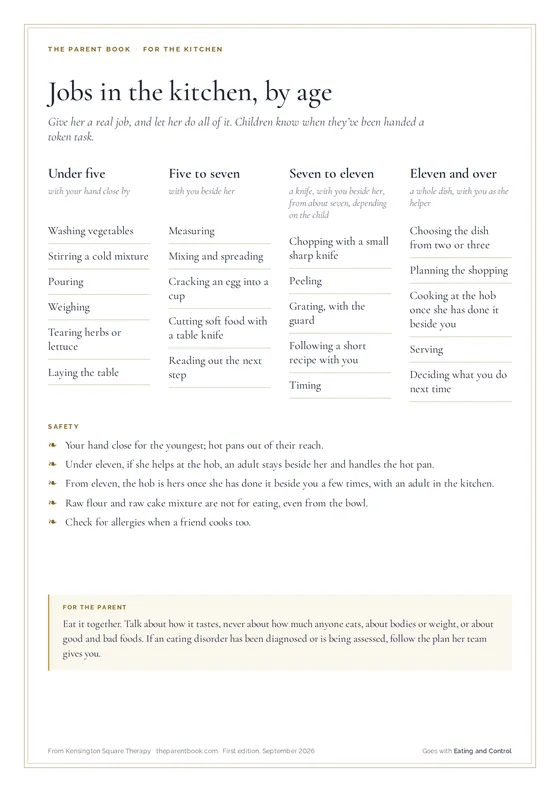 Jobs in the kitchen, by age
For the kitchen · A4 · With a subscription
Jobs in the kitchen, by age
For the kitchen · A4 · With a subscription
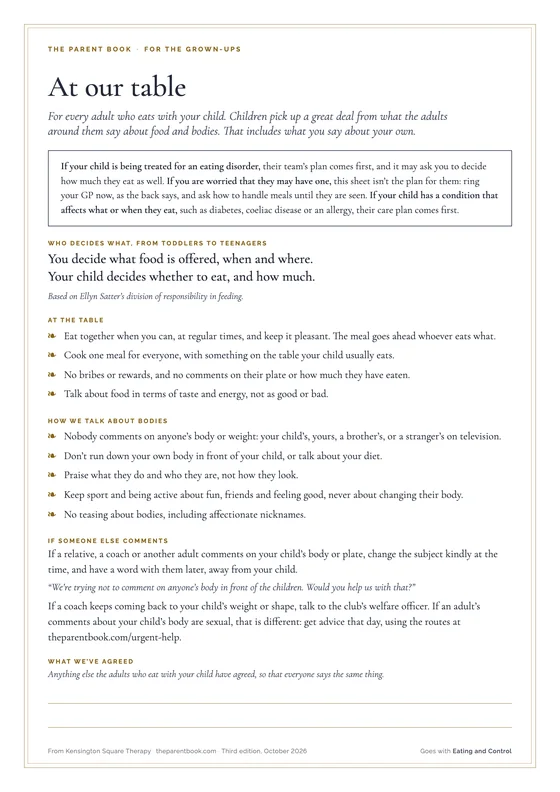 At our table
For the grown-ups · A4, two sides · With a subscription
At our table
For the grown-ups · A4, two sides · With a subscription
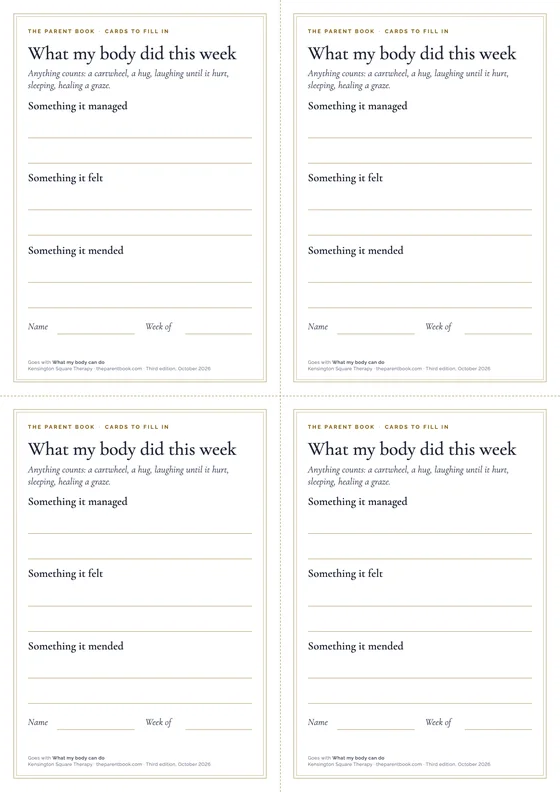 What my body can do
Cards to fill in · A4, two pages: four cards, and a page for you · With a subscription
What my body can do
Cards to fill in · A4, two pages: four cards, and a page for you · With a subscription
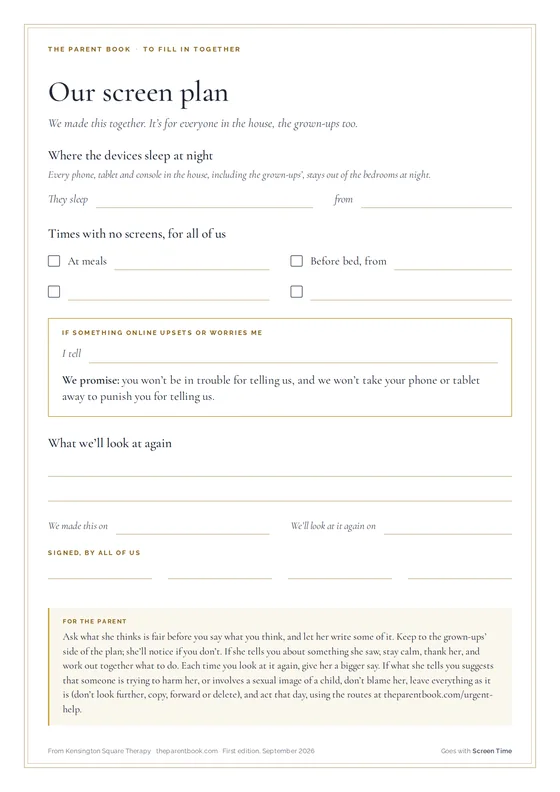 Our screen plan
To fill in together · A4 · With a subscription
Our screen plan
To fill in together · A4 · With a subscription
13 on eating disorders
Chosen by the therapists who write the library: books for you and to read with your child, and pages from organisations we trust.
Also on this shelf
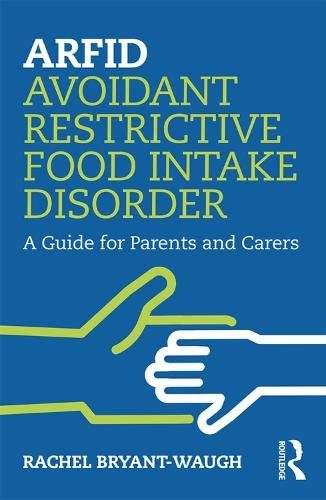
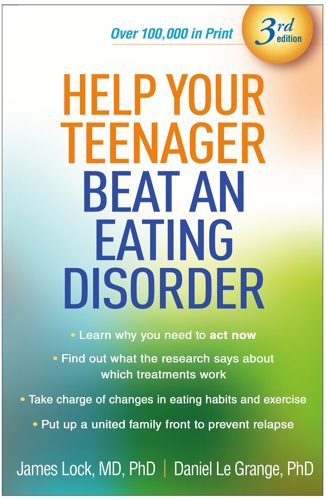
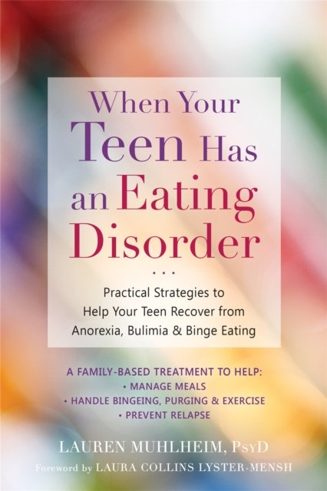
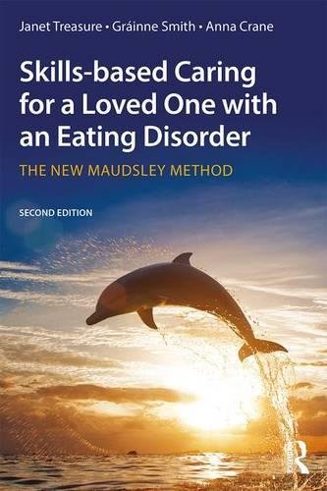
And four more. Every book on the shelf, with a therapist’s note on what it is good for, is in the library.
NHS
How to raise your worries with a child, mealtime tips while waiting for or during treatment, and getting support for yourself.
Beat
Where to start if you think your child may have an eating disorder: signs to notice, how to approach the conversation, and how to go to the GP.
Beat
What parents can expect at each stage of treatment, including family-based therapy, confidentiality as a teenager gets older, and support for yourself.
Nothing on this shelf is written for that age yet.
11 on eating disorders
Podcast episodes, talks and films, each chosen for a reason.
The Other Side Of The Plate
F.E.A.S.T.’s opening episode for parents: recognising that a child may have an eating disorder, responding in the first days and weeks, and understanding the central role families play in treatment.
Also on this shelf
F.E.A.S.T.
Raising Good Humans
Ask Lisa: Untangling Family Life
Get a Grip - Evidence-Based Conversations for Parents and Educators
Every episode on the shelf, with a therapist’s note on what it is good for, is in the library.
YouTube · 2 min
Beat, YouTube
Beat’s short film challenging the stereotype of who gets an eating disorder, a reminder that boys, younger children and people at any weight can be affected.
Also on this shelf
YouTube · 6 min
Maudsley Centre for Child and Adolescent Eating Disorders, YouTube
YouTube · 16 min
Sussex Partnership NHS Foundation Trust, YouTube
YouTube · 35 min
Kelty Mental Health (BC Children’s Hospital), YouTube
YouTube · 1 min
Child Mind Institute, YouTube
And one more. Every film on the shelf, with a therapist’s note on what it is good for, is in the library.
Nothing on this shelf is written for that age yet.
This one is medical, and early treatment matters more than in almost anything else in this library. See the GP this week and ask for a physical check and an eating disorder referral.
Where to start
The gateway to everything the NHS offers a child: paediatric assessment, a referral to CAMHS, and support for you as the parent.
Ask for a double appointment. Describe the pattern over weeks rather than the worst single day, and say plainly what you are worried about. Bring a written list; the ten minutes go quickly.
The mental health crisis line for your area. Free, confidential and answered twenty-four hours a day, every day of the year.
When you or your child is in mental health crisis and it will not wait for a GP appointment.
England, Scotland and Wales: call 111 and choose the mental-health option
Northern Ireland: call Lifeline on 0808 808 8000
The pastoral lead, the head of year, or the form tutor. Free, already knows your child, and often the quickest way to get something changed at school.
Before or alongside anything else. A school cannot act on what it has not been told, and what you bring is often what it did not have.
For eating disorders
The UK’s eating disorder charity. A free helpline, webchat and email, and, for parents specifically, a free twelve-week one-to-one support programme and an online learning hub for families.
As soon as eating has become a worry, and alongside the GP, not instead. You do not need a diagnosis to call.
BEAT Helplines England 0808 801 0677, Scotland 0808 801 0432, Wales 0808 801 0433, Northern Ireland 0808 801 0434 · Mon-Fri 3pm-8pm · One-to-one webchat and email (help@, Scotlandhelp@, Waleshelp@ or NIhelp@beateatingdisorders.org.uk) at the same hours · Outside those hours the line is closed. If your child is physically unwell, use the urgent routes on this page, which are open when this line is not.
www.beateatingdisorders.org.uk/get-information-and-support/support-someone-else
The NHS’s own page for parents: how to raise it with your child, what to do at mealtimes, and how to look after yourself while you do.
The first thing to read, before the GP appointment.
www.nhs.uk/mental-health/feelings-symptoms-behaviours/behaviours/eating-disorders/advice-for-parents
A free course of five online workshops for parents and carers of a young person with an eating disorder, teaching the Maudsley carer-skills approach: what to say, how to respond to difficult behaviour, how to plan for setbacks.
Once treatment is underway and you want to be part of it rather than watching it. Dates are on the page.
charliewaller.org/what-we-offer/eating-disorder-workshops-for-parents-and-carers
Parents of children with eating disorders supporting other parents: a long-running forum, moderated groups, a free thirty-day daily email for families at the start, and peer mentoring.
From the first weeks, when you need to hear from people a year ahead of you. International, so treatment questions go to Beat and the NHS.
The UK’s young people’s mental health charity, with a free Parents Helpline, webchat and email, and a plain A to Z of the things parents worry about.
When you want to talk through a worry about your child with someone who has heard it before, or read a clear first explanation of a named concern. Not a crisis line.
Parents Helpline 0808 802 5544 · Mon, Thu, Fri 9.30am-4pm; Tue, Wed 9.30am-6pm · Webchat Mon-Fri 9.30am-4pm; email parents@youngminds.org.uk · Outside those hours the parents line is closed. The urgent routes on this page are open when it is not.
Every organisation for eating disorders, and when each is the right call Finding a therapist