The Parent Book·From the library
What Screen Time Actually Is
For parents who feel they have lost the argument about screens.
A thirteen-minute read · Published 25 May 2026

By early evening you’ve already said the word phone in a tone of voice you never planned to use. Your twelve-year-old is at the table with the phone tilted just below the edge, the way they all hold it. You asked your child to put it down for supper. They put it down, and then they picked it up again. The pasta is on the hob, and you can hear yourself saying, in a voice that belongs to someone older and crosser than you are, that this is the last time, that the phone will be confiscated, that you’ve had enough.
And you have had enough. You’ve been having enough for about two years. The device they had at nine isn’t the one they have at twelve, and at fifteen it will be different again. Every upgrade starts the argument over.
We hear some version of this from the great majority of parents we see with a child older than nine, and the pattern is consistent. The parent has started to feel they are losing an argument they didn’t choose to get into and aren’t allowed to leave, and that somehow it’s their fault.
Put it into practice
What this chapter looks like in practice: one-minute ideas for tonight, things to do together and sheets to print and keep.
Quick tipsOne minute each
- Ask What They Watch, Not How LongAsking what your child watches online is harder than timing it, and more useful.
- The Room Your Child Will Not LeaveTime on a headset is often time with friends, so start by asking about it.
- A First Tablet at FourAt four, treat the tablet as yours, lent to your child for short stretches with you nearby.
Nine quick tips on this in the library
To do togetherActivities
- Reading in the same roomFor the last twenty minutes before bed, everyone reads in one room, you included. Keep reading aloud to your child for longer than you think they need it.About 20 minutes
- A film, and the conversation you do not forceChoose a film with some care, watch it side by side, and do not ask questions afterwards. If your child wants to talk, they will.The length of a film · with a sheet to print
- Play me somethingYour child picks a song and plays it to you. You listen to the end, and ask one question about it.About 10 minutes · with a sheet to print
Ten activities on this in the library
To printSheets to keep
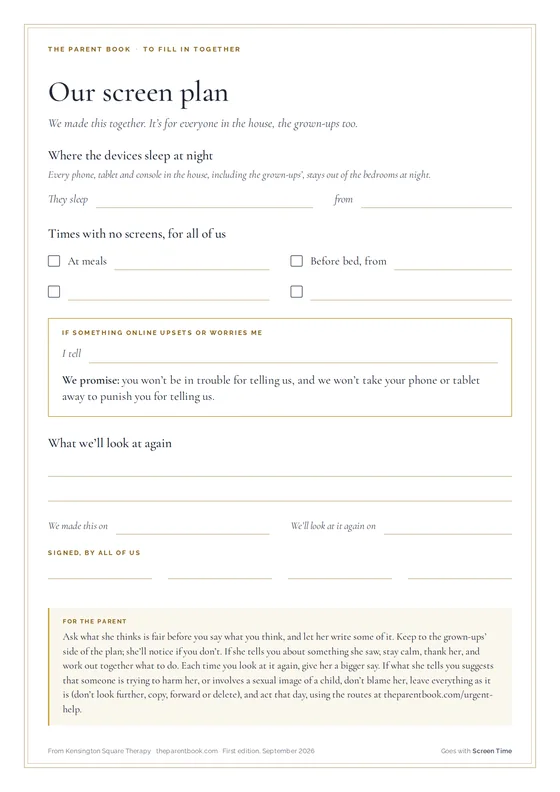
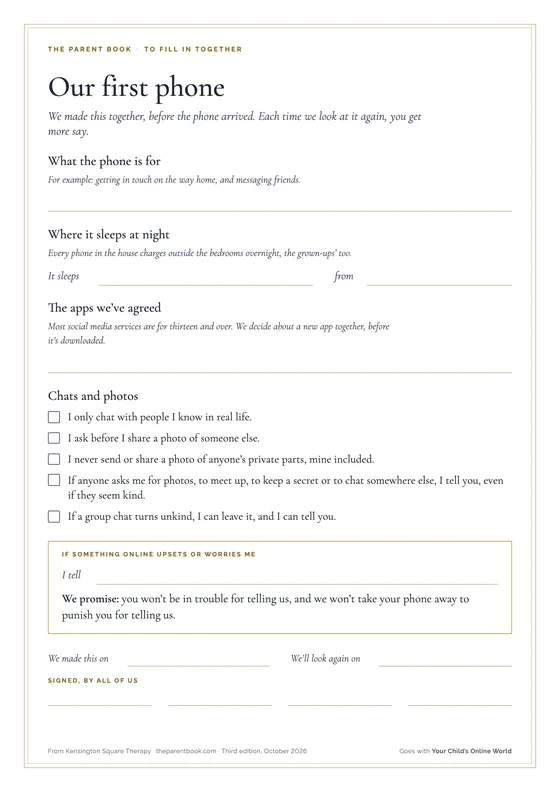
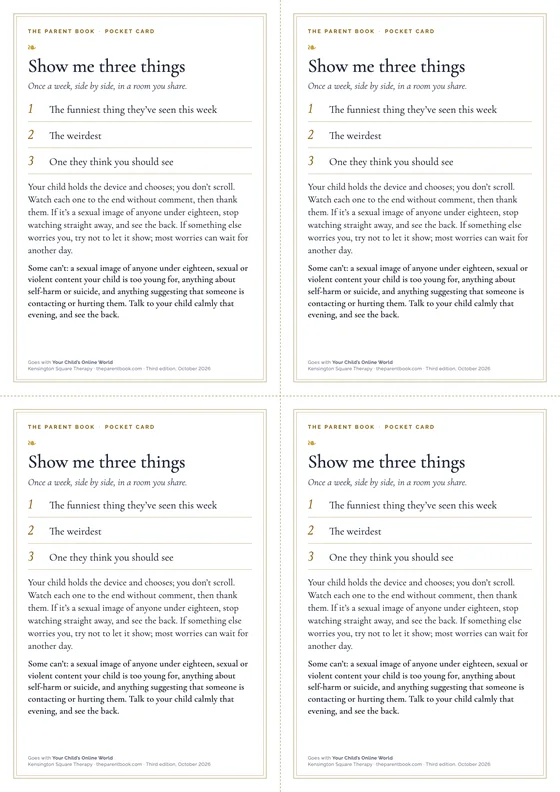
The quick tips and activities are for subscribers, and so are the sheets to print. What a subscription includes.
Who else can help
NSPCC
The NSPCC helpline is for adults worried about a child.
0808 800 5000 · Mon-Fri 10am-4pm by phone; email 11am-4pm, seven days a week. An email sent when the service is closed is not received.
If the NSPCC service is closed and the concern cannot wait, call the police on 101. You can also contact the child’s local out-of-hours children’s social care, social work or social services team. If a child is in immediate danger, call 999.
nspcc.org.uk/keeping-children-safe/reporting-abuse/nspcc-helpline
NHS Every Mind Matters
The NHS self-help hub, with a page on children’s mental health and free programmes on sleep and anxiety for you.
nhs.uk/every-mind-matters/supporting-others/childrens-mental-health
Coram Family Lives
A free, confidential helpline for any parenting or family worry, by phone, live chat, WhatsApp or email, staffed by trained family support workers.
0808 800 2222 · Mon-Fri 9am-9pm; weekends 10am-3pm; closed bank holidays
Outside those hours the line is closed. Samaritans answer at any hour on 116 123, and Shout answer if you text the word SHOUT to 85258.
coramfamilylives.org.uk/how-we-can-help/confidential-helpline